







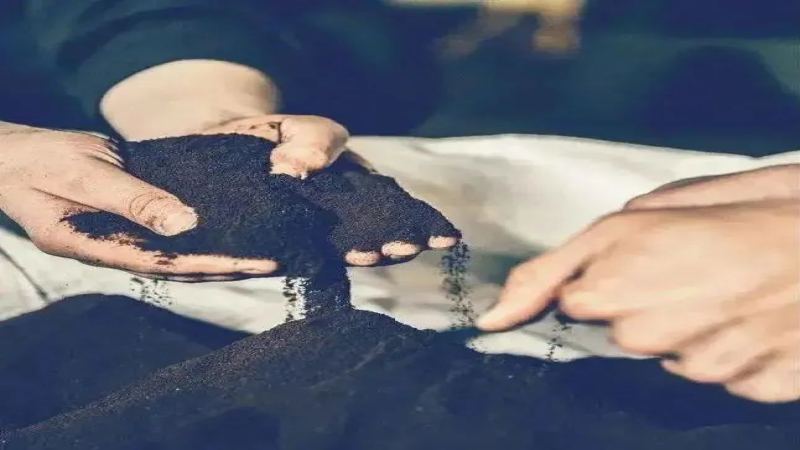
Can the roasting process help turn coffee grounds into zero-carbon fuel?
A Japanese coffee roasting company has teamed up with a research team at Kinki University to develop bio-coke fuel made from coffee grounds. The company claims the carbon dioxide released when the fuel burns is offset by the carbon dioxide absorbed while coffee plants grow, which would make the fuel zero-carbon in net terms.
Coffee grounds are the most common waste in coffee shops, and more than 8 million tons are generated worldwide each year. Disposal consumes energy and can pollute, so researchers have spent a decade turning the residue into blended fuels, briquettes, boards, fabrics, and tableware. How is coffee processed and reused now sits at the center of these environmental efforts.
As the most common waste in coffee shops, coffee grounds generate over 8 million tons annually worldwide. Their disposal not only consumes energy but also pollutes the environment. Over the past decade, researchers have continuously explored ways to reuse coffee grounds, from blended fuels to eco-friendly boards, from clothing fabrics to food utensils. Coffee grounds are transforming into an eco-friendly darling across multiple industries. A Japanese coffee roasting company has teamed up with a research team from Kinki University to develop bio-coke fuel made from coffee grounds, claiming that the carbon dioxide released during combustion can be offset by the amount absorbed during the growth of coffee plants, achieving zero carbon dioxide emissions. How exactly is this "fighting magic with magic" environmental approach realized?
Coffee grounds are the most common waste in coffee shops, discarded as trash the vast majority of the time. However, as coffee gradually becomes the daily "spiritual nourishment" for more and more people, the production of coffee grounds continues to rise, and how to properly handle these residues has become a massive undertaking.
According to statistics, over 8 million tons of coffee grounds are generated globally each year. Disposing of these coffee grounds not only releases gases that exacerbate environmental pollution but also consumes large amounts of energy during incineration. Additionally, some coffee grounds that are not timely processed flow directly into urban sewage systems through drains. Such a massive amount of coffee grounds not only wastes energy but also places a considerable burden on the environment.
Coffee grounds are rich in fiber and, after being recycled and dried, have strong usability. Rather than discarding them, it's better to find ways to utilize them. For this reason, over the past decade, researchers have continuously "racked their brains" over coffee grounds, turning waste into treasure and developing products such as blended fuels, mixed briquettes, eco-friendly boards, clothing fabrics, and food utensil materials. Coffee grounds are no longer waste; they can leverage their advantages in fields like clothing, construction, building materials, fuel, and tableware, becoming an eco-friendly favorite in numerous industries.
For the Japanese, who pursue environmental protection to the extreme, they have conducted more in-depth research and inventions in the practical eco-friendly use of coffee grounds. It was previously reported that a Japanese scientist believed that since a large amount of carbon dioxide is already emitted during coffee roasting and brewing, the disposal of coffee grounds should be done without combustion as much as possible. So this scientist used Aspergillus to soften the coffee ground fibers, then added cocoa butter to solidify them, creating directly edible coffee ground chocolate, stating that this approach not only reduces energy waste and polluting gases from coffee ground disposal but also promotes human intestinal health through fiber.
Recently, a Japanese coffee roasting company also stated that the carbon and fuel used for roasting coffee beans are indeed not environmentally friendly, and the subsequent energy consumption for disposing of coffee grounds is also not eco-friendly. Therefore, they decided to use coffee grounds to roast coffee beans, minimizing carbon emissions during the roasting process and eliminating concerns about energy waste from coffee ground disposal.
The company stated that their coffee beans have always been roasted using charcoal because this method produces a better coffee texture. Compared to gas, which generates a lot of moisture when burned, charcoal produces less moisture during combustion, so the roasted coffee beans dehydrate more thoroughly and quickly, resulting in a softer, warmer coffee flavor with a unique charcoal aroma. However, using charcoal not only consumes large amounts of wood but also pollutes the environment with emitted gases.
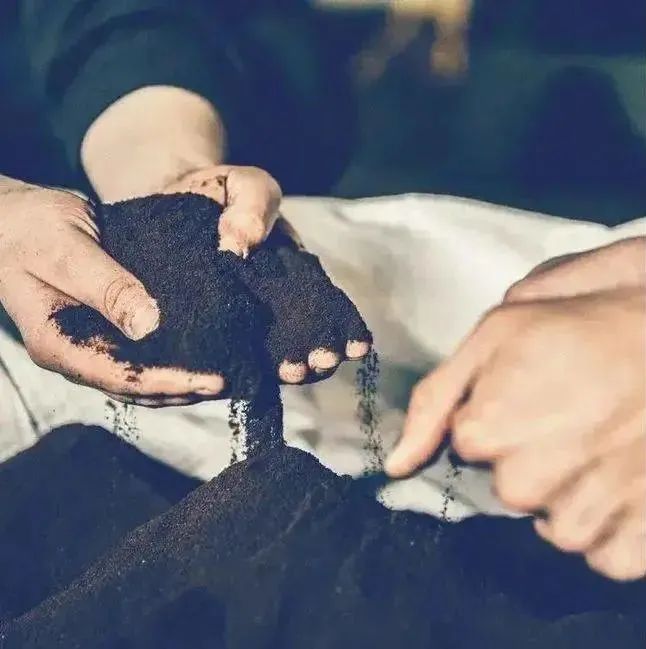
As people's environmental awareness continues to grow, their practice of using charcoal to roast coffee beans has also raised questions about its eco-friendliness. After some discussion, the company decided to recycle coffee grounds for coffee bean roasting, but not by direct combustion, because coffee grounds contain too much moisture and must be efficiently dehydrated before they can be burned directly, which would also waste energy and produce exhaust gases. Therefore, in recent years, they have collaborated with a research team from Kinki University to develop bio-coke.
Bio-coke is an alternative fuel to coal coke, made by heating organic waste and compressing it under high pressure. However, due to its high density, bio-coke has weak combustion performance, and its heat is insufficient for roasting large batches of coffee beans. So they also mix conventionally dried coffee grounds with dried corn stalks and straw, compress them, and add them during the roasting process to boost the heat.
The head of the roasting company stated that coffee plants absorb carbon dioxide during growth, so the carbon dioxide released during combustion is actually the carbon dioxide absorbed during plant growth, thus qualifying as zero carbon dioxide emissions. At the same time, the solid fuel from coffee grounds does not produce waste, so bio-coke and coffee bricks are environmentally friendly fuels.
Alright, the carbon dioxide released during combustion equals the carbon dioxide absorbed during plant growth, offsetting each other to achieve zero carbon dioxide emissions... This "fighting magic with magic" move is indeed brilliant, haha!
Image source: Internet
For professional coffee knowledge exchange and more coffee bean information, please follow Coffee Workshop (WeChat public account: cafe_style)
For more specialty coffee beans, please add the private WeChat of FrontStreet Coffee: qjcoffeex
The above content is compiled by CoffeeHunters, a coffee news website.


