







What Is Arabica Coffee and Where Does It Come From?
Coffee has moved beyond a morning wake-up tool into a social and check-in habit. Trendy cafes appear on nearly every street, often with similar ruin-style, black-and-white or Japanese minimalist decor, and the long queues are fading. To stand out, owners mix in cocktail techniques, unusual ingredients and fusion flavors, while some young operators take savings to the countryside.
Brands such as %ARABICA, founded by a Japanese entrepreneur in Hong Kong, built their reputation on simple, stylish spaces and limited menus, drawing hours-long waits. That model is now easy to copy, so differentiation matters more. Meanwhile, rural three-no cafes, with no signboard, no promotion and no regular social media updates, have gone viral without following the usual playbook.
Coffee has long been woven into daily life, no longer just a tool for staying alert, but also carrying social and check-in functions. Trendy cafes are blooming everywhere in cities, with similar decor styles, yet the queues are gradually fading. In search of differentiation, coffee people incorporate mixology techniques and bizarre ingredients into specialty drinks, even playing with East-West fusion. As urban competition becomes saturated, a group of young people take their savings back to the countryside and open "three-no" cafes—no signboard, no promotion, no regular social media updates—yet unexpectedly go viral online. This article reviews the evolution of the coffee craze from urban trendy shops to rural laid-back operations, and explores the possible direction of the next wave of trendy cafes.
I wonder if you've noticed that coffee is now deeply embedded in our daily lives. Just a morning cup to wake up seems no longer enough; coffee also plays the role of a social medium. Trendy cafes keep emerging, and their purpose is simply to gain more traffic and attract people to come and check in.
It's no exaggeration to say that four cafes might even open side by side on the same street, until they chat about their businesses and suddenly realize they're all in coffee. Although they all sell coffee, there are subtle differences, such as combining with hair salons, pets, specialty drinks, and other elements.
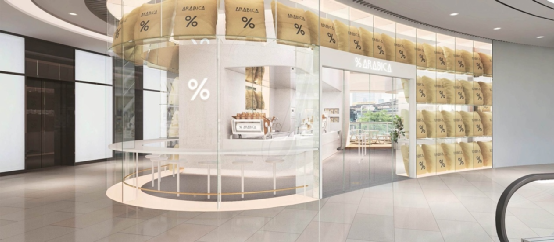
The decor styles of trendy cafes are often quite similar, with ruin style, black-and-white themes, Japanese minimalist style, and more. Among them, %ARABICA, the pioneer of exquisite trendy cafes, was founded by a Japanese in Hong Kong, China, and quickly became popular in Japan, the United States, and several first-tier cities in China thanks to its good reputation and simple, stylish style.
Besides its outstanding environmental design, its menu offerings are actually relatively limited. Even so, it still attracts long queues of consumers, who are even willing to wait for hours under the scorching sun just to get an "admission ticket" coffee and experience the charm of a trendy brand.
Over time, consumers have found that these once unattainable trendy brands no longer have such severe queues. The styles of various trendy cafes can be easily copied and pasted; you just need to find a nearby shop with a similar style.
To stand out among the many trendy shops, businesses have put a lot of thought into their menus. Some incorporate cocktail mixology into coffee; at this point, the barista is no longer just an ordinary barista, but has evolved from a simple coffee brewing machine into a combination of brewing machine and shaker.
With the birth of hit specialty coffees, almost no ingredient can escape the hands of coffee people. From Lao Gan Ma chili sauce to fresh hairy crabs, if you can imagine it, they can make it. At this point, trendy cafes have evolved to the extent of two hours of photos and five minutes of drinking coffee.
Some restaurants also play with the combination of Chinese breakfast and Western soy milk. From environment, taste, to pairing, this path to becoming trendy is intensifying. Although it joins the fun, it loses the original purity of coffee, leaving only a fleeting novelty. Eventually, everything returns to the everyday, and the environment, taste, and pairings are no longer as hot as before, with queue lengths shrinking again and again.
People shift their gaze from the restless, bustling city to the desolate countryside, and cafes that go viral online begin to appear in rural areas. Tired of the city's noise, young people take the money they've earned through half a lifetime of hard work and return to their villages to run cafes. Searching for "rural coffee" on the Xiaohongshu platform yields more than 10,000 shares.
According to Oriental Daily, a Malaysian painter returned from the capital and encountered the pandemic, so he simply converted his studio in an oil palm plantation into a cafe. After on-and-off preparations, it officially opened in March this year. Because of its "three-no" characteristics—no signboard, no promotion, no regular social media updates—its laid-back operation quickly rose on social media platforms, drawing many coffee lovers to make a pilgrimage.
Having seen enough of the city's steel and concrete, people more or less begin to yearn for rural pastoral life. What direction do you think the next trendy cafe will take?
Image source: Internet
For more coffee bean information, please follow Coffee Workshop (WeChat public account cafe_style) For professional coffee knowledge exchange, please add WeChat ID kaixinguoguo0925
The above content is compiled by CoffeeHunters, a coffee news website.


