








Which Coffee Books Track Your Development as a Brewer?
A practical reading list for coffee lovers starts with "You Don't Understand Coffee," which explains the full journey from seed to cup in plain language with illustrations and a question-and-answer format. It covers varieties, green bean processing, roasting and extraction, making it a useful entry point for people new to coffee.
From there, "The Complete Guide to Pour-Over Coffee" builds extraction theory and brewing logic, sorting out the variables that shape a cup. "Coffee Quality Studies" Volumes 1 and 2 suit readers with some background, covering the three coffee waves and more advanced topics, so the list follows a clear path of coffee development.
Just getting into coffee and not sure where to start? Want to dive deeper into roasting but can't find a reliable reading list? This article compiles a practical book guide for coffee enthusiasts at different stages, from zero-based beginners to green bean purchasing and roasting science, covering core topics such as pour-over extraction, varieties and processing, tasting and cupping, and origin knowledge. Whether you're a complete novice or a practitioner with some foundation, you'll find reading material that suits you. At the end, we also recommend an academic guide that can be called the "ceiling," along with Front Street Coffee's professional exchange channel, to help you systematically improve your coffee knowledge.
"You Don't Understand Coffee" This book is quite friendly to zero-based beginners and friends who have just developed an interest in coffee. Using concise and clear language, it explains the complete process of coffee from a seed all the way to the beverage in your cup. The book is paired with many vivid and interesting illustrations, which help beginners more intuitively grasp the underlying principles while also reducing the tedium that pure text reading might bring. The author approaches from a scientific perspective, addressing common questions people have across every stage from green beans to extraction, using a Q&A format to easily introduce coffee varieties, green bean processing methods, the roasting process, and extraction methods.
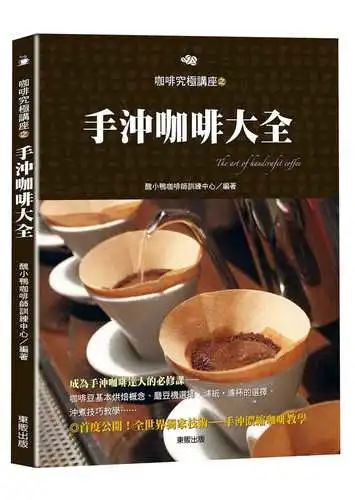
"The Complete Guide to Pour-Over Coffee" This book is aimed at beginners and entry-level players who have just started getting into coffee brewing. Its core content revolves around extraction theory, with the goal of helping readers build their own brewing logic and framework. The writing extensively uses inner monologue and free association techniques, guiding readers to think actively and apply things flexibly. The book also systematically organizes the various variables that affect coffee extraction, helping readers understand that only by truly mastering extraction theory can they understand why different drippers produce different performances during brewing.

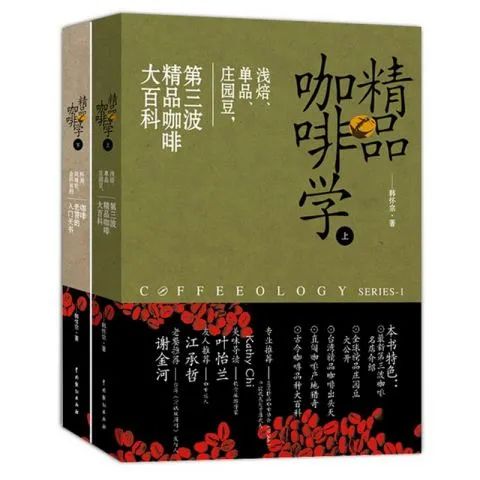
"Coffee Quality Studies" Volume 1 and Volume 2 This set is more suitable for friends who already have a certain level of coffee knowledge and understanding. Volume 1 focuses on sorting out the context of the three coffee waves, a brief history of coffee development, variety classification, and origin distribution. Volume 1 may feel a bit dry to read, but its information density is very high and it's worth revisiting repeatedly. Volume 2 focuses on topics such as coffee tasting, cupping, the flavor wheel, the golden cup standard, and basic extraction techniques. Its depth clearly exceeds Volume 1, making it suitable for those who have already built an entry-level foundation to continue advancing.
"The World Atlas of Coffee" Also suitable for readers who already have basic coffee knowledge. This book starts with coffee bean varieties and covers the entire chain of green beans fairly completely, from harvesting, processing, and trading to roasting, cupping, grinding, and extraction. It further introduces 35 coffee-producing countries across three continents and their main producing regions, making it a reference book you can pull out at any time.
"Bean Hunter" 1 and 2 Coffee practitioners and seasoned enthusiasts will enjoy this set. Rather than calling it a book, it's more like a field notebook. Volumes 1 and 2 record the author's tasting insights while searching for coffee beans in Africa and Central and South America. In addition, readers can learn a great deal about coffee estates and green beans of different varieties. Volume 1 mainly recounts the author's bean-hunting experiences in South America and briefly introduces the COE competition; Volume 2 focuses on bean-hunting journeys in Africa, sharing the thinking behind international judges' bean selection as well as the development trends of special processing methods in recent years.
"The Science of Green Coffee Purchasing" This book is suitable for practitioners and enthusiasts who have just stepped into the field of coffee roasting. The book is divided into three parts: Part 1 sorts out the problems often encountered in the green bean purchasing process; Part 2 explains in detail the various stages of green coffee processing, helping readers more quickly understand processing methods, cultivars, storage, packaging, and defective beans; Part 3 provides a green coffee purchasing guide, offering purchasing plan suggestions and sharing the author's years of experience and reflections on purchasing green beans.
"The Science of Coffee Roasting" Suitable for practitioners and enthusiasts who already have a certain level of knowledge and understanding of coffee roasting. The book explains roasting principles and the various influencing factors during the roasting process. Part 1 introduces the structure of coffee beans and how roasters should store green beans; Part 2 analyzes the effects of six common roasting methods on coffee aroma and mouthfeel, tips for heating green beans evenly, and how green bean roasting amount, temperature, and time affect flavor and mouthfeel; Part 3 explains the three major rules that must be followed during roasting, as well as how to optimize the roasting curve. The author's explanation of coffee roasting is very detailed, scientific, and systematic.
If the books above still can't satisfy your thirst for coffee knowledge, then the writer must recommend this "Academic Guide to Coffee Production"! (English-only edition)

It can be called the "ceiling" among coffee books—flipping through it is both educational and, if you hold it up while reading, a good workout for your muscles.
The writer is serious! Because this book comprehensively covers coffee cultivation, processing, and sustainable production, and is a professional guide for growers, producers, traders, and related scholars.

(Actually, it's not that heavy either—about 6 cm thick
)
Some image sources: Internet
For professional coffee knowledge exchange and more coffee bean information, please follow Coffee Workshop (WeChat public account: cafe_style)
For more specialty coffee beans, please add the private WeChat of Front Street Coffee, WeChat ID: kaixinguoguo0925
The above content is compiled by CoffeeHunters, a coffee news website.


