







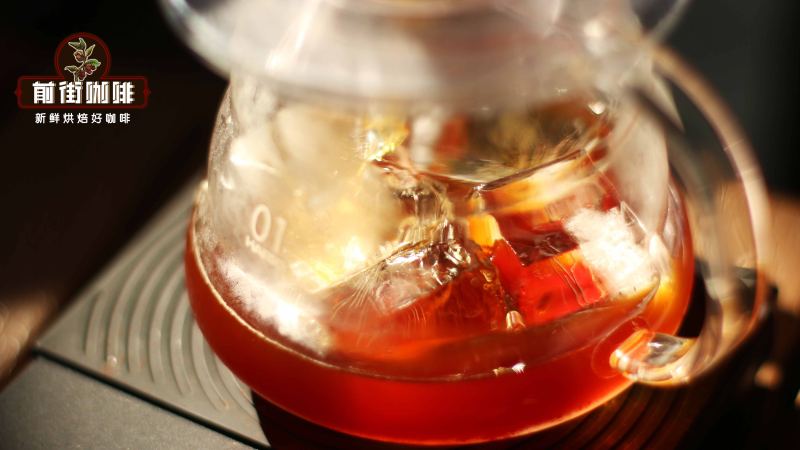
How do you brew iced coffee without a weak, watery cup?
Iced pour-over is really flash-chilled pour-over: hot coffee is brewed normally, then cooled quickly over ice. Applying regular hot pour-over parameters produces a weak, flavorless cup. The fix is adjusting three core settings, the coffee-to-water ratio, grind size, and water temperature. A working formula is fine-ground coffee plus 10 times its weight in hot water plus 5 times its weight in ice, so dilution does not flatten the result.
Pour-over naturally runs strong early and weak late, so cutting the water makes the concentrate richer before ice melts. That alone lowers extraction yield, since later-stage compounds never release. Grinding finer and raising water temperature both improve extraction efficiency, letting you keep concentration and flavor in balance. Dripper and bean choice matter too; an Ethiopian natural bean works well as a test. As for whether is iced coffee fattening, or whether mochas are hot or cold, those depend on what is added after brewing.
Iced pour-over coffee is not simply pouring hot coffee over ice; it is a brewing method known as "flash-chilled pour-over" — using ice to rapidly cool the hot coffee liquid in a short time. However, if you directly use the parameters of a regular hot pour-over, the final product often turns out weak and flavorless. To solve this problem, you need to adjust three core parameters: coffee-to-water ratio, grind size, and water temperature. Front Street Coffee has summarized a practical formula: coffee grounds (fine grind) + 10x hot water + 5x ice. This article will break down the adjustment logic of iced pour-over, offer suggestions on dripper and coffee bean selection, and use an Ethiopian natural bean as an example to provide complete brewing parameters and staged pouring steps.
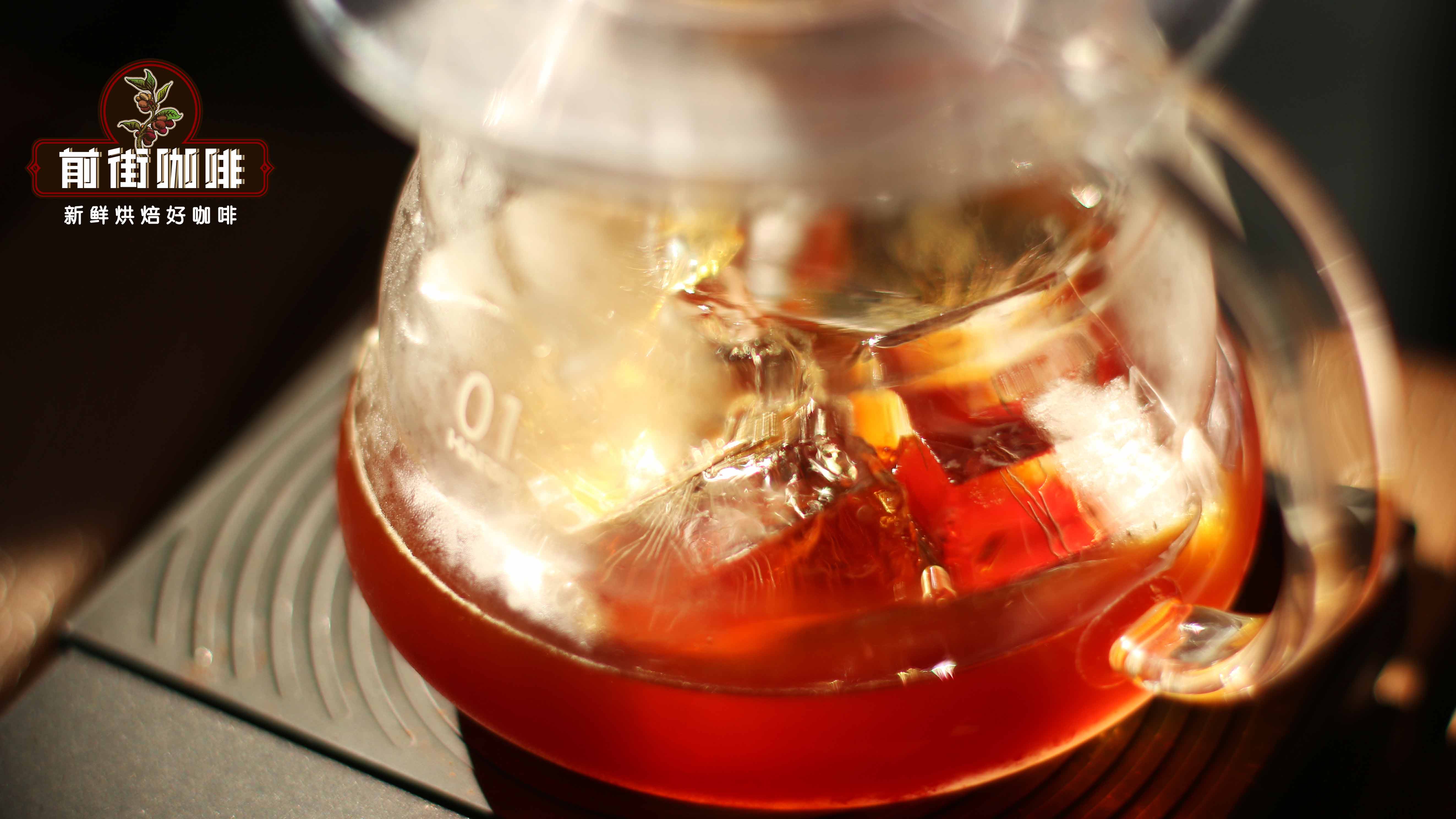
The more accurate term for so-called iced pour-over coffee should be "flash-chilled pour-over." Its method is not complicated: first brew a cup of hot coffee in the normal way, then use ice to bring the coffee liquid from hot to cold in a very short time.
However, just as wanting to replicate a good coffee you had at a café, merely observing the barista's process makes it hard to produce an identical taste — the real difficulty lies in the parameters. Regardless of the extraction method, grind size, water temperature, coffee-to-water ratio, and extraction time are unavoidable factors. If you directly apply a hot pour-over recipe to iced pour-over, the resulting coffee will be very weak, with clearly insufficient flavor.
So the first thing to change is the coffee-to-water ratio. Following the principle that the early stage of pour-over is strong and the later stage is weak, reducing the amount of water poured will naturally make the coffee liquid more concentrated, so that after adding ice to dilute it, it won't become too bland. But a new contradiction arises: with less water, the substances that should have been extracted in the later stage have no chance to be released, resulting in a lower extraction yield. The result is that the concentration is on target, but the flavor is lacking.
At this point, you can approach it from two directions: grind size and water temperature. Making the grind finer allows soluble substances in the coffee particles to be released more easily; raising the water temperature can likewise improve extraction efficiency. How exactly to choose can depend on the situation — adjust only the grind, only the water temperature, or both at the same time. Front Street Coffee's recommendation is to prioritize making the grind finer, because a finer grind also affects another parameter — the extraction time will naturally lengthen, which is exactly the effect we want.
Now that the principle has been explained, as for exactly how much to reduce the ratio, how fine the grind should be, and how much ice to add, there is no unified standard answer, but you can refer to Front Street Coffee's approach. When we have the same coffee beans on hand, we actually don't need to replicate every single parameter from the café exactly. To reproduce the iced pour-over you drank at the café, mastering one "universal formula" is enough:
Iced pour-over = coffee grounds (fine grind) + 10x hot water + 5x ice.
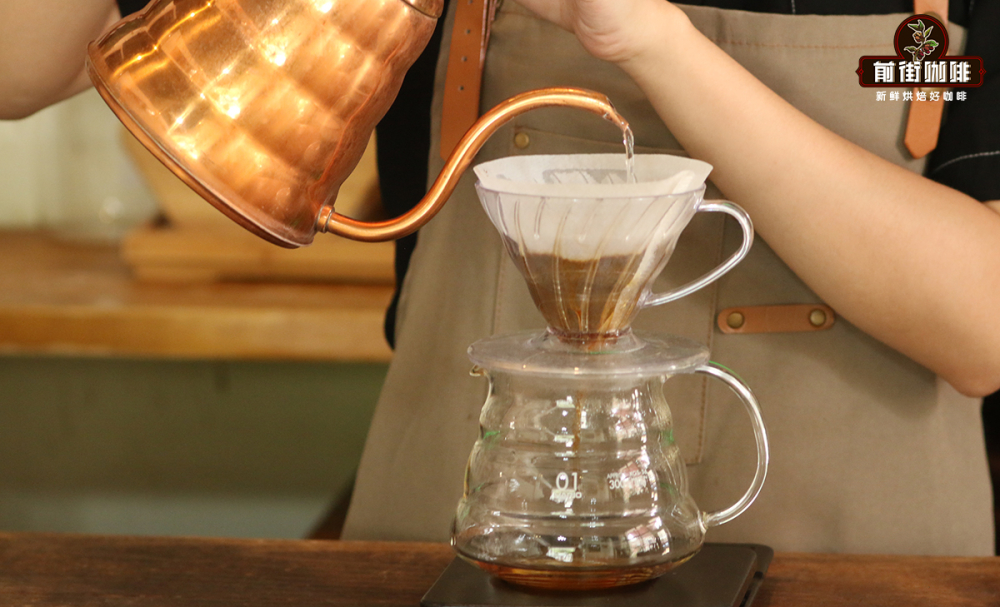
When choosing a dripper, if you prefer rich and bright fruit acidity, a conical dripper is the first choice, such as the V60; if you lean more toward a rounded and balanced profile, a flat-bottomed cake dripper is more suitable, as it enhances the immersion extraction effect. Also, try to choose large ice cubes, as they are less likely to be quickly melted by the hot coffee.
As the saying goes, choosing the right coffee beans is half the battle won. When making iced pour-over, Front Street Coffee tends to favor light to medium roast fruit-acid beans, with Ethiopia, Panama, Colombia, and Costa Rica as preferred origins. Most of these coffees have undergone natural processing, honey processing, or anaerobic fermentation, and when made into iced coffee they usually display good aroma and a very refreshing mouthfeel.
If you want an iced pour-over with a tea-like feel, you can buy Front Street Coffee Butterfly; if you prefer floral notes, choose Fruit Ding Ding; for an iced pour-over with ripe fruit aromas, Front Street Coffee Sidra and Front Street Coffee Strawberry Candy are both good choices; if you are sensitive to acidity, Front Street Coffee PWN Golden Mandheling is recommended — its rich and mellow mouthfeel also shines as iced coffee.
For today's demonstration, Front Street Coffee has selected a recently popular Front Street Coffee Alo Hattesa. This bean comes from Bensa, Ethiopia, and is naturally processed. Whether served cold or hot, it displays elegant magnolia floral notes, a tropical juice-like quality, and a candy-like finish. When producing a light-roast iced pour-over, Front Street Coffee uses the following parameters:
Dose: 15g
Water: 150ml
Ice: 100g
Grind size: EK43s setting 9.5 (85% passing through a No. 20 sieve)
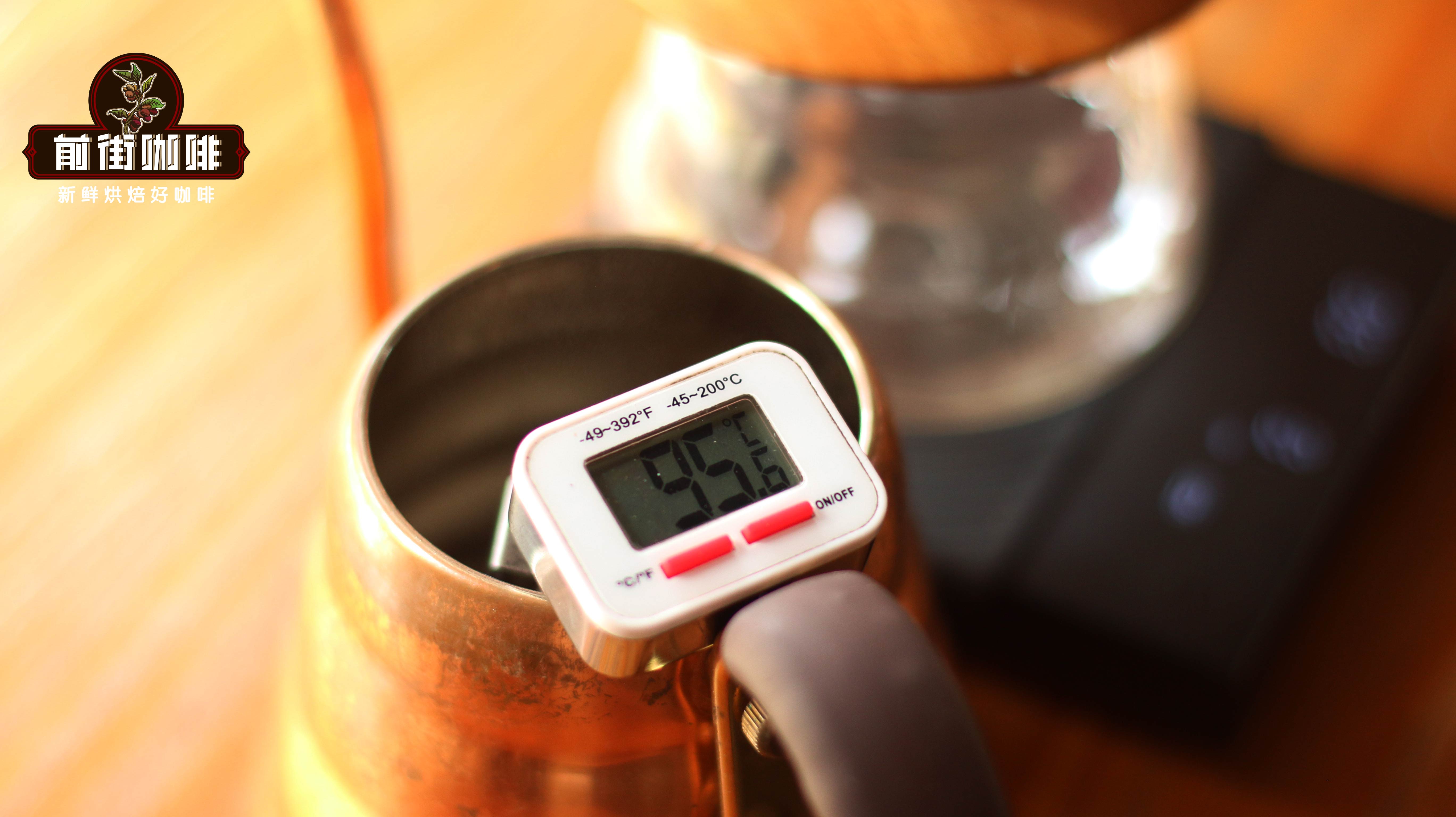
Water temperature: 92°C
Dripper: V60
During operation, first put the ice into the server, then set up the dripper and filter paper, and pour in the coffee grounds. First pour 30ml of water and bloom for 30 seconds.
For the second pour, pour 60ml, moving the stream in circles from the center outward, then back to the center. When the water in the coffee bed is almost finished dripping, begin the third pour, also 60ml, with the same technique as before. Control the entire extraction process between 1 minute 30 seconds and 1 minute 50 seconds.
Next, through a swirling motion, let the ice and coffee liquid mix fully, while feeling the temperature with your hand. Once it is cold enough, it is ready to enjoy.
The Front Street Coffee natural Alo brewed this way greets the palate with the mouth-watering sweet-tartness of yellow peach, sweet orange, preserved fruit, and dried mango, leaning overall toward yellow stone fruit notes. Thanks to the stirring motion, the coffee has not only rich fruit acidity but also a hint of clean, moist sweetness. Chilled by the ice, it drinks like a refreshing glass of grape juice.
The above content is compiled by CoffeeHunters, a coffee news website.


