








Can Coffee Get You High Enough to Queue for Hours in Shanghai?
Blue Bottle Coffee's first Shanghai store drew hours-long queues, purchase limits and reselling above 150 yuan, with proxy buyers charging steep markups. Crowds braved freezing weather on opening day, drawn by the brand's minimalist design, its reputation built in other markets and the pull of checking in at a widely discussed shop.
Consumer psychology offers part of the explanation: herd behavior, where a widely praised brand seems safe to follow, and labeling, where the visit signals taste and status. The costs show up as time, money and health risk, alongside scalping and limits. The article argues for calmer visits and purchases.
After Blue Bottle Coffee opened its first store in Shanghai, phenomena such as hours-long queues, purchase limits, scalping at high prices, and proxy-buying prices soaring above 150 yuan drew widespread attention. This brand, hailed as the "Apple of the coffee world," attracted large numbers of young people to brave the freezing wind and check in, relying on its minimalist design and accumulated reputation. This article starts from psychological mechanisms such as the herd effect and the labeling effect to analyze the motivations behind the check-in craze at internet-famous coffee shops, while also discussing the costs in time, energy, and money, as well as derivative problems such as high-priced proxy buying and purchase limits. At the end, it calls for rational store visits and rational consumption, and retains professional coffee information channels such as Front Street Coffee for enthusiasts to exchange and refer to.
Ever since Blue Bottle Coffee, dubbed the "Apple of the coffee world," opened, the persistence and enthusiasm people have shown have made many netizens sigh: what kind of power does this cup of coffee have to create such a scene?
Enduring hunger while standing in long lines, encountering purchase limits and high-price scalping, ignoring the risk of virus transmission—what exactly is the reason that makes a group of young people who usually cannot even keep their eyes open when getting up early for work willingly brave the biting cold wind and squeeze into the store to check in on opening day? Perhaps they want to drink a cup of coffee they have long been thinking about before the staff are worn down by intense work; perhaps they are driven by the herd effect—since everyone says it is good, following along cannot be wrong; or perhaps it is to "put on a label," using it to gain others' attention.
For many mainland consumers, Blue Bottle Coffee has always carried a "legendary" aura. The main reason is that the mainland coffee market has expanded rapidly, yet this brand was slow to enter; in addition, some people who had tasted its products in stores in other regions praised it highly, greatly beautifying the brand image in many people's minds. Add to that the design of the brand logo and store space, which happens to fit the minimalist aesthetic favored by today's young people. Even if the logo is just a line, with filters and shooting angles, even an ordinary cup of coffee can appear high-end.
This is exactly how the herd effect works: when people have insufficient information about something, they tend to stay consistent with the majority. As long as one person says it is good, a group of people will follow and say it is good; when more and more people "say it is good," others feel a kind of conformity pressure and dare not make a "deviant" choice. So everyone follows the trend and does the same thing, lest they appear out of place. "Putting on a label" corresponds to the labeling effect, which means that after a person is labeled with a certain word or name, they automatically begin self-image management and strive to make their behavior match the label. Choosing to check in at something that fits the current aesthetic of young people and being able to arrive on the first day can not only show accurate grasp of trends, but also clearly highlight one's personal label and uniqueness, making others remember them.

However, when people chase these things, they often fail to take the costs of time, energy, and money into account. To drink this long-awaited cup of coffee, some people queued for more than 4 hours, even spending 7 hours. When both body and mind are exhausted, how much attention is left to truly savor this cup of coffee? When business is booming, store employees are worn out, and product quality also fluctuates to some extent, so the coffee you drink may not be as perfect as expected. Of course, many people also think about giving up midway, but when they think, "I'm already here, might as well wait; it won't make much difference," they keep persisting. But what about time and energy? The basis for judging whether an action should continue should be the maximum value likely to be paid for obtaining the desired result. To put it plainly, can the result you get after investing time and energy in queuing bring you a good return? Is it really worth wasting your time just to exchange it for a little attention? Many people in online queues also revealed their feelings afterward: I think I must have 🧊 in my head.
It is precisely this mentality that gave rise to high-priced proxy buying. Because there are always people unwilling to bear the cost of queuing, yet hoping to gain others' attention. Even if a Blue Bottle latte is priced at more than 40 yuan, some are still willing to spend more than 120 yuan to buy a cup of coffee that has lost quality after sitting for too long, just to take a photo. To curb high-price scalping, Blue Bottle Coffee imposed a "purchase limit" on the second day, allowing only 5 cups per order, but this decision did not seem to reduce people's frenzy, and proxy-buying prices reached more than 150 yuan...
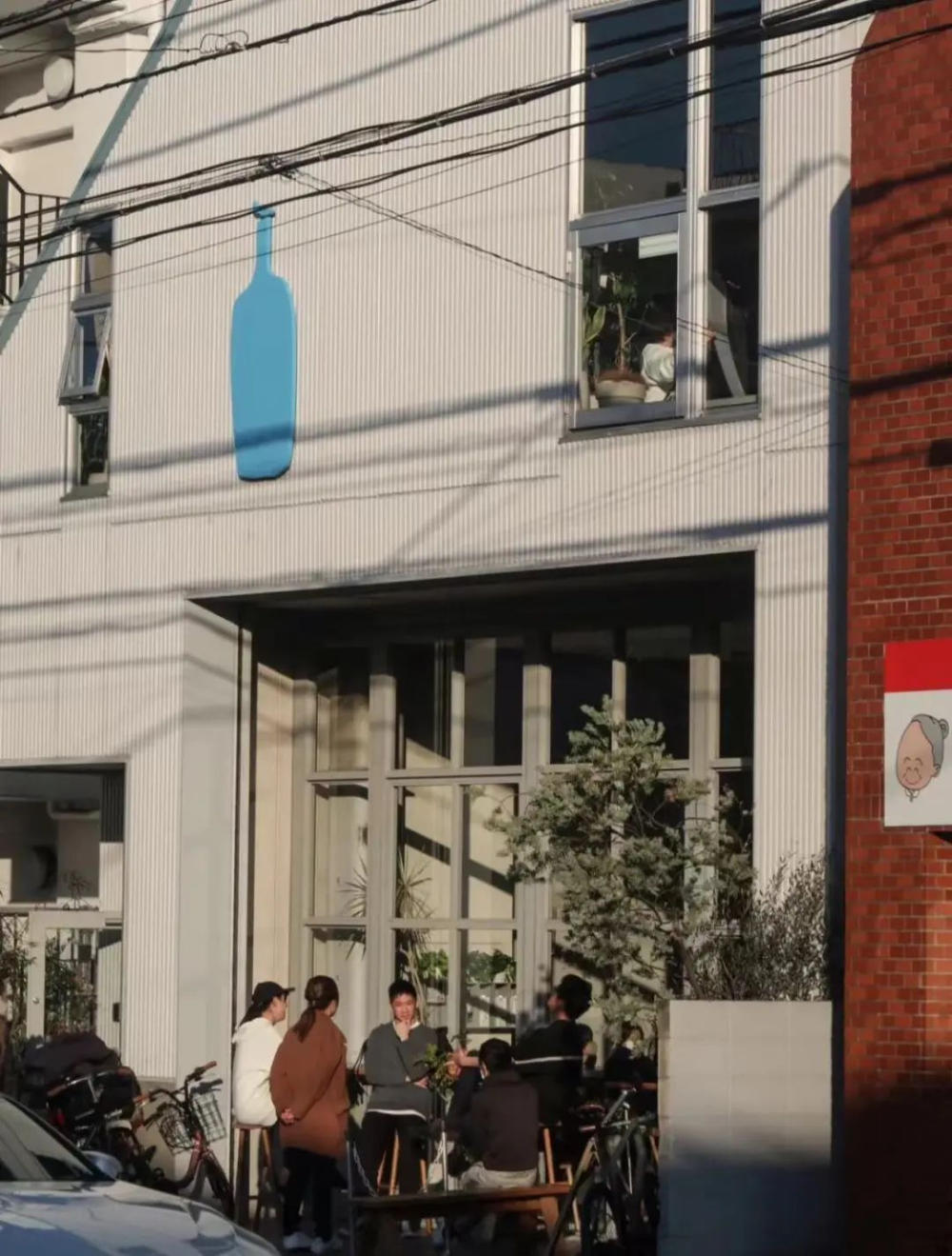
Of course, whether one is willing to spend time queuing is entirely the queuer's own choice. There is a Cantonese saying: "If you can eat salted fish, you can endure thirst." As long as they feel it is acceptable at the moment, even if they may regret it later. But I still hope everyone will not ignore only the cost, and also consider their health... The virus is ruthless, and once a problem arises, it affects far more than one person. It is reported that the brand will continue to expand its stores. If the quality is truly stable, it will not rely only on this one store and these few days to sustain it. I hope everyone can visit stores rationally and consume rationally. Image source: Internet social platforms
Professional coffee knowledge exchange. For more coffee bean information, please follow Coffee Workshop (WeChat public account: cafe_style).
For more specialty coffee beans, please add the private WeChat account Front Street Coffee (FrontStreet Coffee), WeChat ID: kaixinguoguo0925.
The above content is compiled by CoffeeHunters, a coffee news website.


