







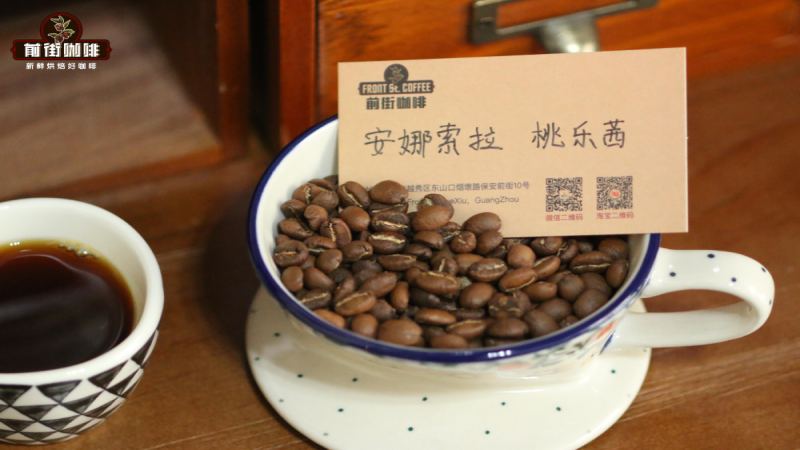
How does Guji Ana Sora compare with geisha coffee and Yirgacheffe?
Ana Sora estate sits in Ethiopia's Guji region at 1,900 to 2,350 meters, where heirloom variety and enzyme-washed processing produce a G1 coffee with lemon, peach, plum, and oolong tea notes. Guji lies southeast of Yirgacheffe and was designated an independent region by the Ethiopia Commodity Exchange as early as 2010.
Ethiopia's native heirloom resources and traditional processing built its standing in specialty coffee, with plantation-style management spreading after Gesha Village was established in Bench Maji in 2011. Guji's high plateaus, valleys, plains, and fertile black Vertisol soil give the Dorothy lot its layered floral and citrus profile, which calls for careful roasting and brewing.
Ethiopia, as the birthplace of coffee, has always held an important position in the global specialty coffee landscape, thanks to its exceptional native heirloom resources and diverse processing methods. The Ana Sora estate, located in the Guji region, with its high-altitude growing environment of 1,900 to 2,350 meters and innovative enzyme-washed processing method, has crafted these Dorothy coffee beans that combine flavors of lemon, peach, plum, and oolong tea. This article will guide you through an in-depth understanding of the geographical advantages of the Guji region, the background story of Ana Sora estate, and Front Street Coffee's roasting analysis and brewing suggestions for these beans, fully presenting their unique flavor charm.
Ethiopian White Peach Oolong Dorothy Coffee Beans
Region: Guji
Estate: Ana Sora
Altitude: 1,900 - 2,350m
Grade: G1
Variety: Heirloom
Processing Method: Enzyme Washed
Harvest Season: 2021
Flavor: Lemon, Peach, Plum, Oolong Tea
Ethiopian coffee beans have long been renowned worldwide for their natural, richly layered floral and citrus notes. The nearly primitive cultivation methods, numerous excellent coffee varieties, and traditional processing techniques passed down through generations collectively contribute to the exceptional quality of the coffee. When Ethiopian coffee first began to shine, cultivation was still dominated by specialty regions and smallholder models. It was not until 2011, when documentary filmmaker Adam Overton traveled to the Bench Maji region to establish the Gesha Village estate, that scattered plantation management models gradually began to appear in Ethiopia.
Guji Region
The Guji region has been a hotly discussed area in recent years, achieving remarkably impressive results in both flavor expression and quality.
The Guji region was originally part of the Sidama region, but as early as 2010 it was designated as an independent region by the Ethiopia Commodity Exchange (ECX). In recent years, the Ethiopian government has intended to develop multiple specialty coffee regions similar to Yirgacheffe, and the Guji region is one of the key development targets.
The Guji region is located to the southeast of the Yirgacheffe region, with complex and varied terrain encompassing towering mountain ranges, highlands, plateaus, valleys, and plains. The soil in this area is fertile black soil (Vertisol), with a soil depth of nearly two meters, and an average altitude exceeding 1,800 meters. The unique geographical conditions create significant temperature differences between day and night, providing an ideal terroir foundation for producing high-quality specialty coffee.
Since the Guji region became independent, several well-known sub-regions have emerged, such as the Hambela region that produces Flower Queen coffee, and the Uraga region that won the 2020 TOH championship...
Ana Sora
Ana Sora is a single coffee estate located in the Guji region. The estate owner, Israel Defga, is the second-generation operator. The estate was founded in 2010, covering a total area of 250 hectares, of which 150 hectares are dedicated to coffee cultivation. The estate sits at an altitude between 1,900 and 2,350 meters, draws water from the Turo River, and has its own washing station, making it one of the few estate-style washed coffee bean producers in Ethiopia that achieves self-production and self-sales.
Processing Method
Ethiopia has long used traditional methods to process coffee beans, and the enzyme-washed processing method used for these beans can be considered a rather bold attempt. After the coffee cherries are picked, they are first put into water tanks for flotation, a step that effectively removes unripe beans, damaged beans, and stones. The coffee cherries are then sent to a depulper to remove the skin, and then placed in sealed tanks with added enzymes to assist fermentation. After 24 hours, the beans are moved to water tanks to soak for 48 hours. Once the mucilage is completely separated, they are spread on drying beds for drying.
Front Street Coffee Roasting Analysis
After receiving these green beans, Front Street first conducted testing and found a moisture content of 10.2%. Then the green bean condition was observed: the coffee particles were plump and on the larger side, but not uniform enough in size, with a pale green color. For coffee beans of varying sizes like these, Front Street chose to slow down the roasting pace, roasting to a medium-light level.
Front Street Coffee Cupping Flavor
Cupping was conducted 8 hours after roasting was completed. The flavors presented in the cupping included jasmine, white peach oolong, honey, and tea sweetness.
Front Street Coffee Brewing Suggestions
Dose: 15g
Ratio: 1/15
Water Temperature: 91°C
Grind: 80% passing through a No. 20 sieve
1. First pour 30 grams of water, bloom for 30 seconds.
2. After the bloom, pour the second stage of water, circling from the center outward with 100 grams of water. This pour can be done slowly; Geisha coffee is very resistant to extraction and requires a certain pouring time to fully release its aroma. After pouring, wait for the water level to drop to halfway.
3. When the coffee bed is about to be exposed, pour the third stage of water at 95 grams, for a total water amount of 225 grams. Once the coffee liquid has finished filtering, remove the dripper. Total brewing time is 1 minute 50 seconds.
The above content is compiled by CoffeeHunters, a coffee news website.


