







Do specialty coffee beans alone guarantee specialty coffee?
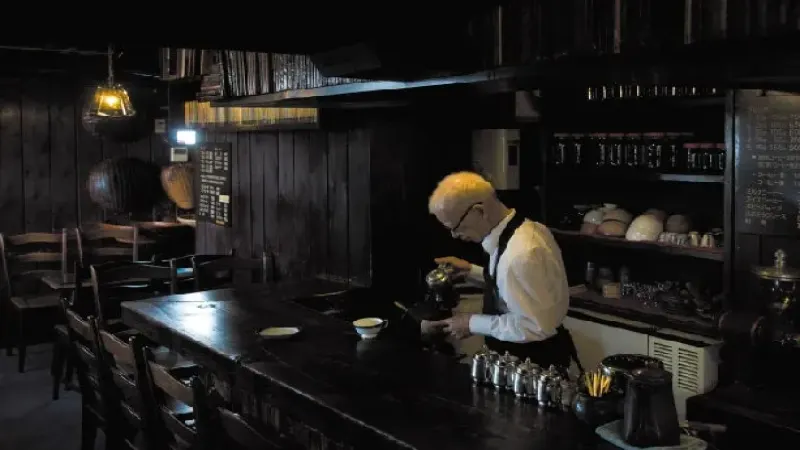
Good beans do not automatically produce good coffee. Daibo Coffee, a legendary Japanese café open since 1975, shows the difference. Owner Mr. Daibo roasts fresh beans himself for about five hours a day in a fully hand-cranked roaster, uses dark roasts, and brews mostly with a flannel filter. Roasting method and brewing skill decide the final coffee quality.
The shop carries few bean varieties and has kept its interior and routine largely unchanged for decades, a restraint that writers, including Haruki Murakami, have long appreciated. The lesson for specialty coffee is that purity and consistency matter more than variety counts. Beans set the ceiling; the roaster and brewer determine how much of that ceiling a cup actually reaches.
Many people directly equate specialty coffee beans with specialty coffee, believing that as long as the beans are good enough, the brewed coffee will inevitably be outstanding. Is that really true? Mr. Daibo, the owner of the legendary Japanese café Daibo Coffee, offers a different answer through more than forty years of unwavering dedication. Starting from the story of Daibo Coffee, this article explores the essential difference between specialty coffee beans and specialty coffee, analyzes the close relationship between roasting methods, brewing techniques, and coffee quality, and reflects on the neglected original intentions and purity in today's coffee culture. If you also love coffee, why not follow in Front Street Coffee's footsteps and together re-understand what truly makes a comfortable cup of good coffee.
Japanese writer Haruki Murakami once left these words in his writing: "Sometimes, what we call life is nothing more than the warmth lingering around a cup of coffee. A cup of coffee, a book, a piece of music—these can help a person rediscover a refined way of living. If life also had a taste, then I hope its taste would be the rich aroma of coffee—familiar and plain, yet able to warm the heart."
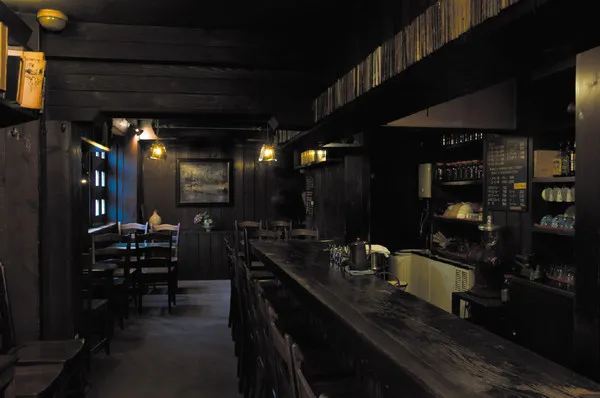
Since opening in 1975, almost everything inside Daibo Coffee has remained unchanged. There are no flashy decorations, no deliberate displays—only the smoke rising when coffee beans are roasted, the rich aroma spreading during brewing, and a shop owner described as "not very enthusiastic"—Mr. Daibo. The reason this shop has become a favorite haunt of writers is not only that it allows people to enjoy a solitary coffee moment, but also that the purity Mr. Daibo himself radiates makes every visit bring new life insights.
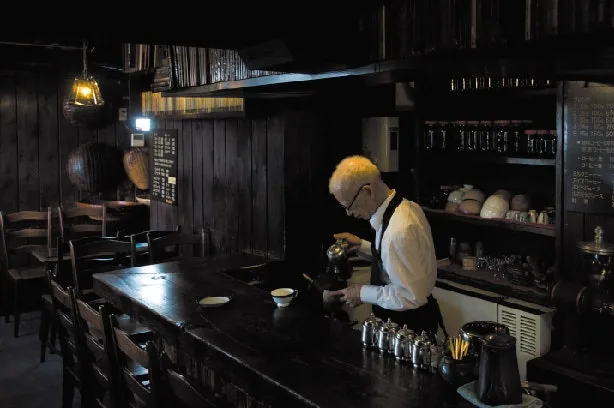
Every day, Mr. Daibo insists on spending five hours roasting the freshest coffee beans in a fully hand-cranked roaster. He says plainly that this is an extremely arduous task, and that he often hovers on the edge of giving up. However, as long as he thinks of the little moments in the shop over the years, and of how every visiting customer will show a satisfied expression after drinking coffee he made with his own hands, Mr. Daibo immediately perks up and keeps going.
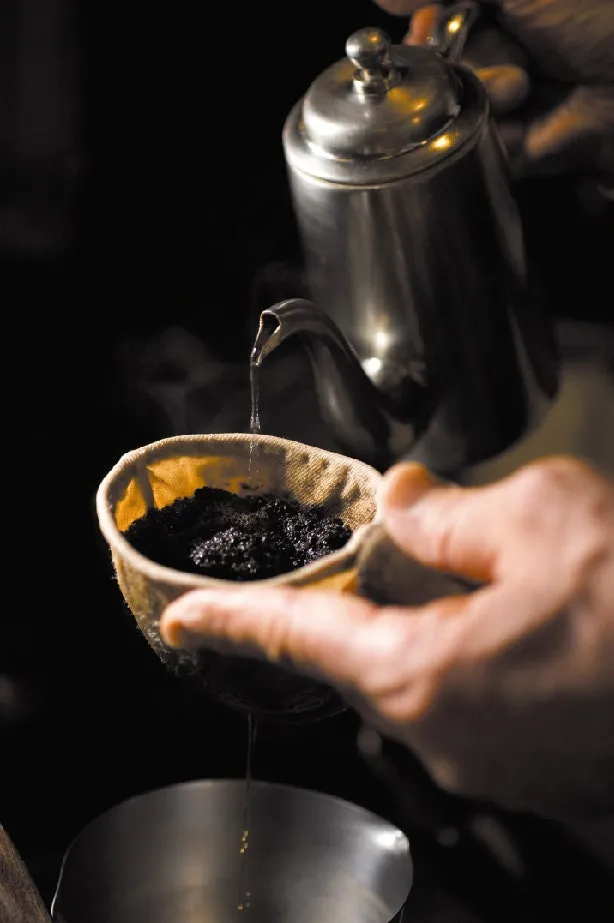
The shop does not carry a wide variety of coffee beans, and all are dark roasted. The brewing method is equally singular, mostly using the uniquely Japanese and rarely seen flannel filter cloth. There are no complicated ideas—only the wish to serve guests a cup of coffee that is mellow and sweet, with a rounded, moderate bitterness. Roasting beans calmly, brewing calmly—these seemingly ordinary actions are in fact one person's unremitting pursuit of the essence of things, and they are also the root of how Daibo Coffee transformed from obscurity into a Japanese legend. "To stay open for a long time, you have to stick to your original intention. Every day, what you think about is not what you can do to make people notice you, but how to keep the café going and how to ensure the quality of the coffee. The customers who come here do not come for anything else, only for a cup of coffee that makes them feel comfortable, so I insist on making coffee that makes everyone feel comfortable."
After reading Mr. Daibo's words, one cannot help but think of today's coffee practitioners. In this era of seeking quick success and instant benefits, many people have long put their original intentions and purity behind them—opening a coffee shop is not for the coffee itself, and drinking coffee is not about whether it tastes good. The focus of a coffee shop has fallen on interior decoration, the focus of brewing coffee has shifted toward technique performance, and the focus of drinking coffee has shifted to flavor descriptions. Whether it is truly professional and whether it truly tastes good has instead become secondary; what matters is showing off one's uniqueness through these external forms. Specialty coffee is discussed eloquently, yet few people can truly present coffee beans in the way that "specialty" should be. If the coffee beans are specialty, is the final cup of coffee necessarily specialty coffee? The answer is clearly no. The components of specialty coffee beans are high-quality coffee beans, while the components of specialty coffee are high-quality coffee beans + a reasonable roasting method + appropriate brewing techniques, ultimately presenting a cup of coffee with balanced flavor that lets people drink it comfortably and pleasurably.
However, there are always people who equate the two. Once specialty coffee beans are equated with specialty coffee, then when coffee quality problems arise, the first thing everyone thinks of is the problem with the coffee beans. This also leads many coffee shops to casually slap on the words "specialty coffee" to attract consumers' attention. But have they ever considered that if they lack enough professionalism to support the words "specialty coffee," it will instead bring great negative effects to the coffee shop? Do not think that making "specialty coffee beans take the blame" solves everything—this concerns customers' trust in and recognition of the coffee shop. Mr. Daibo also once said: "The reason this coffee shop has been able to stay open for so many years is all because of the customers' recognition and trust. Their approval encourages me, and no matter how difficult it gets, I must keep going! Because there are many people who like the coffee I make. My original intention is to provide customers with delicious, comfortable coffee, and the customers' original intention is to come here and drink a cup of coffee that will not become a burden to them."
But nowadays, the mindset of coffee lovers no longer seems so pure either. Just because there is a cup of "specialty coffee" placed in front of them, even if they think it does not taste good, they force themselves to taste some kind of flavor in it... Drinking coffee is no longer for enjoyment, but something they approach with a "burden." It is clearly a very relaxing thing, yet in the end it becomes a task—why bother? Image source: Internet
The above content is compiled by CoffeeHunters, a coffee news website.


