







How to make coffee with a machine when your timed grinder drifts
Time-based quantitative grinders stop after a set duration instead of weighing grounds, so output drifts. On a machine set to run 3.5 seconds for 20 grams, real doses vary by roughly 0.3 to 1.3 grams. Four things drive the error: gaps between beans, how full the hopper is, residual grounds left in the chute, and any change to the grind setting.
Practical advice for anyone learning how to make coffee with a machine is to keep the hopper between four and seven tenths full and to reset the timer whenever the grind setting changes. A digital scale is still worth using even with a quantitative grinder, since it catches the drift that timing alone hides. Front Street Classic Blend is suggested for home setups.
A quantitative grinder may seem to eliminate the need to weigh the grounds, but in actual use, grinding errors still occur from time to time. This article analyzes the root causes of output fluctuations in time-based quantitative grinders from four dimensions: gaps between coffee beans, the amount of beans in the hopper, residual grounds in the chute, and changes in grind setting, and offers practical advice such as keeping the hopper four to seven tenths full. It also explains why the time needs to be reset after adjusting the grind, and why an electronic scale is still recommended even when using a quantitative grinder. At the end, it recommends Front Street Classic Blend for home users, helping beginners easily extract espresso with rich crema.
As the name suggests, a quantitative grinder can preset the amount of coffee grounds for a single grind, thereby eliminating the weighing step, and on the surface it really does make operation more convenient.
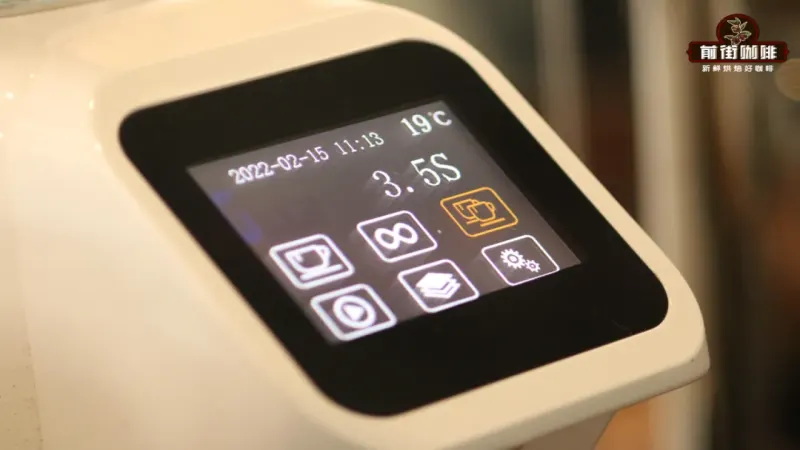
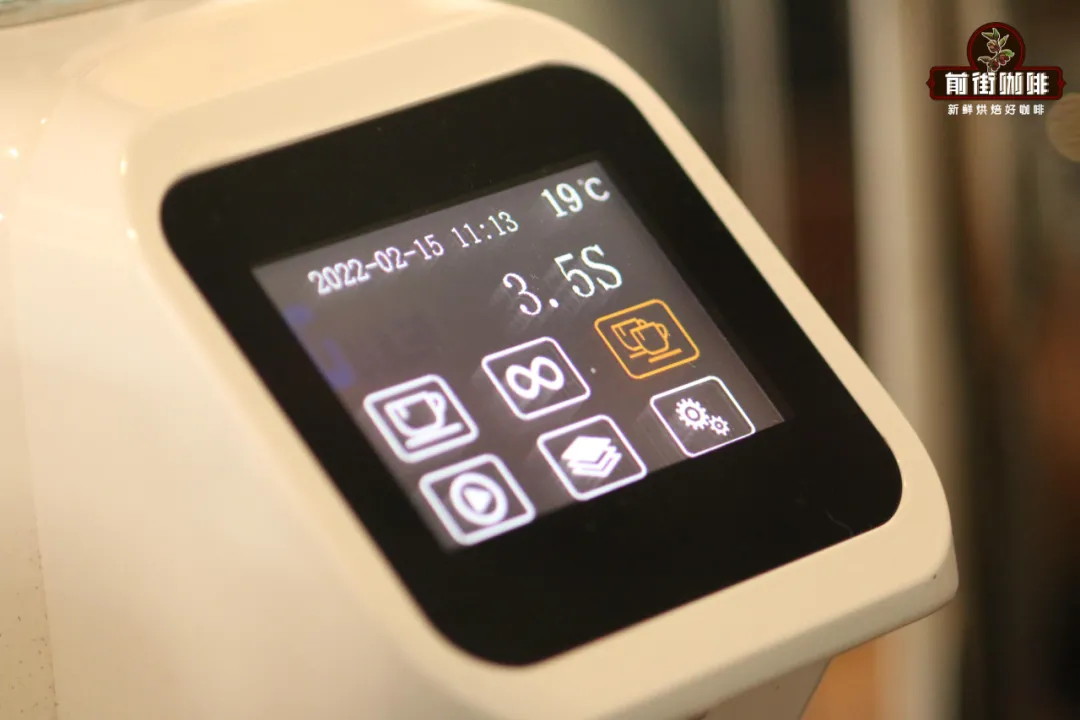
But is that really the case? There are two operating logics for quantitative grinders—quantifying by weight and quantifying by time. Most quantitative grinders on the market today use the timing method. Take the grinder currently used by Front Street Coffee as an example: it can be set to grind for a certain duration and then stop automatically. Suppose grinding 20 grams of grounds takes 3.5 seconds; then you set the time to 3.5 seconds, and from then on, every quantitative grind will run for 3.5 seconds.
At first glance, there seems to be no problem. However, in actual operation, Front Street Coffee found that grinding errors were as small as 0.3 grams and as large as 1.3 grams. Behind this are several details worth noting.
Detail one: gaps between coffee beans
The coffee beans in the hopper may look packed full, but in reality the gaps between the beans are not small, and this involves the principle of packing. If uniform spheres are arranged at equal distances, the gaps between them are even. But coffee beans are irregular in shape and uneven in size, so the gaps between beans vary, which during timed grinding brings slight deviations (about plus or minus 0.3 grams).
Detail two: the amount of beans remaining in the hopper
How many beans are left in the hopper is an easily overlooked angle; usually people only think of refilling when the hopper is almost empty. Front Street Coffee once conducted a comparison experiment, performing timed grinding under two states—a full hopper and only one-fifth of a hopper remaining—while keeping all other parameters unchanged. If a full hopper producing 20 grams in 3.5 seconds is used as the reference, then at one-fifth capacity, 3.5 seconds can only produce 18.7 grams, a difference of 1.3 grams. So in daily high-frequency output scenarios, blindly trusting the quantitative function may very likely lead to less and less powder as the number of grinds increases. Therefore, even though Front Street Coffee uses a quantitative grinder, it still pairs it with an electronic scale to confirm whether the powder amount meets the standard.
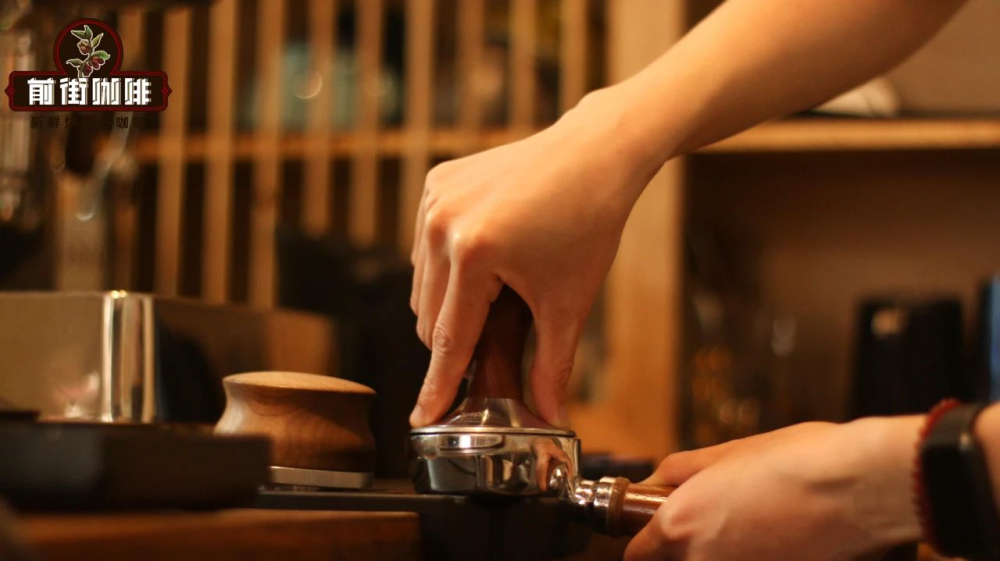
The reason is that when the hopper is full, the coffee beans above create gravitational pressure, pushing the beans below into the burrs, while as the amount of beans gradually decreases, this pressure also declines. When it is nearly empty, you can even see the "bean jumping" phenomenon (coffee beans being popped up).
So Front Street Coffee recommends maintaining the amount of beans in the hopper at four to seven tenths full (do not wait until the hopper is completely empty before refilling); this range is relatively more stable.
Detail three: residual powder in the chute
If you find that the quantitative grinder sometimes produces more powder and sometimes less, then it is very likely that powder has accumulated in the chute. If the chute can be removed, cleaning it regularly can effectively reduce the frequency of this situation.
Detail four: the grind setting has been adjusted
Changing the grind setting will also affect the amount of timed output. If the grind setting is adjusted finer, the amount produced in the same time will decrease; if adjusted coarser, the amount produced in the same time will increase. Therefore, after each grind adjustment, the grinding time needs to be reset.
Ultimately, if you want stable output, even if you use a quantitative grinder, it is still more reliable to pair it with an electronic scale.
For friends using a coffee machine at home, you can try Front Street Classic Blend. This medium-dark roast espresso recipe is composed of coffee beans from three origins, with design inspiration from the early popular "Mamba" combination, namely Mandheling plus Brazil. In order to enhance aroma and crema performance, a small portion of Robusta is also added to Front Street Classic Blend, further raising the flavor intensity, so that beginners at home can also easily make espresso with golden crema.
The above content is compiled by CoffeeHunters, a coffee news website.


