







Why Does My Coffee Look Oily on the Surface?
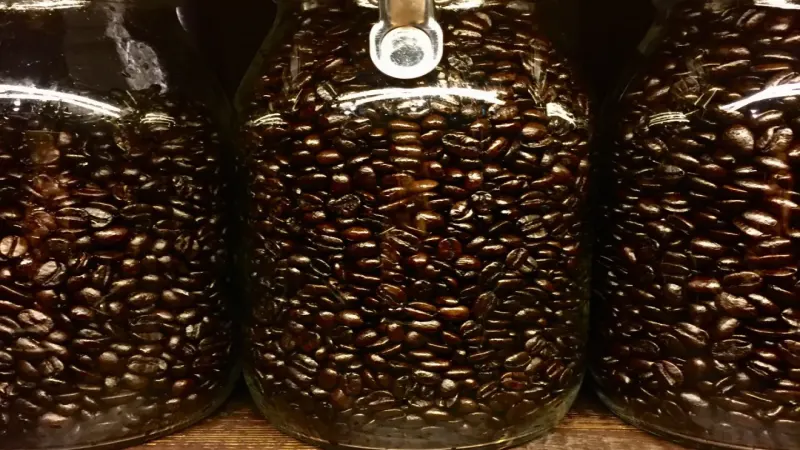
Oily coffee beans are usually a sign of roast level, not spoilage. Dark roasts release more carbon dioxide after roasting, and oil travels to the surface along with that gas, so the beans look glossy within one or two days. Light roasts stay dry because less gas builds up inside the bean during a shorter roast.
Processing adds another variable. Honey-processed beans and anaerobic lots can look visually misleading, so an oily sheen alone does not prove freshness or staleness. Coffees dropped near rolling second crack, such as classic Italian or Japanese dark roasts, show the strongest oil. Because modern roasting rarely goes that dark, shiny beans are less common today.
Many coffee enthusiasts notice that when buying or storing coffee beans, some beans have an oily sheen on their surface, while others remain dry. Is this oil secretion normal? Does it mean the coffee beans are no longer fresh? In fact, oil secretion in coffee beans is closely related to the roast level—dark roast beans tend to release oils more easily, while light roast beans rarely show this phenomenon. However, oil secretion is not an absolute indicator of freshness; the caramelized sugars in honey-processed beans and the diverse flavors of anaerobic processing can both lead to visual misjudgments. Front Street Coffee will guide you through the principles of roasting and processing methods to fully understand the truth about coffee bean oil secretion, and share how to brew to avoid bitterness, so you can enjoy every cup of coffee with greater ease.
Today, Front Street Coffee will explain why some coffee beans have oily surfaces while others do not. We often find that oily coffee beans tend to be darker in color, while dry-surfaced coffee beans tend to be lighter (light brown). So the main reason for coffee bean oil secretion is the roast level of the coffee beans.
Coffee beans produce large amounts of carbon dioxide during roasting. Generally, the darker the roast, the more carbon dioxide is produced within the bean. After roasting, a large portion of the abundant carbon dioxide inside the coffee beans is released in significant quantities within 3-4 days, and oils come to the surface along with the release of carbon dioxide. The darker the roast, the more oil is secreted.
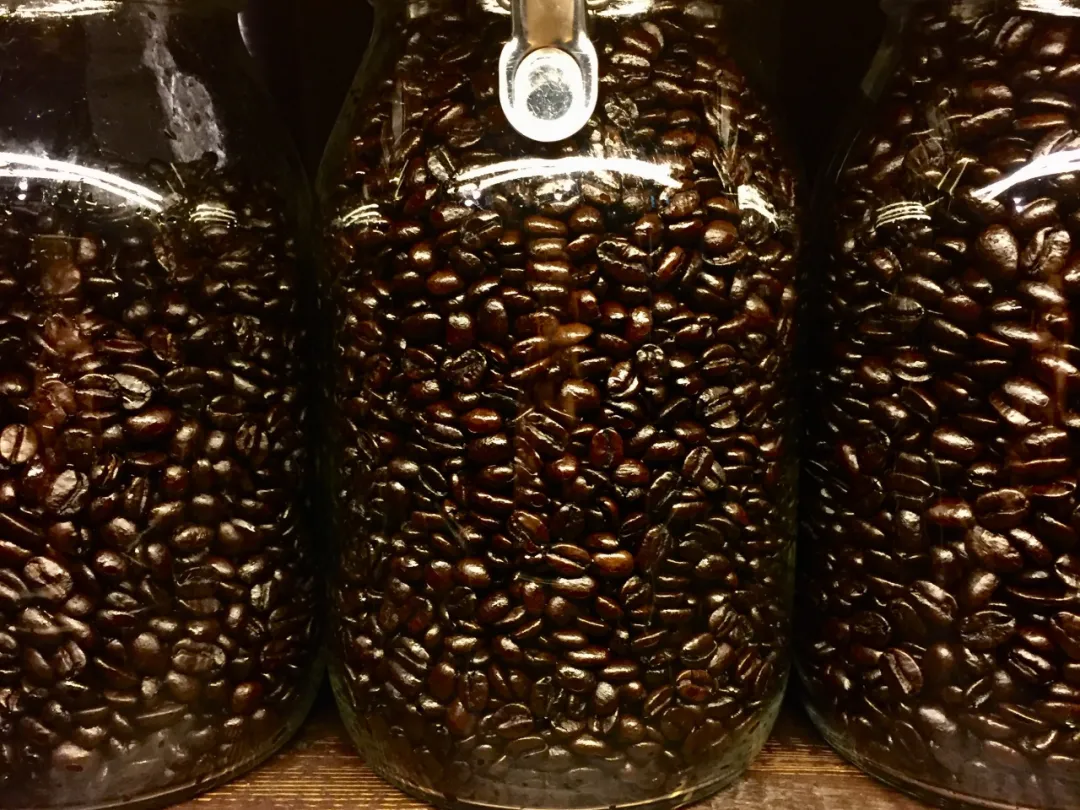
In the past, when the drop time was based on second crack as the marker, coffee beans almost always appeared as dark black "Italian roast." When freshly dropped, the coffee beans did not have obvious oil secretion; after sitting for 1-2 days, oils would rapidly seep out, making the entire bean shiny with oil. Today's "Japanese dark roast" basically also presents this state. Nowadays, coffee roasting generally no longer goes that dark. So it's now rare to see shiny, oil-coated coffee beans (what you can still encounter now would only be coffee beans from a certain well-known coffee chain brand, Italian brand coffee beans, or Japanese-roasted coffee beans).
Dropped at rolling second crack, no oil on the surface when freshly dropped For coffee beans roasted by Front Street Coffee, only Indonesian Mandheling, Jamaican Blue Mountain, and espresso blend coffee beans are roasted relatively dark and will show slight oil secretion. Other light roast coffee beans basically won't show this oil secretion phenomenon.
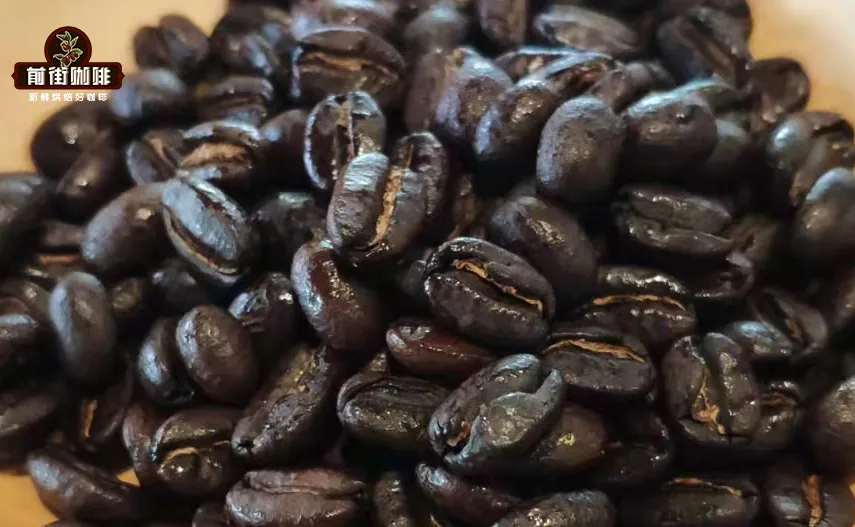
Some friends say that Costa Rican coffee beans also show slight oil secretion. Actually, this is a phenomenon of honey-processed coffee beans. In honey processing, because the mucilage layer is not removed, the mucilage is thicker along the center line and at both ends of the coffee bean, making it easy for sugar residue to remain. Through the caramelization reaction during roasting, those sugar residues caramelize, causing the center line and both ends to appear darker than the body of the bean, sometimes showing a reflective sheen.
Is it true that oily coffee beans mean they're not fresh? This phenomenon does exist, but it's not absolute. Some coffee beans secrete oils during degassing, giving the coffee beans a "rancid" taste and causing them to lose their original flavor. However, when it comes to defining what is a light roast, what is a medium roast, and what is a medium-light roast, it has always been difficult to explain clearly to consumers. Coffee bean processing methods are also becoming increasingly diverse, and the endless stream of new anaerobic processing methods means we can no longer identify them in the old ways. For example, in Flower Moon Night coffee beans, the flavor profile presents sweet strawberry jam, rose, and liqueur chocolate notes—what roast level would you define that as? After 4-7 days of resting, this coffee bean will secrete a small amount of oil along the center line of the bean. But there is no "rancid" taste—the secreted oil is a normal phenomenon. So judging whether coffee beans are stale by oil secretion easily leads to misjudgment. It's better to use the old methods: check whether the bloom expands during brewing, and then taste whether the flavor has gone off—that's more reliable.
The above content is compiled by CoffeeHunters, a coffee news website.


