







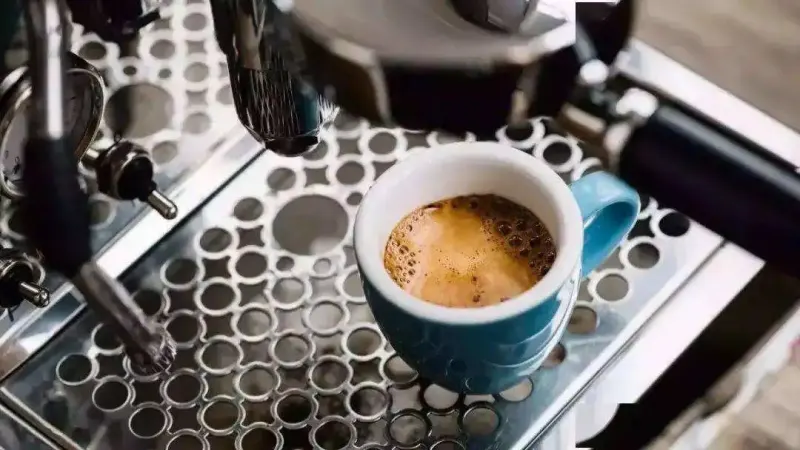
How Did the Espresso Coffee Machine Shape Italian Coffee Culture?
Italy has pursued intangible cultural heritage status for espresso since 2016, and the bid has now entered UNESCO's official review process. The drink itself grew out of industrial-era Italy: in 1884 a steam-powered coffee-making machine was patented in Turin, built for speed rather than flavor. Spring piston and semi-automatic machines followed through the 20th century.
Late 19th-century coffee drinking in Italy was largely a male activity, and the beans used then were mainly robusta rather than specialty grade. Traditional brewing was too slow for workers needing caffeine through a long shift, so steam pressure was used to push hot water through the grounds quickly. The early results tasted scorched and bitter, but the extraction speed set the template for the modern coffee machine.
A small cup of espresso carries with it Italy's profound cultural heritage and the marks of transformation from the industrial age. From the birth of the steam-powered coffee machine at the end of the 19th century, to the iterative upgrades of spring piston and semi-automatic machines in the 20th century, and on to today's globally popular café culture, espresso has undergone more than a century of development. At the same time, Italy has been working since 2016 to seek intangible cultural heritage status for espresso, and now it has finally entered the official review process of UNESCO. This article will take you through the history of the Italian espresso machine and the latest progress in its heritage application.
In Italians' daily lives, espresso occupies an irreplaceable position. Behind every cup of espresso are intertwined regional characteristics, humanistic traditions, and the historical threads of the industrial age driving rapid social development.
For most people, espresso may simply be a strong-tasting drink that gives them a boost, or a base ingredient used to make various specialty coffee drinks. However, in the eyes of Italians, it is far more than that—it is a daily ritual woven into life, a cultural identity, and an important symbol of Italy's national identity, making the country stand out on the world stage. Espresso was not originally invented in pursuit of crema or flavor, but to adapt to the fast-paced rhythm of society at the time. In that era, everything demanded speed, efficiency, and mechanization, and coffee was no exception.
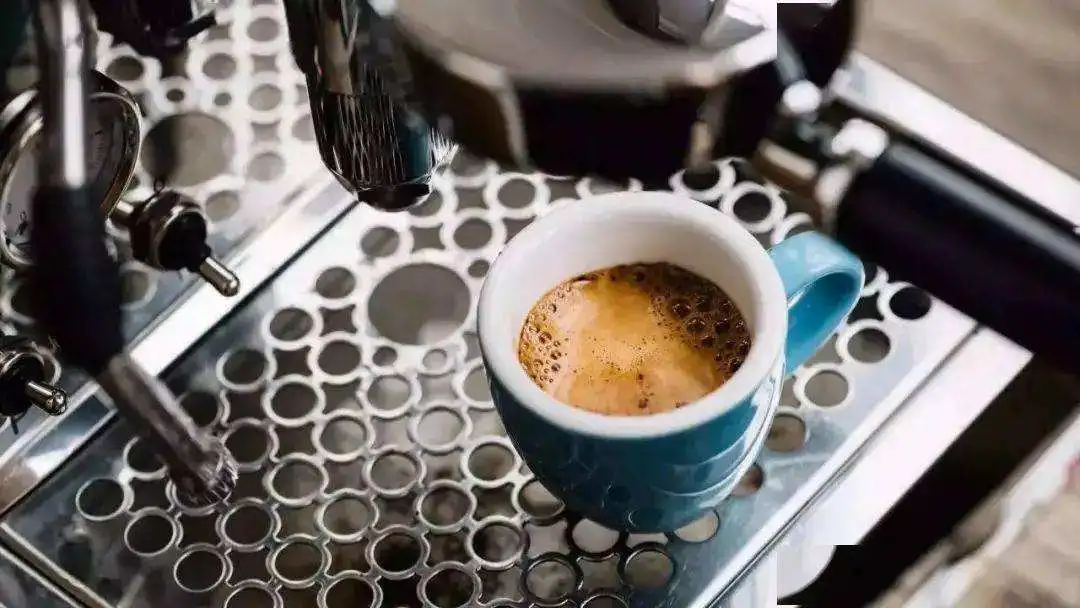
Traditional coffee brewing methods were far too inefficient. In late 19th-century Italy, drinking coffee was basically an exclusively male activity, as men needed the caffeine to sustain an hour of efficient work (the coffee beans used at the time were mainly Robusta, not specialty grade). However, the coffee brewing process was too cumbersome, and people in a hurry turned their attention to the steam engine. With the pressure generated by the steam engine, hot water could quickly pass through the coffee grounds and extract a concentrated coffee liquid. Thus, in 1884, someone in Turin successfully registered a patent for a steam-powered coffee-making machine. The machine was indeed fast, but the taste was scorched, bitter, and hard to swallow. Still, because it was brewed quickly, the coffee made by this machine was called "espresso" (meaning "fast" in Italian).
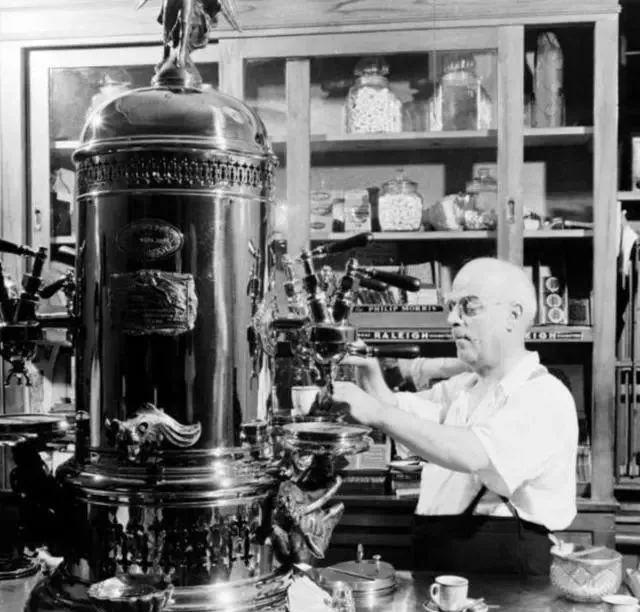
Although the first generation of "fast coffee" did not taste good, once people mastered the method of quickly extracting coffee using steam pressure, it was as if a new world had opened up, and they continuously improved and upgraded this steam-powered coffee machine. At first, Milanese designer Luigi Bezzera purchased the patent for the steam-powered coffee machine, added a handle and portafilter to the original steam boiler coffee machine, and studied and adjusted the coarseness of the coffee grind so that the density of the coffee grounds formed under external pressure was enough to resist the rapid penetration of high-pressure water, thereby guiding the high-pressure water flow more reasonably so that it passed evenly through the entire coffee bed and finally "squeezed out" a balanced cup of coffee. In addition, he added a cooling channel inside the machine to prevent excessively high water temperatures from causing a burnt, bitter taste in the coffee, and applied for a patent in 1901. What truly made espresso blossom throughout Italy was La Pavoni, the company that acquired Bezzera's patent. After buying the patent, La Pavoni added a pressure relief valve, solving the problem of temperature and pressure inside the machine fluctuating with the intensity of the heating flame, and also installed a steam wand.
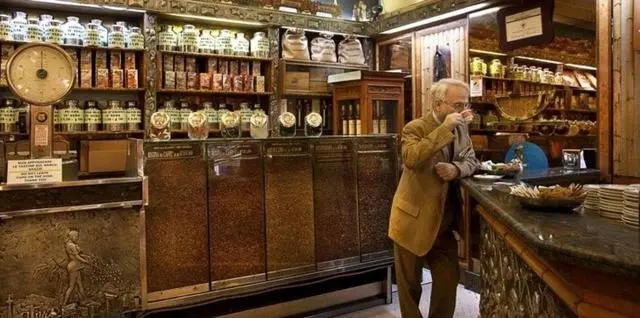
The upgraded coffee machine was named Ideale and was officially launched in 1906. With the introduction of the Ideale, more and more Italians fell in love with the coffee quickly extracted by this machine. The word "espresso" was also officially included in dictionaries in 1920, defined as "coffee made by forcing steam or water through ground coffee." The person who brought the espresso machine to the world and helped more people recognize that this Italian pressure-based coffee machine could quickly make espresso was Pier Arduino from Turin. He sold this uniquely Italian coffee machine to France and gradually exported it around the world, while also producing promotional posters to help more people understand and recognize Italian espresso.
In 1942, Arduino felt that the espresso of the time was not yet rich enough, so he added a manual spring piston to the machine, raising the extraction pressure from only 1.5-2 bar to 8-10 bar through manual pressure. At the same time, coffee grinding also placed greater emphasis on fineness and uniformity, making the coffee "squeezed out" by the machine more concentrated. The espresso we know today began to take shape during this period. In 1961, Faema changed the manual spring piston to automated operation, ensuring that every cup of espresso extracted maintained consistent quality. This machine, model E61, became the first semi-automatic espresso machine in history. With advantages such as ease of operation, affordability, and compact size, the Faema E61 quickly spread throughout Italy. Italians gathered in cafés to enjoy affordable yet distinctive coffee together, forming Italy's unique social culture.
In 1970, Ulka launched a semi-automatic coffee machine suitable for home use, allowing every household to make espresso in the kitchen. In 1987, Starbucks purchased commercial espresso machines in large quantities, bringing this drink that represents Italy into the daily lives of people around the world, and as a result espresso machines also came to be widely used in cafés everywhere. Today, espresso is not only familiar to Italians, nor can it be tasted only in Italy. Espresso has opened up a coffee era and has also helped more people learn about Italy's cultural history. Even during special periods such as the pandemic, people around the world still did not forget to drink a cup of espresso, which is enough to show that it has become an indispensable ritual in people's lives.
As early as March 2016, Italy had already begun working to have espresso recognized as intangible cultural heritage. Today, it has finally been included on UNESCO's candidate list for World Intangible Cultural Heritage and has officially entered the review process. Centinaio said he was very honored to see Italian espresso included on UNESCO's list of candidates for intangible cultural heritage of humanity, and revealed that Italy's Ministry of Agricultural, Food and Forestry Policies had officially submitted the nomination documents to UNESCO headquarters.
Image source: Internet For professional coffee knowledge exchange and more coffee bean information, please follow Coffee Workshop (WeChat public account: cafe_style) For more specialty coffee beans, please add the private WeChat of Front Street Coffee (FrontStreet Coffee), WeChat ID: kaixinguoguo0925
The above content is compiled by CoffeeHunters, a coffee news website.


