








How Do Coffee Brewing Variables Decide Who Stays Behind the Bar?
Grind size, water temperature, and coffee-to-water ratio are the variables that decide how pour-over coffee tastes, and machines hold a clear edge over people at repeating them exactly. The same settings can produce a hundred cups with consistent flavor, while circular pouring by hand varies from one person to the next. That stability is why some production positions may be mechanized, though baristas who understand the brewing logic are expected to move behind the scenes.
The reason comes down to control. An advanced Golden Cup extraction assessment asks for three cups with the same extraction yield but different strengths, each inside a set strength range, which requires math, science, and chemistry rather than feel. A repeatable coffee formula of grind, temperature, ratio, and pouring method is what a machine follows well. Reading and adjusting that formula is the work left for people.
Pour-over coffee brewing methods are wildly varied, but the core variables that truly determine flavor are just grind size, water temperature, and coffee-to-water ratio. Yet these seemingly simple parameters and circular pouring make it hard for many people to consistently reproduce a good cup of coffee. Machines are naturally superior to humans in stability—does this mean baristas will eventually lose their jobs? Front Street has a bold prediction: mechanized production positions may be replaced, but baristas who truly understand brewing logic will move behind the scenes, responsible for formulating and adjusting plans. This article starts from standard brewing methods and explores the relationship between technique, understanding, and the future of baristas.
Front Street has previously introduced various brewing methods and offered some preliminary analysis. These include both standardized, scientific procedures and problem-solving approaches that adapt on the fly. But no matter how simple or complex the technique appears, the ultimate goal is always the same—to brew coffee that tastes good.
Setting techniques aside, the variables that can affect flavor during brewing are really just a few: grind size, water temperature, and coffee-to-water ratio. Yet it is precisely these few that leave many enthusiasts stuck at the threshold. Add to that the circular pouring everyone does, which looks similar but actually varies considerably—"a few extra circles," "pouring a bit too fast"—in reality, there is no unified standard for circular pouring. Most people operate purely by feel, and humans are precisely the biggest uncertainty factor. This is exactly where machines' advantage in stability becomes apparent. Theoretically, as long as grind, water temperature, ratio, and pouring method are set correctly, producing one hundred consecutive cups of coffee with consistent flavor is no difficult task.
In advanced Golden Cup extraction courses, there is an assessment that requires brewing to a specified extraction yield and strength—that is, brewing three cups with the same extraction yield but different strengths (all three also within specified strength ranges). Brewing a cup of coffee you're satisfied with isn't hard, and the knowledge required needn't be too deep; but to pass that exam, you must understand brewing variables and be able to control them effectively, which involves knowledge of math, science, and chemistry.
Many people have imagined what the future world will look like—cyberpunk, steampunk, wasteland tech, spiritual ascension... Artificial intelligence replacing human labor, and even pour-over coffee has already had machine prototypes exhibited. Front Street hereby makes an irresponsible bold prediction: when entry-level wages generally exceed machine costs, frontline baristas engaged in mechanized production will face layoffs. But the profession of barista will not die out. Those who remain will be the ones with deep understanding of coffee and thorough knowledge of all brewing parameters. They will retreat behind the scenes, responsible for formulating and adjusting brewing plans, while the actual operation is left to machines. (Don't think this is far-fetched—Jingwei filling the sea, Chang'e flying to the moon—aren't these myths now realized?)
If you agree with Front Street's judgment, you'll understand: practicing pour-over technique and being as stable as a machine is certainly important, but learning to think and truly understand is even more crucial.
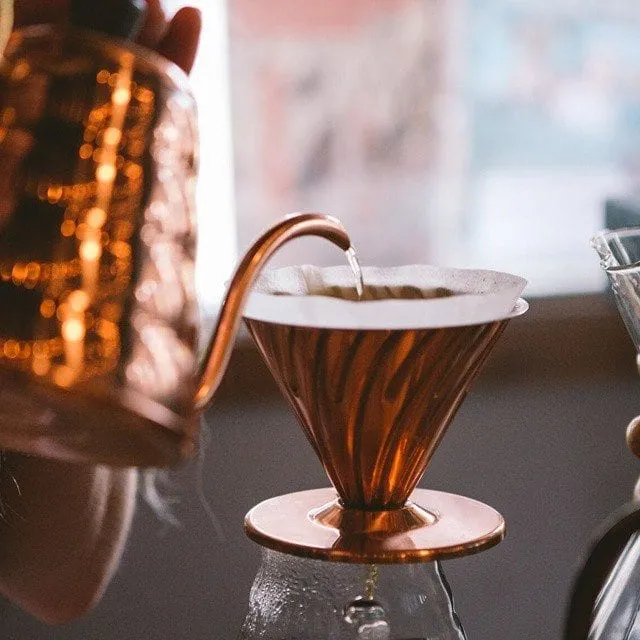
Technique and water control can be acquired through repeated practice—they were never something a barista should brag about. Trust Front Street: spend twenty minutes a day holding the kettle and practicing water control, and within a month you'll basically be able to pour freely. But "understanding" is something you need to learn from the cradle to the grave. Think back to brewing theory from ten years ago, five years ago, three years ago—it has been constantly updated and iterated. Understanding what "one extra circle" or "pouring too fast" does to coffee is far more difficult and far more important than learning to operate a pour-over.
Of course, for friends who love pour-over coffee, it's impossible for machines to completely replace it. The charm of pour-over coffee lies in the process itself. Perhaps one day, pour-over coffee will evolve into a cultural phenomenon, just like today's "tea ceremony."
The above content is compiled by CoffeeHunters, a coffee news website.


