








How does water temperature change coffee extraction?
Water temperature directly controls how fast compounds dissolve from the grounds. A cupping comparison at 80°C, 94°C, and 100°C over a four-minute immersion showed each group cooling steadily, with the 100°C group falling from 91°C to 79.4°C and the 80°C group from 75.3°C to 65.2°C.
Because coffee particles hold water-insoluble material alongside good and bad flavor compounds, boiling water extracts desirable and undesirable notes alike. Competition brewers use 95-96°C and even alternate temperatures, but a narrower range is advised for pour-over, enough to extract sweetness and acidity without pulling out harsh, bitter flavors.
What water temperature is actually suitable for pour-over coffee? Does higher temperature mean better extraction? Starting from everyday dissolution phenomena, this article analyzes how water temperature affects coffee extraction efficiency, and through cupping immersion experiments and pour-over comparison data, demonstrates the actual flavor performance of coffee at different temperatures. The article also explores competition brewers' high-temperature brewing strategies and why Front Street Coffee recommends a narrower brewing temperature range, helping enthusiasts understand the key role of water temperature in brewing and avoid common misconceptions.
"No way, Baidu says..."
"Uh, have you heard of the WBrC? Many competitors in the competition brew coffee with water at 95 or 96°C. The 2018 champion even alternated between 80°C and 95°C, and last year's champion also alternated between 93°C and 88°C."

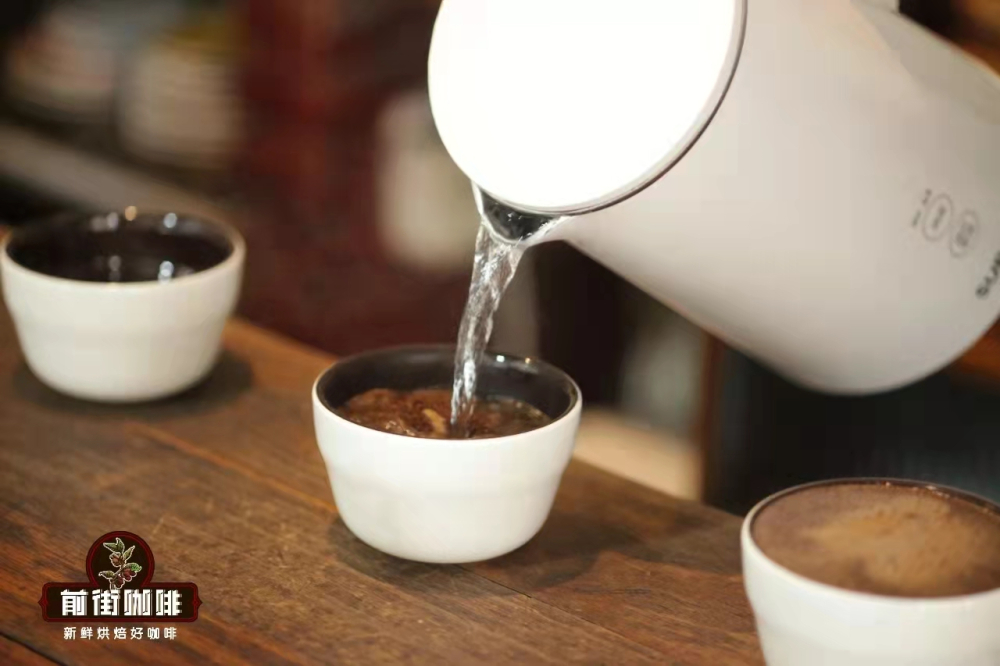
Understanding water temperature is very important. Take a common example from daily life: instant powder. If you brew it with freshly boiled water, most of it dissolves; if you brew it with warm water, it can still dissolve partially, but you need the external force of stirring with a spoon to fully dissolve it; if you brew it with cold water, even stirring with a spoon may not fully dissolve it. This shows that water temperature affects the dissolution rate (or extraction efficiency). If it's a refined substance like instant powder (or instant coffee), then of course it's best to dissolve it all as quickly as possible, so using 100°C water to brew it is no problem. But coffee beans contain water-insoluble substances, good-flavor coffee substances, and bad-flavor coffee substances. So to get a cup of good coffee, reasonable adjustments must be made to the water temperature, trying to avoid extracting undesirable flavors. If we look only at the effect of water temperature on coffee extraction efficiency, using the cupping immersion format directly, comparing water temperatures of 80°C, 94°C, and 100°C (immersion time 4 minutes). 100°C group temperature change: from 30 seconds to 4 minutes, the temperature decreases from 91°C to 79.4°C; 94°C group temperature change: from 30 seconds to 4 minutes, the temperature decreases from 87°C to 75.3°C; 80°C group temperature change: from 30 seconds to 4 minutes, the temperature decreases from 75.3°C to 65.2°C.
During tasting, the 100°C group showed very bright fruit acidity at the 5th minute, a solid mouthfeel, and very rich floral and fruity aromas. It was only at the 20th minute that unpleasant bitter and miscellaneous flavors appeared. The 94°C group performed similarly to the 100°C group, with slightly lacking flavor at the 5th minute, showing a solid mouthfeel at the 6th minute, and the fruity sweet-sour sensation was also much more subdued. Slight miscellaneous sensations appeared only at the 30th minute. The 80°C group was very light from the 5th to 9th minute, with slight fruity sweetness and a thin mouthfeel. At the 10th minute, a smooth, rich fruity sweetness appeared, with a slight sugarcane note. After 30 minutes, there were no obvious miscellaneous flavors.

From this immersion extraction experiment, with grind size fixed and temperature as the only variable, the higher the water temperature, the richer the coffee's aromatic substances, while at lower water temperatures, the coffee's expression is more subdued. But unlike pour-over, cupping immersion extraction involves pouring all the water in at once, with a large amount of water exposed to the air, causing the actual extraction temperature to be greatly reduced. Another point is that in immersion extraction, the coffee grounds are stationary and release slowly, which is also why immersion extraction takes longer than filtration extraction. Next, let's compare the water temperature changes in pour-over. Using Front Street's previous pour-over temperature comparison experiment data, where 90°C and 93°C were used for brewing respectively, and a thermometer was used to measure the temperature changes in the coffee bed. When brewing with 90°C water, the actual water temperature participating in extraction is between 84.5-86°C. When brewing with 93°C water, the actual water temperature participating in extraction is between 85-88°C.
From the comparison of the two groups, it can be seen that the initial brewing temperature differs by 3°C, while the actual extraction temperature difference is less than 3°C. Although the gap is narrowed, it can still be clearly distinguished through tasting, and this is based on the premise of consistent grind size and the same technique. Pour-over filtration involves continuous pouring, so compared to immersion, the temperature is maintained better. In addition, the water stream during pouring acts like a stirring spoon, continuously agitating the coffee bed, so this additional variable affects extraction efficiency. Looking back at why Front Street's recommended brewing temperature range is so narrow: because many of Front Street's audience are just beginning to learn pour-over coffee and don't have much understanding of how parameters affect each other. Using safer parameters can increase the probability of extracting a conventionally good-tasting cup of coffee (in plain terms, fewer failures).
As for competition brewers' parameters, for example, with a reasonable brewing plan, a water temperature of 96°C can extract richer sweet aromas. But you need to distinguish clearly whether your beans are as excellent as the competitors' and can withstand high-temperature extraction, and whether your grind is consistent with the competitors' (grind size is the most difficult parameter). Understanding water temperature is indispensable for brewing coffee. If the coffee doesn't taste good, it's not necessarily your technique—it could be a water temperature issue, a grind issue, or even more likely...
The above content is compiled by CoffeeHunters, a coffee news website.


