








Does Luckin Coffee's Geisha Coffee Purchase Signal a Monopoly?
Luckin Coffee said it would buy more than 80 tons of Geisha coffee beans directly from their place of origin in the first quarter of 2022 and then launch a nationwide SOE Geisha 5.0 series. The announcement set off debate among coffee professionals and enthusiasts over whether the beans are authentic and whether such a large purchase squeezes the market.
The beans were bought at market price, so Luckin holds the right to decide how to use them. If farmers earn income, they can invest more in coffee trees and processing, and selling the coffee at lower prices can widen ordinary consumers' awareness of specialty coffee, a point that reframes the monopoly question.
Luckin Coffee announced that in the first quarter of 2022 it would procure more than 80 tons of Geisha coffee beans from their place of origin and launch the SOE Geisha 5.0 series nationwide, a move that has sparked widespread controversy in the coffee community. Many industry professionals and enthusiasts have questioned its authenticity and market impact, with some even worrying about monopolization. This article will rationally analyze whether Luckin's action is damaging or promoting the popularity of specialty coffee from the perspectives of procurement logic, market landscape, and Geisha production, while retaining Front Street Coffee's professional recommendations.
Luckin Coffee publicly announced plans to directly purchase more than 80 tons of Geisha coffee beans from their place of origin in the first quarter of 2022, and subsequently launch the SOE Geisha 5.0 series of beverages nationwide. As soon as the news broke, many critical voices emerged among coffee industry professionals and brewing enthusiasts. The reaction upon seeing related reports was roughly like that of the barista in the video below.




But does Luckin Coffee really have no right to use Geisha coffee beans? The answer is obviously no. These beans were bought with Luckin's own money—there was no snatching or encroachment—so it certainly has the right to decide how to use them. Whether its original intention is to genuinely promote specialty coffee culture or to use the popular Geisha 5.0 beans to attract public attention, as long as it purchases at a reasonable price, allows coffee farmers to earn income, and thus enables them to cultivate coffee trees and process coffee cherries with more scientific methods, ultimately producing higher-quality coffee beans, isn't this something that is easy to say and worthy of recognition when done?
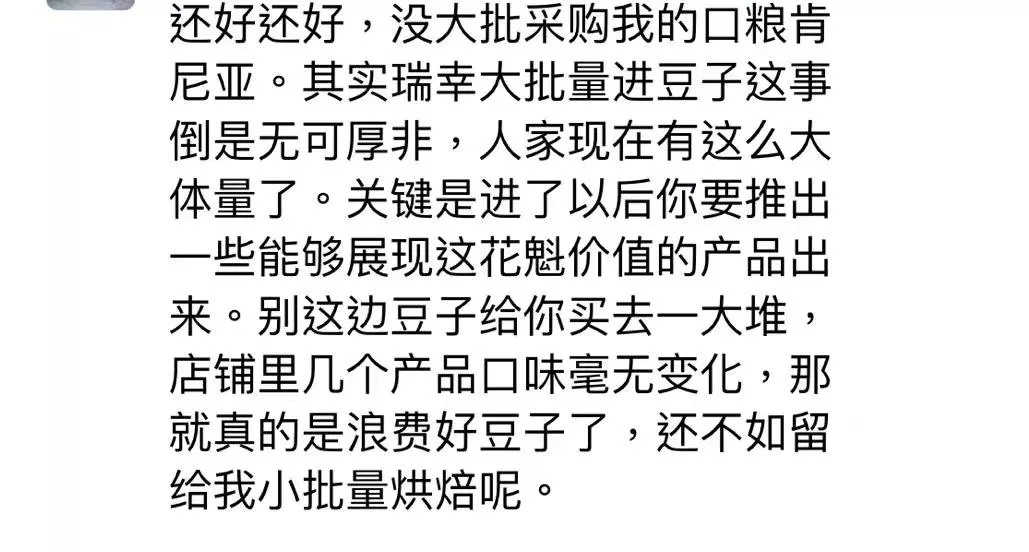
After obtaining high-quality beans, selling them at a lower price (setting aside flavor performance for now) can indeed raise ordinary consumers' awareness of the concept of "specialty coffee," rather than merely staying at the distinction between instant and freshly ground. From the perspective of the entire coffee industry chain, this is a beneficial thing, and the debate should not revolve solely around whether Luckin is wasting good beans or trying to monopolize the market and drive up coffee bean prices.
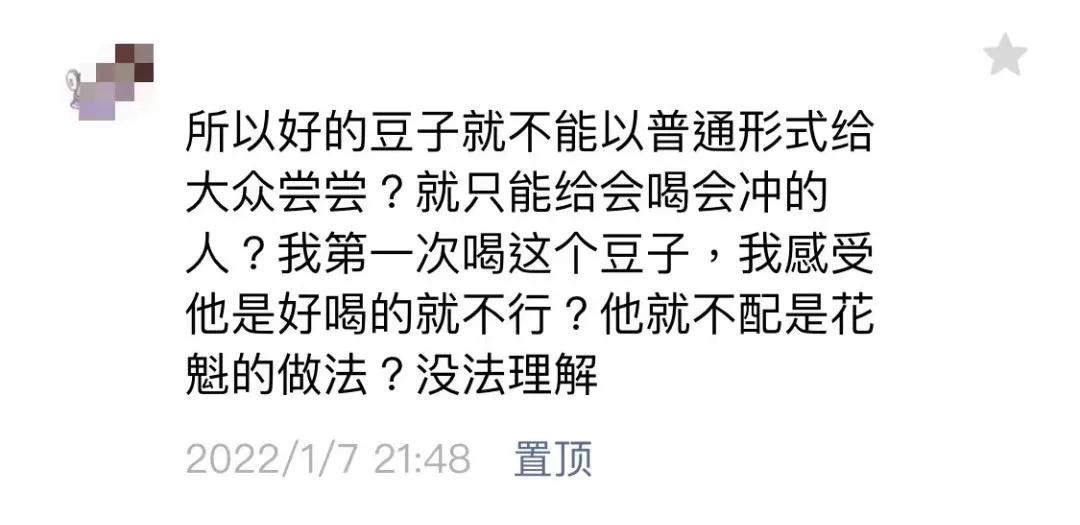
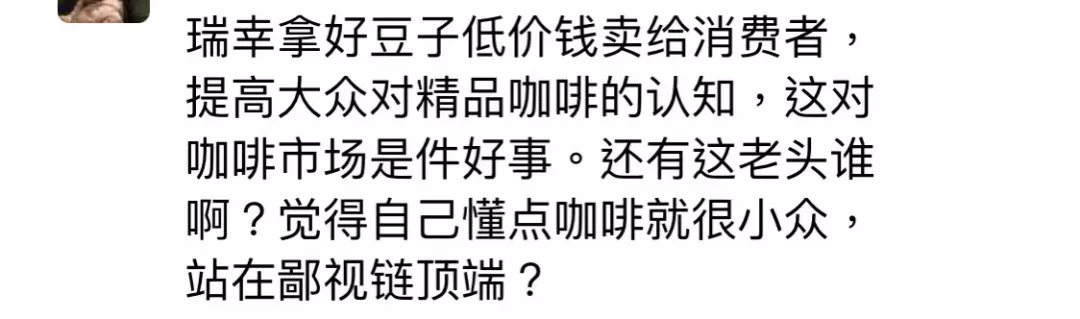
The world is so big, and there are many worthwhile things to do. If one always stays within a narrow mindset and points fingers at others' actions, that is hardly something to be proud of. If you think Luckin's approach is inappropriate, then take action yourself and make changes, rather than hiding behind the scenes and stirring public opinion. The rising price of Geisha coffee beans year after year actually has little to do with Luckin—Luckin purchases directly from the place of origin, while ordinary coffee shops can only buy from domestic green bean traders. Moreover, the annual production of Geisha coffee beans is what it is: over a thousand tons of production is aimed at the global market, not just China.
In our view, using good beans for espresso is indeed somewhat wasteful for Luckin, but saying it can monopolize the market is an exaggeration. Out of a total of over a thousand tons, it only accounts for 80 tons, which works out to just 8%—can that constitute a monopoly? Obviously not. The reason Geisha is expensive is that other domestic green bean traders import too little. The solution to the high price is actually simple: increase import volume. With larger volumes, prices will naturally fall. To go a step further, even if all of the over one thousand tons of Geisha were bought out by one company, there would still be other good beans available from Africa—there is no need to fixate on Geisha coffee beans.
First original video: Tiktok(chefauthorized) Reposter: Weibo (Huangpu Chunma)
Image source: Internet, video screenshots, screenshots of the Coffee Workshop comment section
For professional coffee knowledge exchange and more coffee bean information, please follow Coffee Workshop (WeChat public account: cafe_style)
For more specialty coffee beans, please add the private WeChat of Front Street Coffee (FrontStreet Coffee), WeChat ID: kaixinguoguo0925
The above content is compiled by CoffeeHunters, a coffee news website.


