







How does authentic Blue Mountain coffee differ from cappuccino?
Authentic Jamaican coffee from the Blue Mountains must be grown above 1,000 meters, in an area covering only about 6,000 hectares. Blue Mountain itself is split into No. 1, No. 2, No. 3, and peaberry, with No. 1 the largest and most plump. The Jamaica Coffee Industry Board set these standards after it was established in 1950.
High prices trace back partly to history: Japanese interests once held 85% of the share, leaving only 15% for the rest of the world, according to 2013 export figures. Much of the market carries Blue Mountain flavored beans or instant versions rather than the real grade, and Blue Mountain suits drinkers who want a clean cup, while cappuccino is a milk-based drink.
Blue Mountain coffee is often regarded as the pinnacle of coffee, but the market is flooded with products bearing the name "Blue Mountain." What grade do coffee beans truly grown in Jamaica's Blue Mountains actually belong to, why do prices remain so high, and how does their taste compare to cappuccino? This article, from Front Street's perspective, will outline the origin system, grading standards, and historical quota changes of authentic Blue Mountain coffee, introduce the characteristics and brewing recommendations of Clifton Farm Blue Mountain No. 1, distinguish Blue Mountain flavored coffee beans from Blue Mountain instant coffee, and finally address which groups Blue Mountain coffee and cappuccino are each suited for.
Blue Mountain coffee originally referred specifically to specialty coffee beans produced in Jamaica's Blue Mountain region. Many consumers' impressions of it remain limited to labels like "expensive" and "king of coffee," which is precisely why a large number of derivative concepts borrowing the Blue Mountain name have appeared on the market. Next, Front Street will sort through them one by one.
- Truly authentic Blue Mountain coffee beans
The most authentic Blue Mountain coffee beans come from Jamaica's Blue Mountain range. After the Jamaica Coffee Industry Board (CIB) was established in 1950, a fairly comprehensive set of coffee production standards was put in place.
Jamaica classifies coffee into three categories: Blue Mountain coffee, High Mountain coffee, and Jamaican coffee. Among them, Blue Mountain coffee must be grown at elevations above 1,000 meters in the Blue Mountain range, covering a total area of only about 6,000 hectares. Blue Mountain coffee itself is further divided into four grades: No. 1, No. 2, No. 3, and peaberry. No. 1 beans are the largest and most plump, with No. 2 and No. 3 decreasing in turn, while PB refers to separately screened peaberries, usually smaller than flat beans at about 14 to 15 mesh. When people speak of top-grade Blue Mountain coffee beans, they are actually referring to Blue Mountain No. 1.
There is another historical reason Blue Mountain coffee beans are so expensive: in earlier years, Japanese interests monopolized 85% of the share, leaving only 15% circulating globally, which made it seem even rarer.
According to 2013 export statistics from the Jamaica Coffee Board, within the limited Blue Mountain coffee quota, 85% went to Japan, while the United States, Europe, and other countries each accounted for 5%. However, data from the International Coffee Association show that in the global consumption distribution of authentic Jamaican Blue Mountain coffee, China actually accounts for 15% of consumption. The reason is that some of Japan, Australia, and Europe's Blue Mountain coffee shares were exported to Taiwan through directly operated subsidiaries.
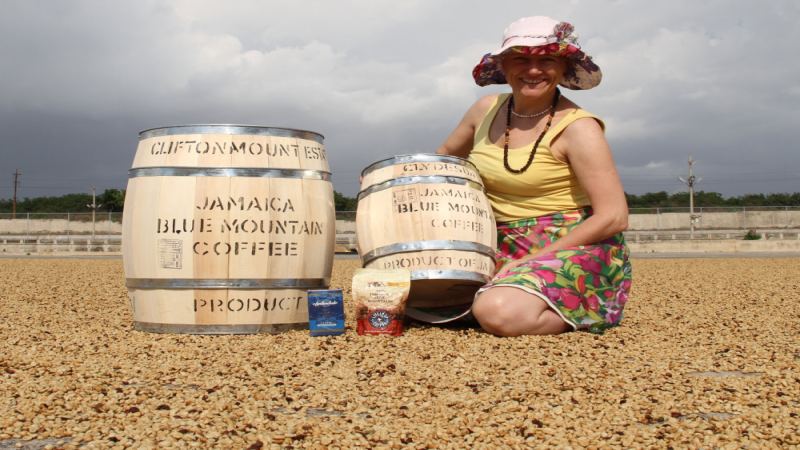
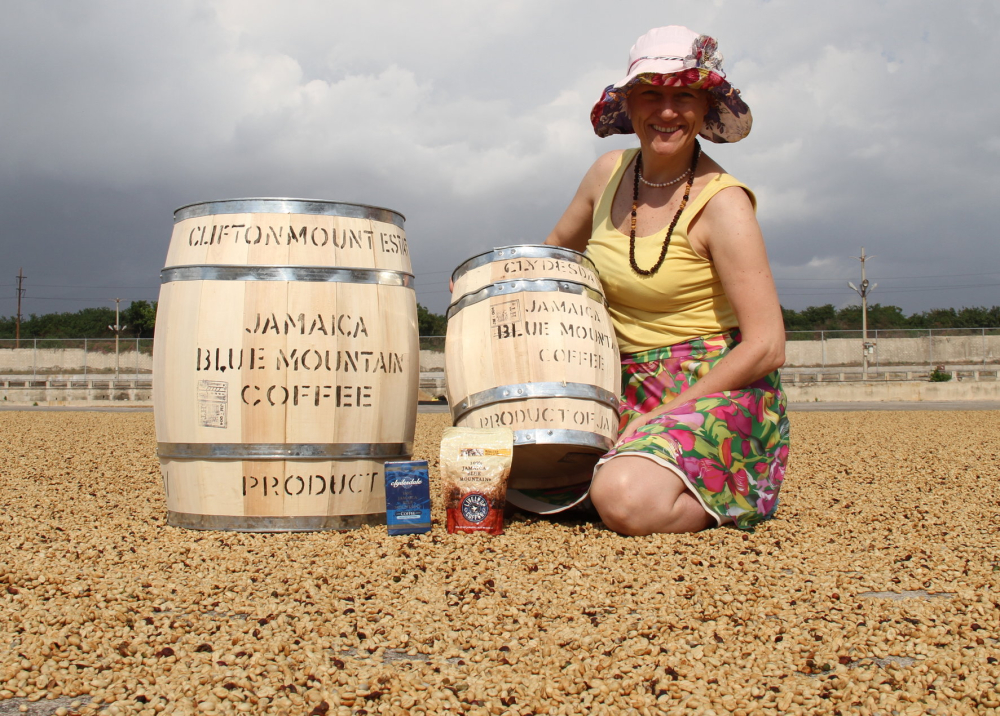
In the past decade, Japan's priority purchasing rights have expired, and China has also been importing Blue Mountain coffee normally for many years. In recent years, estate owners in the Blue Mountain region have even visited China so that domestic consumers could gain a deeper understanding of Blue Mountain coffee beans. Take Front Street's Blue Mountain No. 1 as an example: Front Street's Blue Mountain coffee beans come from Clifton Farm, which was also among the first estates to sign contracts with the Chinese side. In addition, when purchasing genuine Blue Mountain coffee, a certificate is included as authentication. It can be said that the Blue Mountain barrel and Blue Mountain certificate are important evidence for identifying authentic Blue Mountain coffee.
The Sharp family of Clifton Farm has been growing coffee for more than two hundred years. It is a genuinely old-established Blue Mountain estate and also the only farm in the Blue Mountain region to have obtained Rainforest Alliance certification. Blue Mountain No. 1 belongs to the pure Typica variety, one of the few ancient pure varieties in the world, with quite outstanding flavor performance. Combined with Jamaica's meticulous washed processing, the coffee beans are plump and large, with uniform color.
Front Street believes that Blue Mountain coffee beans best embody the flavor of traditional coffee—balanced and aromatic, truly deserving of the title "king of coffee." To restore this flavor, Front Street uses a medium-dark roast, presenting a rich, mellow feel like nuts and chocolate, with sourness, sweetness, and bitterness in balance.
Front Street believes that pour-over is the best brewing method for consistently showcasing Blue Mountain coffee's flavor, and recommends using a Kono dripper to better highlight Blue Mountain's rich, mellow mouthfeel.
To taste the pure, aromatic Blue Mountain flavor, Front Street recommends brewing with freshly roasted coffee beans, as this is the best way to experience the coffee's rich layers. Coffee beans shipped by Front Street Coffee (FrontStreet Coffee) are all within 5 days of roasting, because Front Street knows well that freshness has an enormous impact on flavor. Front Street's roasting principle is "freshly roasted good coffee," ensuring every customer who places an order receives the freshest possible state when the coffee arrives. Coffee's resting period is about 4 to 7 days, so by the time customers receive it, it is exactly at its peak flavor.
Brewing parameters
Dose: 15g
Ratio: 1:15
Grind size: medium grind for pour-over (75% passing through a No. 20 sieve)
Water temperature: 88 degrees Celsius
Front Street uses segmented extraction, namely a three-stage pouring method: first bloom with 30g of water for 30 seconds; in the first stage, pour in a small stream in circles until 125g, then stop; when the liquid level drops to the point where the coffee bed is about to be exposed, continue with the second stage, pouring until 225g to end extraction. Total extraction time (including bloom) is 2 minutes 00 seconds.
Next, let's talk about those names that appear to be Blue Mountain but are not actually genuine Blue Mountain coffee.
- Blue Mountain flavored coffee beans
As long as the word "flavored" appears, it can basically be concluded that it is not genuine Blue Mountain coffee beans. These coffee beans often use beans from other origins to impersonate Blue Mountain coffee beans. If you have never tasted real Blue Mountain coffee, you may easily form a mistaken impression of Blue Mountain because of this. The famous espresso blend recipe "Manba Blend" uses Mandheling coffee blended with Brazilian coffee to simulate the Blue Mountain flavor.
- Blue Mountain instant coffee
A 100-gram pack of Blue Mountain coffee beans can sell for more than two hundred yuan, so how could genuine Blue Mountain coffee beans possibly be used to make instant coffee? In fact, the raw materials for instant coffee are mostly lower-priced Robusta coffee beans, Yunnan coffee beans, or Brazilian coffee beans. Labeling something as Blue Mountain instant coffee in advertising is mostly just a promotional gimmick.
As for whether Blue Mountain coffee or cappuccino tastes better, that depends on individual taste preferences. Blue Mountain coffee beans are mostly used to make black coffee, and friends who do not drink coffee often may find it slightly scorched and bitter; while cappuccino is a classic Italian coffee made from espresso plus milk and thick milk foam, with a full, dense mouthfeel. Because milk is added, it is not especially bitter, while still highlighting the coffee's aroma, making it very suitable for people who do not usually drink coffee.
For professional coffee knowledge exchange and more coffee bean information, please follow Coffee Workshop (WeChat public account: cafe_style)
For more specialty coffee beans, please add the private WeChat of Front Street Coffee (FrontStreet Coffee), WeChat ID: qjcoffeex
The above content is compiled by CoffeeHunters, a coffee news website.


