







How do beginners pick beans from across the coffee belt
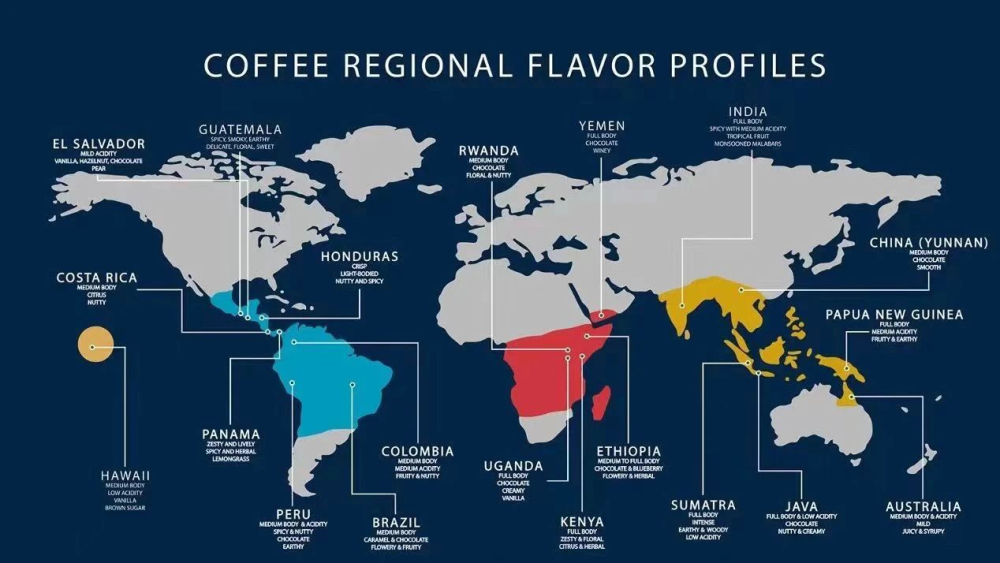
Beginners choosing specialty coffee should start with origin and roast date rather than price. Beans grown along the coffee belt, the band of tropical and subtropical regions between the Tropics of Cancer and Capricorn, carry distinct regional flavors. Comparing a few single-origin bags side by side is the fastest way to learn what suits your taste before committing to a routine.
Green beans must be roasted before brewing, and freshly roasted beans release roughly 6 to 10 liters of carbon dioxide per kilogram, about 1% to 1.2% of their weight. Around 35% of that escapes in the first three days, so beans need rest before brewing. Start with approachable origins such as Brazil, Colombia, Guatemala, Ethiopia or Yunnan, and check the roast date on every bag.
For friends who are just getting into coffee, facing a dazzling array of coffee beans often leaves them not knowing where to start. Based on Front Street's roasting experience, this article systematically sorts out the tasting window and storage key points of specialty coffee beans, explains beginners' common questions about shelf life, and details the origin information and roasting date to pay attention to when selecting coffee beans. The article also introduces, one by one according to seven producing regions across three continents, the daily drinking beans Front Street has prepared for beginners, including Brazil Red Bourbon, Colombia Huila, Costa Rica Tarrazu, Guatemala Huehuetenango, Ethiopia Yirgacheffe, Indonesia Lintong Mandheling, and Yunnan small-bean coffee, helping beginners build an understanding of regional flavors and gradually find the taste they love.
Coffee, cocoa, and tea are ranked as the world's three major beverages, naturally attracting new consumer groups to explore coffee culture. Many coffee lovers who have just started ask Front Street how to choose coffee beans that suit their own taste and what kind of coffee is suitable for beginners to drink. Therefore, Front Street wrote this article specifically to talk about how coffee newcomers should choose beans.
Specialty Coffee Bean Selection and Brewing Knowledge
Many beginners may have only drunk instant coffee, and the shelf life of instant coffee is mostly around one year, so some friends ask Front Street: can specialty coffee beans also be stored for that long?
The answer is no. Green coffee beans must be roasted before they can be used for brewing, and freshly roasted beans from Front Street carry a "dryness," manifesting as sharp acidity, insufficient roundness, and sweetness that has not yet reached an ideal state. Brewing at this point easily produces astringency, and the flavor is poor. Roasting itself is a process involving both chemical and physical changes.
According to Front Street's roasting experience, each kilogram of coffee beans releases about 6 to 10 liters of carbon dioxide in an unsaturated environment, equivalent to 1% to 1.2% of the beans' total weight, of which about 35% is discharged in the first three days after roasting, so freshly roasted beans are not suitable for immediate brewing. Although coffee beans are isolated from outside air after being bagged, the air inside the bag still continuously participates in chemical reactions, and the aroma and mouthfeel change accordingly. For example, Front Street's Flower Butterfly has floral notes, and Yirgacheffe has berry aromas. Aroma is precisely the charm of single-origin coffee, yet good things are always brief; single-origin coffee usually begins to gradually lose its aroma after one month. Therefore Front Street recommends that coffee beans bought back must be finished within one month—the best tasting window for fresh coffee is 2 to 3 weeks, and about one week after roasting is the peak of flavor. If purchased through Front Street's official Taobao store, generally the week it arrives is within the best tasting window. Front Street's shop also offers the freshest beans every day for coffee fans to taste.
In summary, the tasting window of FrontStreet Coffee beans is 15 to 30 days from completion of roasting, and some beans can be extended to about 45 days with proper storage. Therefore, what we call "expired" usually takes 30 days as the boundary. At this point, the beans have basically finished degassing, and medium-dark to dark roasted beans will slightly "oil out." But if improper storage causes severe oiling, or if it smells only of wood, then this bag of beans is no longer suitable for continued drinking.
Front Street also wants to emphasize one point: coffee beans past their tasting window are equivalent to stale beans. They not only lose good flavors but also develop bad flavors. Although today's specialty coffee does not say so explicitly, the roast level has generally been set between medium-light and medium-dark, with more than 80% being medium-light or medium roast, and Japanese-style roasting may not even appear. Because the heavier the roast (longer time, higher temperature), the shorter the tasting window; while the floral, fruity acidity, nutty, chocolate, and creamy flavors presented by medium-light or medium roast will gradually diminish in aroma over time.
Therefore Front Street recommends that coffee fans buy only about two weeks' worth of beans each time, and if conditions permit, buy roasted beans and grind them fresh. No matter how good the coffee is, do not stockpile it; enough for one month is sufficient. For drip bag coffee, it is best to buy only 15 days' worth and restock after finishing.
Pay Attention to Origin Information When Buying Coffee
When selecting coffee beans, Front Street reminds everyone to be sure to pay attention to origin information, from the country and producing region down to the estate name. This is because some shops may pass off coffee from non-origin sources, or mark only the country without the estate, which is usually large-region coffee and difficult to guarantee in quality. Coffee from the origin also is divided into commercial grade and specialty grade, so it is not that something labeled Ethiopia is necessarily specialty coffee. It is best to be specific down to the producing region and traceable to the origin; such beans are usually not bad. Front Street's coffee beans are done exactly this way. After all, good coffee is not afraid of being understood; it is only afraid that coffee fans will not try to understand it.
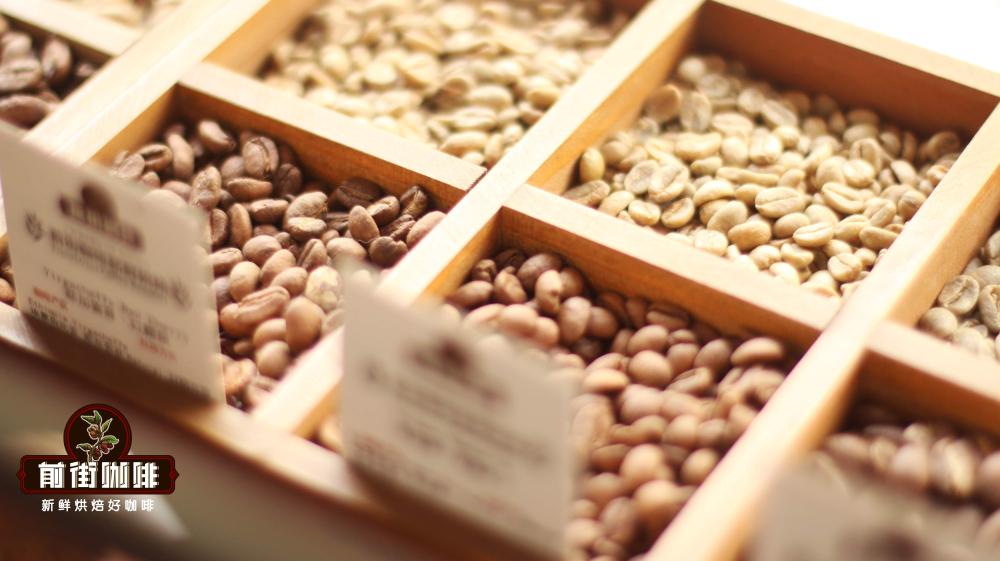
In addition, be sure to check whether the packaging date is the most recent. The shelf life of green coffee beans is generally one to two years, and the freshness period of roasted beans after roasting is within 2 months, so choose freshly roasted coffee beans and use them within the freshness period after buying them, so as to enjoy coffee's most enchanting aroma and rich mouthfeel. Freshly roasted beans, because the bean body contains a large amount of gas and respires vigorously, release gas during extraction, allowing us to see beautiful, full bubbles; some light-roasted beans have less obvious bubbles.
The above are several points to pay attention to when selecting coffee. Finally, Front Street recommends a few coffee beans with flavors from different producing regions for beginner friends, making it easier for everyone to choose.
Daily Drinking Coffee Beans—Understanding Producing Region Flavors
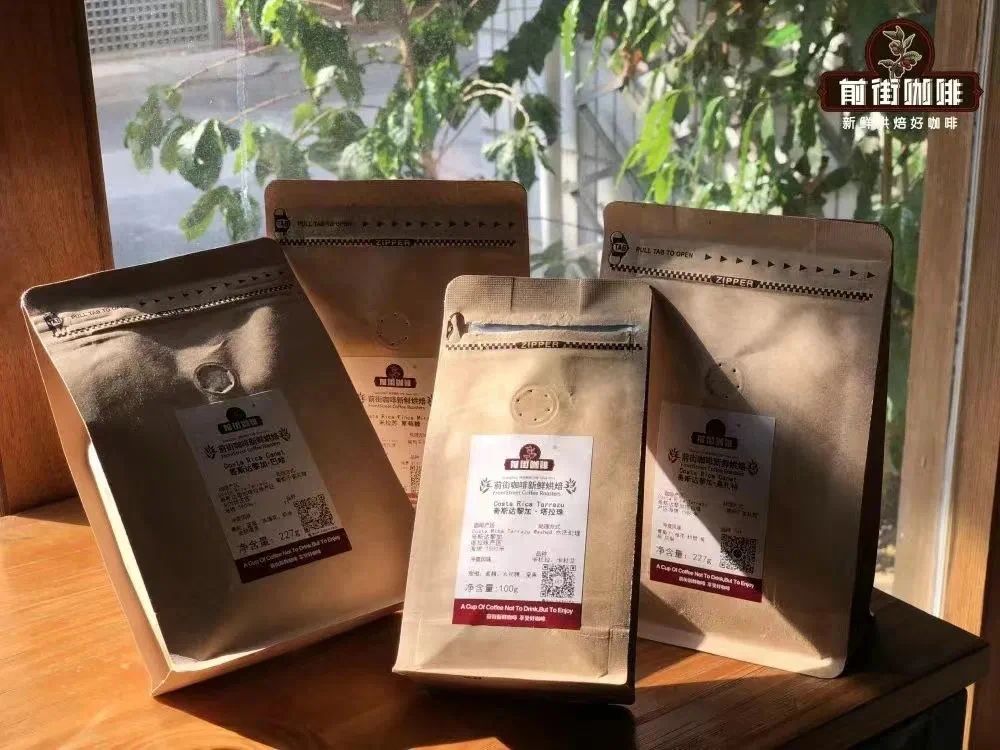
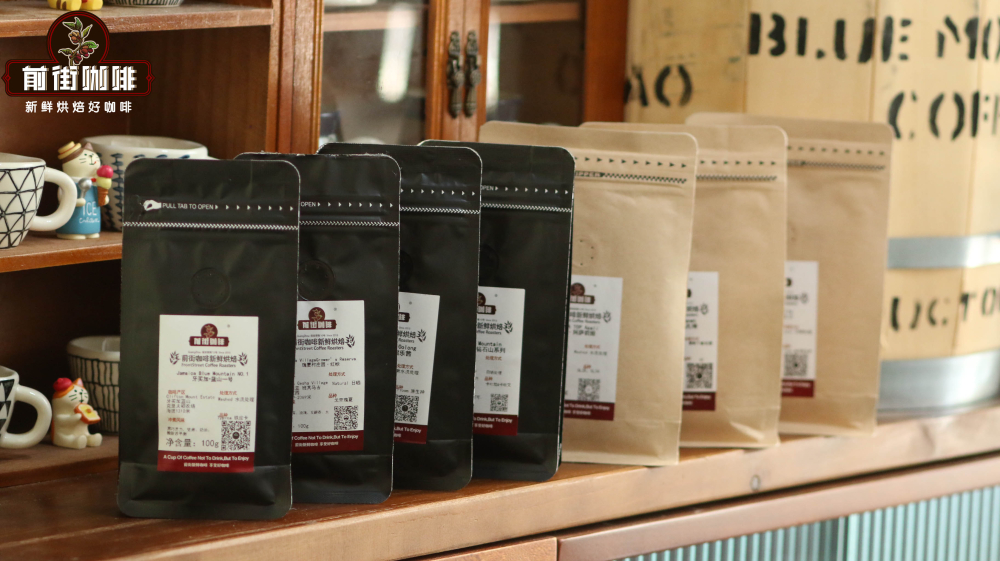
Because many beginners do not know how to choose beans, Front Street specially launched coffee beans from seven producing regions as daily drinking beans for everyone to try. These daily drinking beans come from three continents—Asia, Latin America, and Africa—and each has its own flavor: African producing regions are known for fragrant, rich fruitiness; Asian producing regions focus on rich flavors; and Latin America combines richness with berry notes. Front Street therefore selected the producing regions that best represent the flavor characteristics of these three continents, introduced one by one below.
First, let us introduce the specialty coffee beans of Latin America, including Brazil Red Bourbon, Colombia Huila, Costa Rica Tarrazu, and Guatemala Huehuetenango.
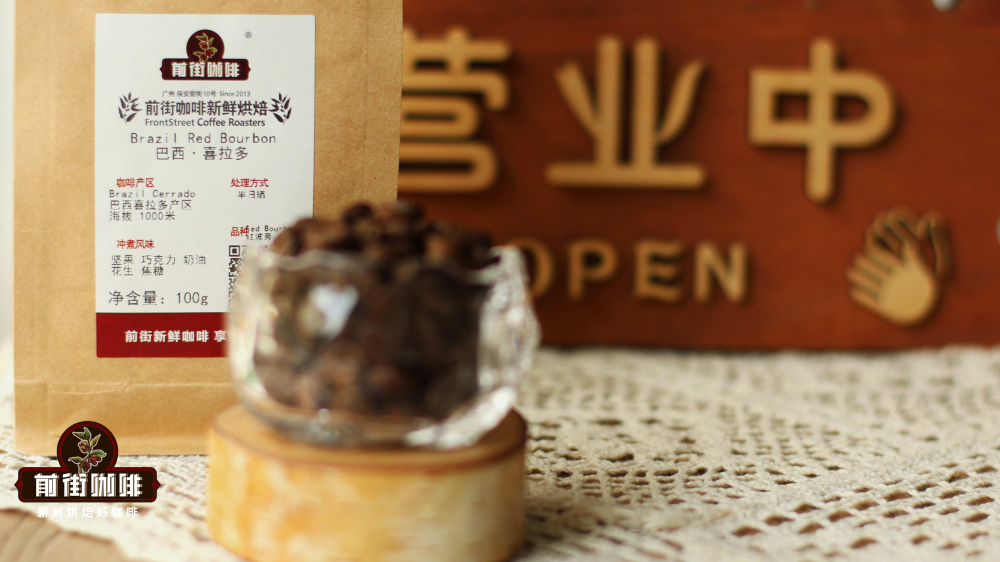
Front Street Brazil Red Bourbon Coffee Beans
Country: Brazil
Producing Region: South Minas
Altitude: 1,000 meters
Variety: Red Bourbon
Processing Method: Semi-washed
Flavor: Nuts, chocolate, cream, peanut, caramel
Brazil is the world's largest coffee producer, and Brazilian coffee beans are also representative of the Bourbon variety. Front Street selected this Brazil Red Bourbon from dozens of Brazilian beans because it offers high value for money and carries the nutty and cocoa flavors typical of the Brazilian producing region.
Red Bourbon Variety
The Bourbon variety and the Typica variety both belong to the old varieties within the Arabica species. Bourbon coffee was first planted on Réunion, which was called Île Bourbon before 1789, and the variety got its name from this. As old varieties, Bourbon has broader leaves than Typica and grows densely, with yields 30% higher than Typica. The beans are rounder and shorter, with thick berry-like acidity, obvious creamy and aromatic notes, and prominent fruity acidity, but it also has poor disease resistance.
After the Red Bourbon coffee tree flowers and bears fruit, the fruit color changes from green to slightly yellow, slightly orange, ripe red, and then to a more mature dark red, so some people also call it the "Red Bourbon variety." Red Bourbon was introduced to Brazil around 1860 via Campinas in the south and is a typical coffee tree variety. Simply put, Bourbon is a branch under the Arabica species. Generally, if it bears red fruit, it is Red Bourbon; there are also Yellow Bourbon and Orange Bourbon. Yellow Bourbon has lower yield but better quality.
Of course, the flavor of a coffee cannot be judged only by the original flavor of the producing region. Front Street's previous articles also mentioned that the processing method affects the flavor expression of coffee to a certain extent. This Front Street Brazil Red Bourbon uses the semi-washed method, which can make the beans taste sweeter and more fermented. But Front Street believes that the washed processing method better reflects the most original flavor of a coffee bean, because it makes the coffee taste cleaner and more transparent. Therefore, most of Front Street's daily drinking beans use washed processing, with the aim of letting newcomers taste the most authentic producing-region flavors. This Brazil Red Bourbon uses semi-washed because the country lacks water, and the washed method requires large amounts of water and is not widespread in Brazil. Therefore Front Street believes this Brazil Red Bourbon also has more local characteristics and a distinctive flavor.
Semi-Washed Processing Method
The semi-dry processing method is also called the pulped natural method. Unlike traditional natural processing, semi-washed first removes the skin of the coffee cherry, which allows control over the fermentation degree of the mucilage-covered beans after pulping; traditional natural processing dries with the skin on, making it impossible to see the degree of mucilage fermentation. Semi-washed lies between natural and washed, but it does not have the washed process of "tank fermentation and rinsing with clean water"; instead, the beans are directly put out in the sun to dry. The method seems similar, but without the fermentation step, the flavor of the coffee beans is completely different.
FrontStreet Coffee Colombia Huila Coffee Beans
Country: Colombia
Producing Region: Huila
Altitude: 1,500-1,800 meters
Variety: Caturra
Processing Method: Washed
Flavor: Nuts, dark chocolate, caramel, soft fruity acidity
Colombia is the world's third-largest coffee producer and exporter. Colombian coffee is famous for its soft mouthfeel and rich, mellow nutty and chocolate flavors. According to Front Street's understanding, the Huila region has mountainous terrain, and coffee is planted on canyon slopes. It has the high altitude and suitable temperature for growing high-quality Arabica beans. The climate of the canyon slopes prevents cold winds from intruding, provides cool mountain breezes without high temperatures, and has relatively abundant rainfall, making it a truly gifted coffee cultivation area. Colombian coffee workers go up the mountains to pick the fruit by hand, and the vast majority of beans are processed by the washed method. Therefore Huila coffee has a full mouthfeel and heavier body, with aromas of nuts, chocolate, and caramel and a smooth, pleasant fruity acidity. Front Street selected this Colombia Huila as the representative of the Huila producing region's flavor.
Caturra Variety
Beginners may be curious about what the Caturra variety is. In fact, Caturra is a natural mutation of the Bourbon variety mentioned above, discovered in Brazil in 1937. Its tree is shorter and smaller than Bourbon. Because it inherits Bourbon bloodlines, its disease resistance is weaker, but its yield is higher than Bourbon. Although discovered in Brazil, Caturra is not suitable for growing in Brazil, so it was not planted on a large scale there. Instead, it became widespread in Central and South America; countries such as Colombia, Costa Rica, and Nicaragua all plant Caturra on a large scale.
Above, Front Street mentioned that the washed processing method best reflects the flavor of a producing region. So what is the process of the washed processing method?
The Process of the Washed Processing Method
1. Bean selection: Put the harvested fruit into a large water tank. Ripe fruit sinks, while unripe or overripe fruit floats on the surface.
2. Remove mucilage: Use a machine to remove the skin and pulp, leaving only coffee beans covered with mucilage. The washing process is precisely to wash away this layer of mucilage.
3. Fermentation: Mucilage has strong adhesion and is not easy to remove. It must be placed in a tank for about 18-36 hours, using microbial fermentation to break down the mucilage.
4. Washing: Put the fermented beans into a water tank and rinse them back and forth, using the friction between the beans and the water flow to wash the coffee beans clean.
5. Drying: After washing, the moisture content of the coffee beans reaches 50%, and they must be dried to reduce it to 12%; otherwise, excessive moisture will cause mold and spoilage. The best method is sun drying. Although it takes 1-3 weeks, the flavor is good. Some places use machine drying, greatly shortening processing time, but the flavor is relatively inferior to natural sun-dried beans.
6. Hulling: After drying is completed, the coffee beans are stored in a warehouse for one week (to stabilize moisture content), then sent to a factory for hulling to remove the parchment layer.
7. Sorting and grading: Remove defective beans to ensure better quality, then hand them over to exporters to sell around the world.
FrontStreet Coffee Costa Rica Tarrazu Coffee Beans
Country: Costa Rica
Producing Region: Tarrazu
Altitude: 1,500 meters
Variety: Caturra, Catuai
Processing Method: Washed
Flavor: Sweet orange, honey, toffee, nuts
Costa Rican coffee has always been known for balanced flavor, rich chocolate, and a smooth mouthfeel. According to Front Street's understanding, Tarrazu is located south of the capital San José and is one of Costa Rica's most valued coffee-growing areas. Front Street therefore chose it as the producing region that best represents Costa Rican flavor. This Tarrazu also uses washed processing. The previous text introduced the Caturra variety, so what is Catuai?
Catuai Variety
From the name, one can see that Catuai is closely related to Caturra—Catuai is a cross between Mundo Novo and Caturra, so to speak a "second-generation hybrid." It inherits Caturra's advantage of a low tree body and also compensates for Caturra's weakness of fragile fruit; it bears solid fruit that does not easily fall when strong winds blow. The biggest regret is that its overall flavor is slightly more monotonous than Caturra. Catuai also has red-fruit and yellow-fruit types, and as with Bourbon, the red-fruit type has better flavor. According to Front Street's understanding, Catuai, Caturra, Mundo Novo, and Bourbon are listed together as Brazil's four main coffee varieties.
FrontStreet Coffee Guatemala Huehuetenango Coffee Beans
Country: Guatemala
Producing Region: Huehuetenango
Altitude: 1,500-2,000 meters
Variety: Bourbon, Caturra, Catuai
Processing Method: Washed
Flavor: Nuts, lemon peel, berries, citrus
According to Front Street's understanding, Guatemala has a high average altitude, and its coffee belt is distributed above 1,500 meters, making it easiest to grow strictly hard beans. Therefore Guatemalan coffee has a special smoky flavor and a rich, juicy mouthfeel. Guatemala has eight major producing regions in total, divided into five volcanic producing regions and three non-volcanic producing regions. Huehuetenango is one of the three non-volcanic producing regions. Here Front Street wants to explain another key point: the growing environment for high-quality specialty coffee requires high altitude, suitable temperature, and abundant rainfall, and Huehuetenango has all these conditions, so it naturally can grow coffee beans with excellent flavor. In addition, Huehuetenango coffee is grown on volcanic soil. Volcanic soil is rich in nutrients, with both sufficient substances for plant growth and good drainage, making it very suitable for coffee growth, which also determines Huehuetenango's excellent quality. Front Street specially selected this Huehuetenango to represent Guatemala's coffee flavor.
Next, let us talk about the African daily drinking beans known for fruity acidity.
FrontStreet Coffee Ethiopia Yirgacheffe Coffee Beans
Country: Ethiopia
Producing Region: Yirgacheffe
Altitude: 1,800-2,000 meters
Variety: Local heirloom varieties
Processing Method: Washed
Flavor: Jasmine, berries, lemon, citrus
Yirgacheffe is located in the Gedeo region of southern Ethiopia. Because the coffee produced in Yirgacheffe has a unique flavor and is widely popular, it stands in a class of its own in product classification and occupies a place in the global specialty coffee market.
After the classic Blue Mountain coffee, Yirgacheffe is the coffee that has attracted the most attention from coffee fans around the world. Front Street can even say without exaggeration that no one will dislike the flavor of Yirgacheffe, so Front Street believes it is the one among the seven daily drinking beans most suitable for beginners to taste. The so-called Yirgacheffe flavor refers to rich citrus and lemon acidity, intense jasmine aroma, a light and elegant mouthfeel with a tea-like quality, drinking like refreshing, clean lemon tea. Especially in summer, the Yirgacheffe cold brew packs launched by Front Street are very popular, because under long low-temperature extraction, Yirgacheffe's mouthfeel becomes richer, and the juiciness and tea-like quality blend more harmoniously.
FrontStreet Coffee Indonesia Lintong Mandheling Coffee Beans
Country: Indonesia
Producing Region: Sumatra, Lintong
Altitude: 1,100-1,600 meters
Variety: Typica, Caturra
Processing Method: Wet-hulled
Flavor: Toasted bread, nuts, caramel, pine, herbs
Front Street believes that beginners just getting into coffee must have heard of Mandheling. It is also one of the signature coffees of most coffee shops, because its flavor can be said to best match people's imagined coffee taste—containing acidity, bitterness, and sweetness while fully balancing these three flavors, so it is widely loved by coffee fans. As far as Front Street knows, the name Mandheling comes from the fact that Mandheling originally referred to the name of an Indonesian ethnic group. Back then, Japanese soldiers returned to Japan after colonizing Indonesia and could not forget the delicious local coffee, so through trade connections they asked locals to help collect high-quality coffee beans, among which was this Mandheling. The Japanese liked it very much and asked for its name. Because the commercial source was inconvenient to disclose, the locals casually said "Mandheling," and by accident it became the name of this coffee bean.
The processing method of Mandheling is different from all those mentioned earlier by Front Street. According to Front Street's understanding, this is because the local weather is rainy with constant typhoons, unable to provide the good weather required for natural sun drying, and the local economy is poor, so the more expensive washed method could not be used either. Thus the highly local wet-hulled method emerged, unique only to Indonesia.
Wet-Hulled Processing Flow
In the first stage, a wooden pulper is used to remove the skin and pulp, then fermentation is carried out for 3 hours, followed by drying to reduce moisture content to 30-50%, half-dry and half-wet.
In the second stage, the mucilage and parchment layer are removed, and drying continues in the later stage. The drying process takes 2-4 days, and the moisture content drops to 12-13%.
Typica Variety
According to Front Street's understanding, Typica is the oldest variety in the Arabica branch and also Ethiopia's oldest native variety. Typica has an elegant flavor, but its constitution is weak, its disease resistance is low, and it is susceptible to leaf rust, so its yield is low and it is not economically efficient. In recent years in Central and South America, Typica has gradually been replaced by Caturra and Catuai, so it is becoming increasingly rare. Although Typica has an elegant flavor, its popularity is less than that of Bourbon.
Finally, we come to the Yunnan coffee beans from our country, which are also the representative of Asia.
FrontStreet Coffee Yunnan Small-Bean Coffee Beans
Country: China
Producing Region: Yunnan, Baoshan
Altitude: 1,200 meters
Variety: Catimor
Processing Method: Washed
Flavor: Melon and fruit aromas, sweet melon, brown sugar, plum acidity, black tea-like quality
This Yunnan small-bean coffee from Front Street is a coffee bean grown by Front Street on a plantation in Yunnan. In fact, Yunnan coffee has two varieties: one is Typica, and the other is this Catimor. Yunnan Typica is labeled as Yunnan specialty coffee, while Yunnan Catimor is labeled according to market custom as Yunnan small-bean coffee.
Front Street roasts both of these beans to medium roast, because the Yunnan producing region is not an acidity-focused region. Its flavor is relatively balanced, with a base tone of nuts and brown sugar. Therefore Front Street chooses medium roast to showcase Yunnan coffee's balance, nutty brown-sugar sweetness, and soft fruity acidity.
Catimor Variety
So what is the Catimor variety? In fact, Catimor is a cross between Caturra and Timor. Its characteristic is strong disease resistance, but it is not suitable for growing at high altitudes. It is currently an important variety of commercial beans.
The above are the seven coffee beans organized by Front Street that are suitable for beginners to taste. When first drinking coffee, beginners often only feel bitterness or acidity, but coffee beans from different producing regions really do differ in flavor. Taste carefully and you can discover the differences among them, thereby choosing the coffee beans that best suit your own taste through trying. The reason Front Street chose these seven coffee beans with clearly distinct flavors for beginners to taste is precisely to help coffee fans who have just started.
The above content is compiled by CoffeeHunters, a coffee news website.


