







Which moka pot suits a beginner, single or double valve?
A single-valve moka pot is the more reliable entry choice for beginners. The single-valve model has no pressure valve on the spout, so the coffee flows out freely, which gives a high tolerance for error, simpler operation, and better safety. A double-valve pot adds a pressure valve at the outflow that only opens once enough pressure builds, producing a stronger, fuller extraction but demanding more precise operating details and parameters.
The moka pot has moved from no valve to single valve and then to double valve since its invention, bringing espresso-style coffee into ordinary households. For pairing, the full-bodied character of moka pot coffee suits beans such as Front Street Classic Blend, Front Street Brazil Queen's Estate, or Front Street PWN Indonesia Golden Mandheling. Beginners can start with a single-valve pot and adjust grind and heat before moving on.
Since its invention, the moka pot has evolved from no valve to single valve and then to double valve, bringing espresso into ordinary households. The core difference between single-valve and double-valve models lies in whether the spout is equipped with a pressure valve, which directly affects extraction strength and ease of operation. For beginners just getting to know the moka pot, the single-valve style offers high tolerance for error, simple operation, and better safety, making it a more reliable entry choice. This article will compare the structural differences and suitable users of the two types of moka pots in detail, share practical operating tips for single-valve moka pots, and, in light of the rich and full-bodied character of moka pot coffee, recommend three suitable coffee beans: Front Street Classic Blend, Front Street Brazil Queen's Estate, and Front Street PWN Indonesia Golden Mandheling, to help coffee lovers find the moka pot approach that suits them.
When the moka pot first appeared, there was no distinction between single-valve and double-valve. The reason this device could sweep the world for nearly a hundred years is that it broke the old rule that women were not allowed to enter coffeehouses to enjoy coffee, while also allowing ordinary people to quickly extract a cup of extremely strong coffee at home using steam pressure, with quality comparable to the expensive, bulky espresso machines of the time. As coffee lovers' demands for flavor expression increased, double-valve moka pots gradually entered the market in recent years.
Single-Valve Moka Pot vs. Double-Valve Moka Pot Differences
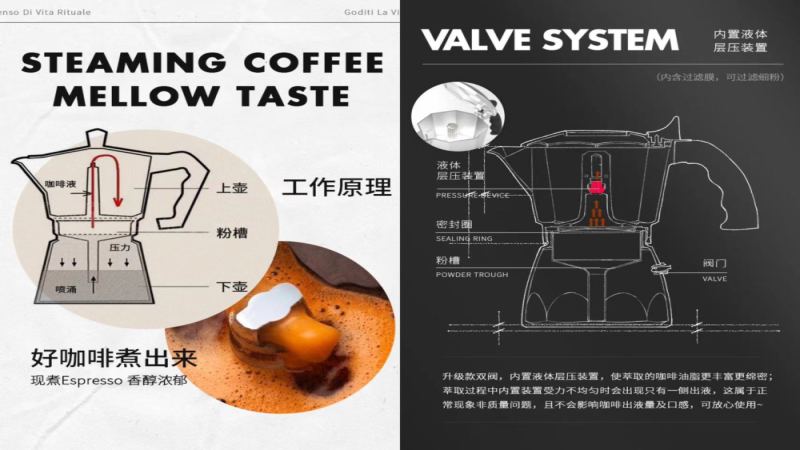
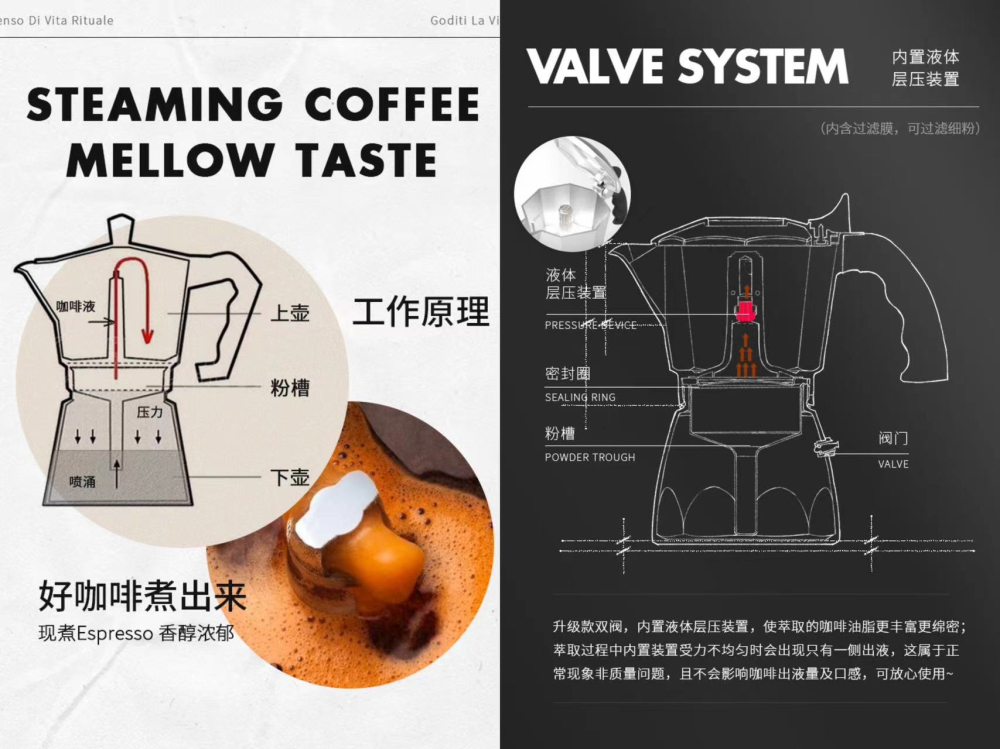
The most core difference between the two is reflected in the design of the spout. The outflow channel of a single-valve moka pot has no obstruction, while a double-valve moka pot adds a pressure valve at the outflow position, requiring enough pressure to build up to push the valve open and allow the coffee liquid to flow out smoothly.
Should Beginners Choose Single Valve or Double Valve?
It is precisely because higher pressure is needed to open the valve that espresso extracted with a double-valve moka pot is superior in strength and fullness. However, it should be noted that double-valve moka pots are more difficult to brew with, placing higher demands on operating details and parameter precision. Front Street Coffee therefore does not recommend that beginners start directly with a double valve, because stably controlling the extraction process of a double-valve moka pot is indeed not an easy task.
By contrast, single-valve moka pots have a very large margin for error, making them especially suitable for first-time beginners; parameter adjustments do not need to be too particular, and safety risks are lower than with double valves. Once you are proficient, you can absolutely list your single-valve pot on a second-hand platform and then get a double-valve pot, since you can save quite a bit on price.
How to Use a Single-Valve Moka Pot ?
When using a single-valve moka pot to extract coffee, there are several points to keep in mind: when adding water to the lower chamber, the water level must not rise above the pressure relief valve (that nut-like component); grind the coffee beans as fine as possible, but not so fine that they can pass through the holes at the bottom of the filter basket; before heating, be sure to confirm that the upper and lower chambers are tightly screwed together; when heating reaches the point where coffee liquid begins to flow into the upper chamber, immediately turn off the heat source and place the pot on a wet cloth to cool down. The temperature difference will encourage further release of the coffee liquid while reducing the risk of over-extraction.
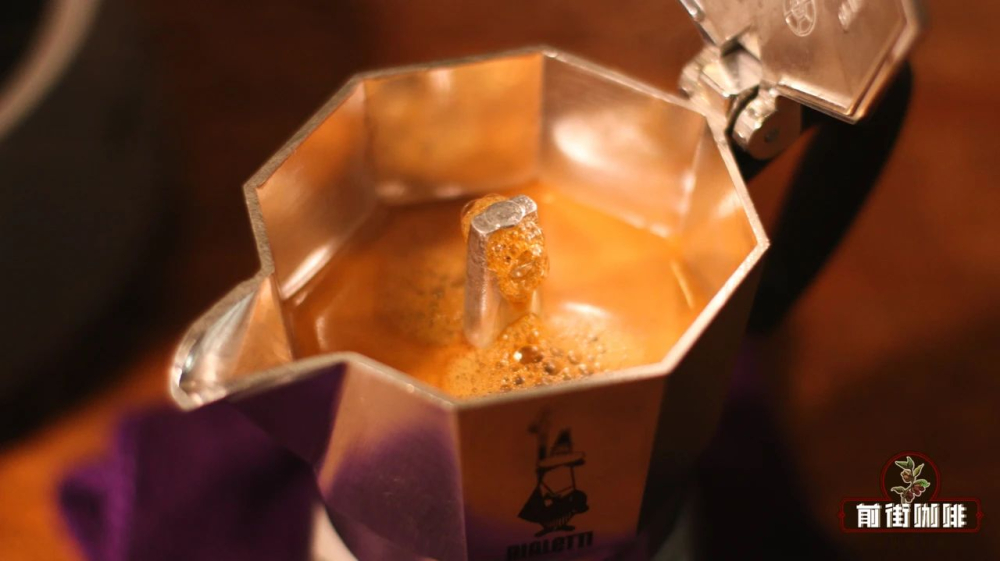
Front Street Coffee uses a 3-4 cup capacity single-valve moka pot. During operation, add 20 grams of ground coffee to the filter basket, pour hot water into the lower chamber without exceeding the pressure relief valve, then insert the filter basket. After taking anti-scald measures, screw the upper and lower chambers tightly, open the lid of the upper chamber, and begin heating. Once the hot water boils and enters the extraction stage, immediately turn off the heat. After extraction is completely finished, to avoid excessive steaming, pour the coffee into a cup as soon as possible.
What Coffee Beans Are Suitable for Pairing with a Moka Pot ?
Coffee made with a moka pot is known for being rich and full-bodied, so Front Street recommends coffee beans specially blended for espresso; medium-dark roasted single-origin beans can also work.
If you prefer a style with prominent aroma and high body, Front Street recommends "Front Street Classic Blend Coffee Beans." This blend is composed of Brazil Red Bourbon and Indonesia Mandheling, with a small amount of Robusta added to enhance the crema performance, so moka pot coffee made with Front Street Classic Blend offers flavors of butter, roasted chestnut, and dark chocolate.
If you like a taste with nutty aroma, high body, but not too much bitterness, Front Street recommends "Front Street Brazil Queen's Estate Coffee Beans." These coffee beans come from the famous specialty-producing region of Brazil—Queen's Estate in Mogiana, São Paulo, at an altitude range of 1,400 to 1,950 meters. The variety is Yellow Bourbon, offering both a captivating roasted nut aroma and an excellent brown-sugar-like sweetness.
If you want something richer with a more substantial body, Front Street recommends "Front Street PWN Indonesia Golden Mandheling Coffee Beans."
These coffee beans come from the Gayo Mountain producing region in Aceh, Sumatra, Indonesia. After PWN purchases Mandheling coffee beans, it conducts one machine sorting and more than three rounds of manual hand sorting starting from the fruit stage, ensuring that the bean size reaches 18 mesh or above, making the flavor expression more balanced and clean while retaining Mandheling's signature herbal, pine, and spice notes with a fuller body and a longer-lasting sweet aftertaste.
The above content is compiled by CoffeeHunters, a coffee news website.


