







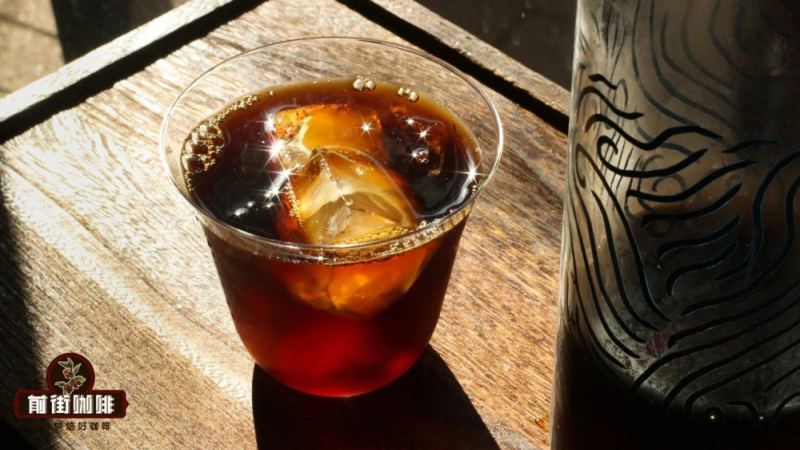
Can Blue Mountain coffee be used for cold brew?
Yes. Front Street Jamaica Blue Mountain No. 1 works well for cold brew, especially the cold steep method. Choose medium-light roasted single-origin beans, grind slightly finer than for pour-over, keep the coffee-to-water ratio near 1:11, and steep 8 to 18 hours in 4 to 10 degrees Celsius water. The low temperature limits bitter compounds while sugars and organic acids dissolve more fully.
Cold brew covers two styles: cold steep, where grounds sit directly in cold water, and ice drip, where water passes through the coffee bed drop by drop. Hot water is not an option, since that leaves the cold brew category. Blue Mountain coffee's mild, balanced profile suits this slow extraction, and the result is a smooth iced cup with restrained acidity and a clean finish.
Cold brew coffee comes in two types: cold steep and ice drip. Both use low-temperature water throughout the extraction process, so bitter large molecules are not easily released, while sugars and organic acids dissolve more fully, giving the coffee a more balanced taste. However, bean selection, grind size, coffee-to-water ratio, and steeping time all affect the final flavor. This article takes Front Street Jamaica Blue Mountain No. 1 as an example, first explaining the growing environment and flavor characteristics of Blue Mountain coffee, then sharing the operational details of cold brew: it is recommended to choose medium-light roasted single-origin beans, grind slightly finer than for pour-over, steep for 8 to 18 hours, and control the coffee-to-water ratio at around 1:11. Finally, it provides Front Street's cold brew method to help you make a refreshing and smooth iced coffee.
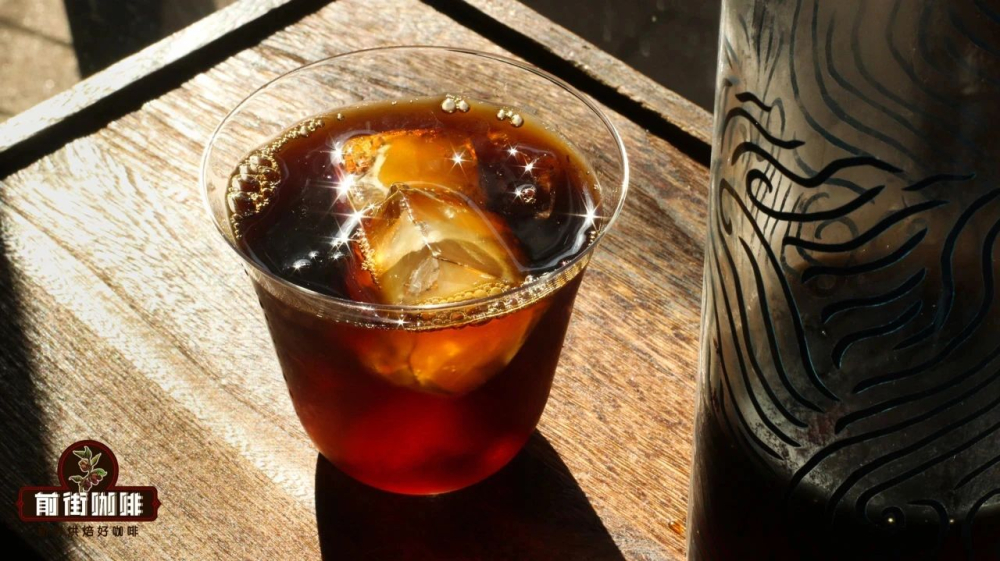
Cold brew coffee can be divided into two categories: cold steep coffee and ice drip coffee. The former involves steeping coffee grounds directly in cold water, while the latter uses a drip device to let water pass through the coffee bed drop by drop to complete extraction. People often ask Front Street: "Can cold steep coffee be made with hot water?" The answer is no—once hot water is used, it no longer belongs to the category of cold steep coffee. Cold steep can only use room-temperature or ice water, and the entire steeping process must be kept at low temperature.
Because it only comes into contact with 4-10°C cold water throughout, the extraction speed is very slow, and bitter large molecules are not easily released. At the same time, long low-temperature steeping allows components such as sugars and organic acids to dissolve more fully, so the finished coffee's acidity, sweetness, and body appear more balanced.
So how do you make cold steep coffee taste good? Front Street shares a few key details from an operational perspective.
Bean Selection
If you want to reduce the chance of failure, it is recommended to prioritize medium-light roasted beans, such as Front Street Fruit Ding Ding, Front Street Huakui, and Front Street Geisha. They are rich in floral and fruity aromas and have a higher margin for error compared to medium-dark roasts. The market offers a wide variety of processing methods and roast levels, but as long as it is labeled as a single-origin bean for pour-over, it can basically be used for cold brew. Dark-roasted beans have a strong aroma and a bitter-then-sweet profile when brewed with hot water, but once made into cold brew, after chilling, often only burnt bitterness and carbonized flavors remain, making it hard to retain the delicate layers of hot coffee.
For cold brew, light to medium roast is more suitable. If you want a refreshing juice-like feel, you can start with light-roasted Front Street Butterfly, Front Street Kenya Little Tomato; if you want a stronger fermented fruit flavor, try anaerobic or honey-processed Front Street Strawberry Candy, Front Street Blackberry, Front Street Xizhua; if you don't like acidity and just want a balanced "coffee taste," Front Street Bird of Paradise is also a good choice.
Today we are using Front Street Jamaica Blue Mountain No. 1 coffee beans, known as the "Emperor of Coffee," to see how it performs as cold brew.
The Uniqueness of Blue Mountain Coffee
The key to Blue Mountain coffee's popularity lies in its signature Blue Mountain flavor, and the foundation of this flavor is the superior local growing conditions. Richard Sharpe, owner of Jamaica's Clifton Mount Estate, once explained in an interview why Blue Mountain coffee is so good: "It is the specific latitude, longitude, and the unique position of this Caribbean island that create a microclimate that exists nowhere else."
The Blue Mountain Range is located in eastern Jamaica, in a seismic zone, where volcanic eruptions brought abundant minerals to the soil. The Blue Mountains have the highest peak in the Caribbean region and are also a famous local tourist destination. The air is clean and pollution-free, and with year-round rain and a cool, humid climate, coffee trees grow vigorously in the mist. The high altitude creates a large temperature difference between day and night, giving coffee cherries enough time to accumulate nutrients and ultimately present a rich, sweet taste. The Blue Mountain Range spans a large area, but the terrain is rugged, and coffee trees are mostly planted on steep slopes. Manual harvesting is extremely difficult, so local farms hire skilled female workers to go up the mountain and pick only sufficiently ripe coffee cherries to ensure quality.
For many years, Jamaica has insisted on growing only Arabica, so the local Typica has not undergone hybridization or mutation, and its bloodline has remained pure. Unlike many producing regions, Jamaica is a relatively closed island nation and happens to have a unique microclimate. After more than two hundred years of domestication and adaptation, Blue Mountain Typica has developed relatively good disease resistance, especially better resistance to coffee berry disease than ordinary Typica, with more stable yield and quality.
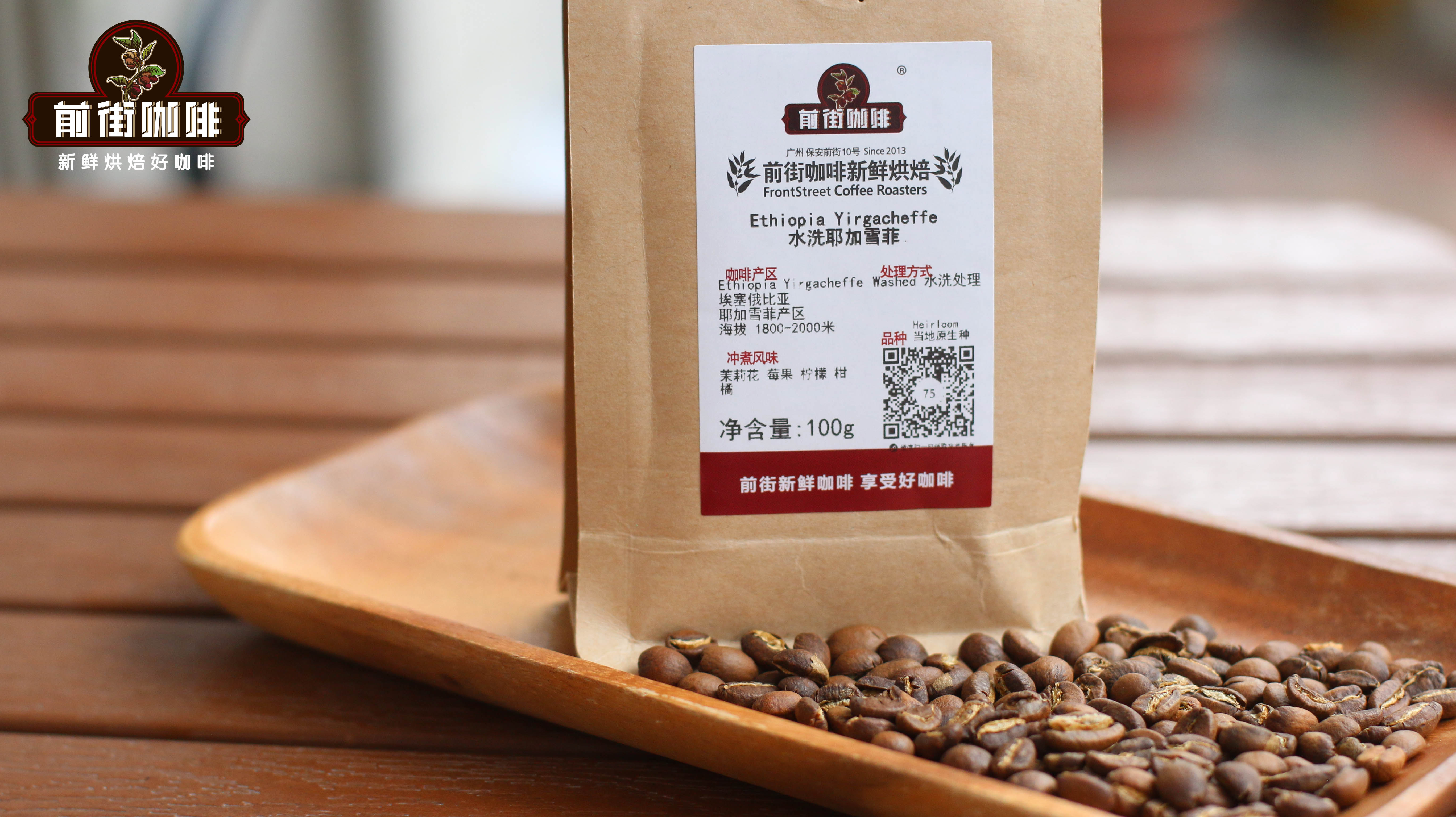
Front Street Blue Mountain No. 1 uses a medium-dark roast, so whether ground or brewed, it can express dark chocolate-like sweetness, caramel sweetness, and a soft, elegant acidity. The flavors are balanced, and the mouthfeel is smooth, rich, and full—a typical Blue Mountain flavor.
Coffee Grounds Grind Size
Cold brew is carried out at low temperature. Cold water's extraction efficiency on coffee grounds is inherently slow, and bitter and astringent substances are not easily released, so it is not as demanding as pour-over in terms of grind size, coffee-to-water ratio, and steeping time. Usually, as long as it falls within a general range and the beans are chosen well, you can make a delicious iced coffee in a few steps.
Taking Front Street's daily cold brew as an example, the grind size is slightly finer than for pour-over, that is, a 75-80% passing rate through the Chinese No. 20 standard sieve. To the naked eye, it looks close to fine granulated sugar, corresponding to setting 10 on an EK43s; for a hand grinder, using the C40 as an example, it is about 26 clicks.
Steeping Time
Pour-over is very particular about water temperature and time because water is the main extraction medium, and temperature directly changes the taste. Cold brew only comes into contact with 4-10°C low-temperature water throughout, so extraction is very slow. Therefore, the steeping time needs to be extended to allow more aromatic substances to be released and to let sugars and organic acids dissolve more fully, ultimately achieving a better balance of acidity, sweetness, and body. Generally, the steeping time for cold brew is recommended to be controlled at 8 to 18 hours.
Front Street once conducted a cold brew experiment using time as a variable, steeping the same coffee for 6 hours, 10 hours, 16 hours, and 24 hours respectively. The result was that the 6-hour cup tasted too thin with a flat aroma, the 24-hour cup was noticeably bitter with signs of over-extraction, while the 10-hour and 16-hour groups performed best, with rich aroma and a full-bodied taste.
Coffee-to-Water Ratio
Front Street has noticed that some friends, for convenience, directly dump coffee grounds and water into a pitcher and steep. But whenever extraction is involved, the coffee-to-water ratio is an unavoidable parameter. Without weighing, coffee is like opening a blind box—you never know what flavor you will get. To make the extracted coffee taste better, Front Street recommends controlling cold brew at around 1:11. If the concentration is too high, you can add an appropriate amount of ice cubes to dilute it.
Finally, Front Street shares its own cold brew coffee method. For beans, Front Street tends to use medium-light roasted coffee beans. The container only needs to be clean and sealable. Prepare 40 grams of coffee grounds, grind to a fine grind (85% passing rate through a No. 20 sieve), pour into the container, add 440 milliliters of cold water, stir evenly with a wooden stick, and cover with a lid.
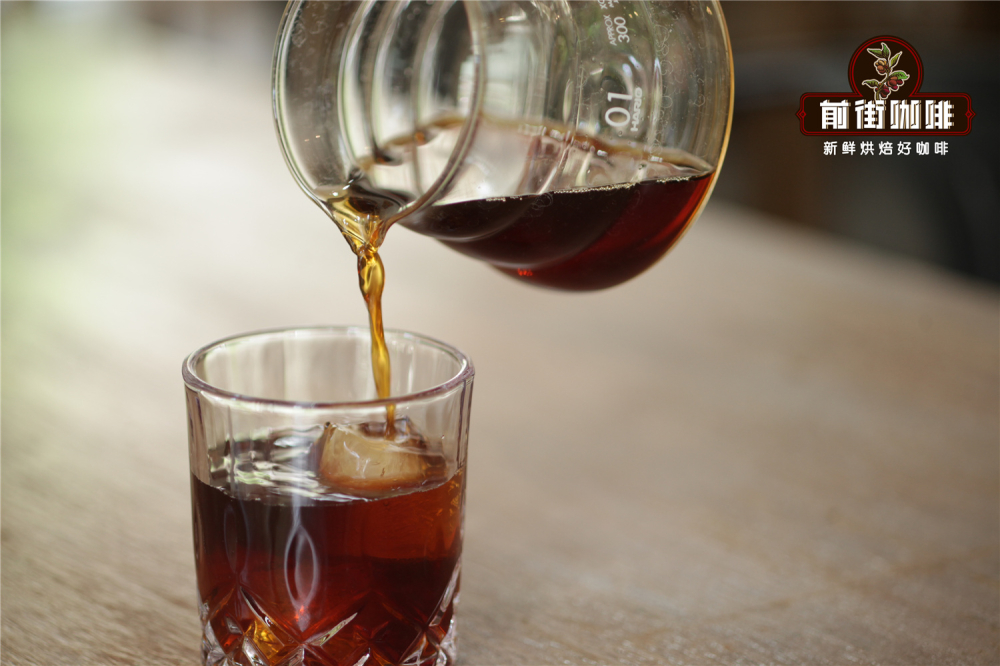
After stirring evenly, seal with plastic wrap, place in the refrigerator to chill for 12 hours, then remove and filter out the grounds. After filtering out the coffee grounds, the clear coffee liquid is ready to drink directly; you can also bottle the filtered coffee liquid and continue to refrigerate for 4 hours, and the flavor and mouthfeel will be even better.
The above content is compiled by CoffeeHunters, a coffee news website.


