







Do tropical coffee and these black teas share a flavor direction?
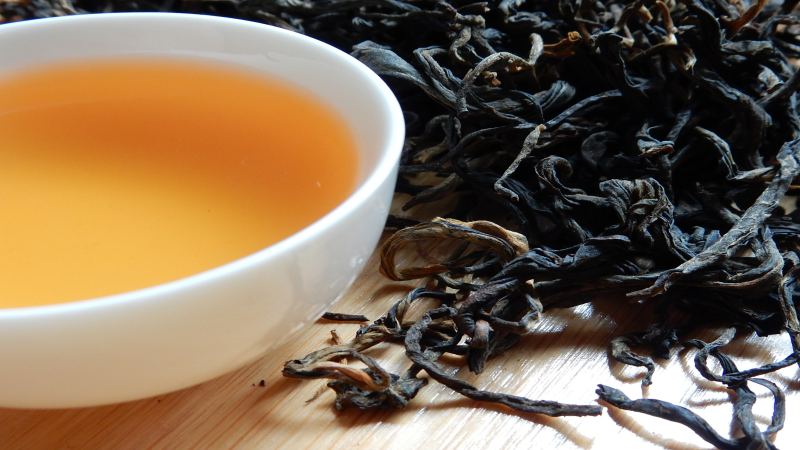
Five black teas anchor this comparison: Taiwan Ruby, Traditional Lapsang Souchong Superior Grade, Lapsang Souchong Qi Zhong, Yunnan Ancient Tree Black Tea, and High Mountain Purple Black Tea and Wild Red. Each carries clear markers, from the minty cooling note of Taiwan Tea No. 18 to the pine smoke of Tongmu Pass and the old-tree honey of Yunnan Lincang.
Origin and craft explain the spread. Ruby comes from Sun Moon Lake in Nantou County and is often called Taiwan Tea No. 18. Lapsang Souchong splits into a smoked type and a fruit-forward higher grade, with Qi Zhong showing tropical fruit, honey, and peach. Yunnan ancient tree and purple teas add perilla and wild notes, giving buyers a range of prices to weigh.
There are many types of black tea on the market, with significantly different styles. This article focuses on five distinctive black teas—Taiwan Ruby, Traditional Lapsang Souchong Superior Grade, Lapsang Souchong Qi Zhong, Yunnan Ancient Tree Black Tea series, and High Mountain Purple Black Tea and Wild Red—examining each one's origin background, craftsmanship characteristics, and flavor expression. From the minty aroma of Taiwan Tea No. 18 to the pine smoke aroma of Tongmu Pass, from the old-tree honey charm of Yunnan Lincang to the perilla note of purple tea, each tea has clear recognizability. At the same time, combined with product information from the Front Street brand, this helps coffee and tea enthusiasts make judgments that better match their taste and budget when purchasing.
Ruby Black Tea
Ruby Black Tea is the signature representative of Taiwan black tea. It uses the Taiwan Tea No. 18 cultivar, with growing areas concentrated around Sun Moon Lake in Nantou County. Because the cultivar and origin are so closely associated, this tea is also often directly called Taiwan Tea No. 18 or Sun Moon Lake Black Tea. Its most prominent identifying point is a mint-like cooling sensation, which easily reminds people of Ceylon Uva tea.
Traditional Lapsang Souchong Superior Grade
The original production area of Lapsang Souchong is around Tongmu Pass in Wuyishan, Fujian, and historically it was also called Lapu Mountain Suchuan black tea. It is regarded as the ancestor of global black tea production, and the origins of Earl Grey tea and Keemun black tea are both related to it. Lapsang Souchong can broadly be divided into two directions. Category A is the pine-smoke-smoked type well known to the public, while Category B is a higher-end version dominated by tropical fruit notes. What is introduced here is the most classic smoked style within Category A, whose smoky aroma comes from the process of drying over an open pine wood fire after fixation. A properly made Lapsang Souchong will bring out fruity notes beyond the smoke, clearly distinguishing it from tea that has only smokiness and lacks fruity charm. Some tea lovers also find it pairs very well with whiskey.
Lapsang Souchong
Lapsang Souchong Qi Zhong is like a continuation of the Lapsang Souchong legend, presenting a gorgeous fruity aroma woven from tropical fruit, honey, and peach. Ordinary black tea is finished after fermentation and drying, while Qi Zhong must be dried and then roasted over charcoal at about 100°C for a long time, using increased maturity to draw out the fruity aroma. The raw material for Qi Zhong comes from old seedling trees in tea gardens at an elevation of 1,200 meters, giving it a solid foundation, so the aftertaste is rich and the throat rhyme is long. Lapsang Souchong Xiao Chi Tian, Tongmu Shuixian Black Tea, and others also belong to the same lineage. These teas are all delicious, and this time Qi Zhong was selected.
Yunnan Ancient Tree Black Tea Apricot Honey Aroma
This tea uses naturally cultivated tea from an elevation of 2,100 meters in Lincang, Yunnan, as its raw material, and is made according to standard Yunnan black tea craftsmanship. Standard Yunnan black tea is characterized by extremely light withering, emphasizing a soft and warm mouthfeel. It carries a light honey aroma while also revealing a minty coolness. Drinking it plain is of course suitable, and it also performs excellently when made into milk tea.
Yunnan Congou Black Tea
Yunnan Ancient Tree Black Tea Apricot Honey Aroma undergoes almost no withering, while this Front Street brand product is fully withered like Darjeeling and then processed into black tea. The withering brings a gorgeous slightly spicy aroma, and the overall style appears brighter. The raw material is taken from naturally cultivated seedling tea at an elevation of 2,100 meters in Lincang, Yunnan, picked from old trees over a hundred years old; it enters the mouth mellow and full, and the lingering aftertaste has a feeling of slowly seeping deep into the body.
High Mountain Purple Black Tea
In tea gardens at around 2,000 meters elevation in Lincang, Yunnan, a cultivar known as purple tea grows. Purple tea carries a characteristic aroma similar to perilla leaves, so it is also often used as a raw material for raw Pu'er tea. Front Street, based on special customization, processed purple tea into black tea. High Mountain Purple Black Tea has both a light perilla note and brings out a sweet aroma similar to sweet potato. As a characteristic of purple tea, its flavor has a spreading sensation in the mouth, rich and full. It is also very delicious when used to make milk tea.
Wild Red
This tea is made from fresh leaves of wild tea trees in the mountains of Lincang, Yunnan. So-called wild tea, as the name suggests, is not cultivated in tea gardens but grows naturally among mountain forests. Its taste carries a strong personality like wild mountain vegetables, and its aroma layers are complex, capturing notes of grapes, vanilla, tender tree bark, and dried fruit. The flavor is very rich, with clear contours and a profound aftertaste.
The above content is compiled by CoffeeHunters, a coffee news website.


