







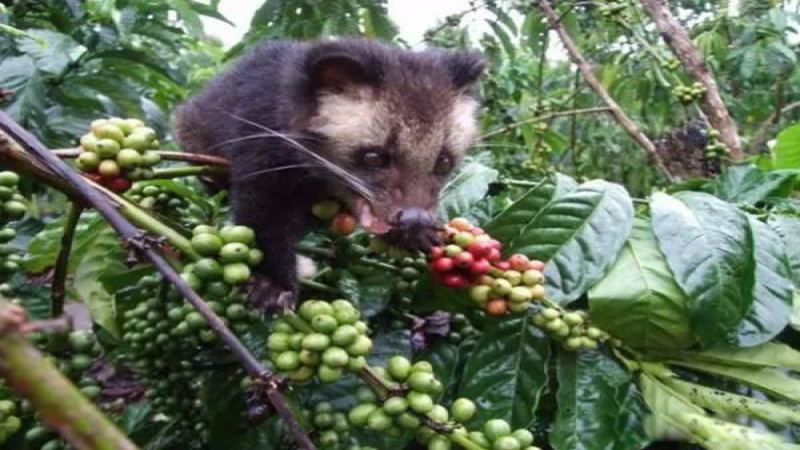
What is kopi luwak coffee and where does it really come from?
Kopi Luwak, also called civet coffee, is coffee made from beans that a civet eats and then excretes, after which the beans are washed, sun-dried, deodorized and roasted. Its authentic origin is Indonesia, particularly Sumatra, where production is small and the price is high because the beans pass through the animal's digestive system before processing.
Affordable Vietnamese versions labeled Kopi Luwak exist because Vietnam grows mainly Robusta, a lower-cost species also used for instant coffee and espresso blends. That mirrors the Blue Mountain market, where limited authentic supply led to many flavor-style imitations. The article also reviews common Vietnamese products and the counterfeit and animal welfare concerns around civet coffee.
Kopi Luwak has long been regarded as one of the most expensive coffee categories in the world. Its authentic origin is Indonesia, where coffee beans naturally excreted by civets are refined through multiple processes, resulting in extremely low production. However, the market is flooded with affordable Vietnamese Kopi Luwak—what is going on? Front Street Coffee will analyze for you the essential differences between Vietnamese Kopi Luwak and authentic Indonesian Kopi Luwak, reveal the reasons behind its low price, review several common Kopi Luwak products on the Vietnamese market, and share Front Street's brewing parameters and flavor performance for Kopi Luwak. In addition, the article will discuss the proliferation of counterfeit Kopi Luwak and animal welfare issues in the production process, helping coffee lovers view this special category rationally.
The authentic origin of Kopi Luwak is Indonesia, and it is also one of the highest-priced coffee categories in the world. Yet coffee labeled as Vietnamese Kopi Luwak can be found on the market, and at quite affordable prices. What exactly is the reason? Front Street Coffee believes this situation is quite similar to that of Blue Mountain coffee. Authentic Jamaican Blue Mountain coffee has limited production and a high price, which is precisely why a large number of Blue Mountain coffees marketed under the banner of Blue Mountain flavor have emerged on the market.
Coffee grown in Vietnam is mainly of the Robusta variety. Robusta beans are usually used to make instant coffee and espresso blends, so their cost is inherently low. The proper name of Kopi Luwak is civet coffee, and it originates from Indonesia—specifically, from the feces excreted by a tree-dwelling wild animal called the civet on the island of Sumatra, which is then processed through multiple fine steps such as selection, sun-drying, deodorizing, and roasting. Its price is extremely high, making it arguably the most expensive and most unique coffee category today.
The civet is a creature native to Indonesia. It actively seeks out ripe coffee cherries to eat. Inside the civet's digestive system, the skin, pulp, and pectin of the coffee cherry are broken down, but the parchment layer cannot be digested, so the coffee beans are eventually excreted with the feces. People wash them clean, dry out the moisture, and finally remove the parchment layer, completing the entire green bean processing procedure. Through fermentation in the civet's special stomach environment, the coffee beans acquire a unique flavor: bitterness is noticeably reduced, while body is enhanced. Authentic Kopi Luwak has a mellow mouthfeel and almost no acidity.
Therefore, Vietnamese Kopi Luwak is merely coffee with a civet-style flavor, not authentic Kopi Luwak, so its price is naturally lower than the authentic product. Vietnam does indeed produce Kopi Luwak, but compared with Kopi Luwak native to Indonesia, there are clear differences in taste and quality. Indonesia's civets are native local species that, through long-term evolution, feed on local ripe, high-quality coffee beans and produce Kopi Luwak after internal fermentation. Vietnam's civets are introduced non-native breeds that need to be manually fed coffee beans and did not form through natural evolution, so the degree of human intervention is relatively high.
Vietnamese Kopi Luwak
(1) Vietnam Trung Nguyen G8 Weasel Coffee
Trung Nguyen Coffee created the No. 8 Legend Weasel Coffee, carefully blended from two types of highland coffee beans, Robusta and Arabica, making it a special blended coffee.
Here we need to explain weasel coffee. In Vietnam's Central Highlands, there lives a special kind of civet weasel (also called the civet cat). Whenever the coffee plantations are heavy with fruit, they choose ripe red coffee cherries and eat their fill. The coffee beans are not digested in the weasel's stomach, and enzymes in the digestive tract act on the coffee beans, breaking down the protein structure and thereby reducing the coffee's bitterness and astringency. The next day, coffee workers use their experience to collect the coffee beans excreted by the civet weasels, wash them, dry them, and then carefully roast them to make civet weasel coffee.
Weasel coffee has a heavy, full body and a strong, rich taste. This coffee comes from Vietnam's Trung Nguyen Coffee Company and uses a Vietnamese-style preparation method; when tasted, it can rival Blue Mountain coffee.
(2) Vietnam Vinacafe Kopi Luwak
This is a three-in-one instant coffee powder. Although it is an instant product, the taste is pure, the mouthfeel is delicate, the sweetness is moderate, and the aftertaste is fragrant. Instant Kopi Luwak is convenient to brew and tastes good, making it very popular among the public.
(3) Vietnam VietGourmet Kopi Luwak
Also an instant coffee, this product has an excellent taste. After brewing, it has a rich milky aroma and drinks very smoothly. It is suitable for consumers who prefer a milky flavor.
(4) Vietnam Cat King Golden Kopi Luwak
Also a three-in-one instant coffee. As soon as you open the packet, a striking aroma greets you. It can be called the best-tasting coffee the author has ever had—rich, smooth, and full of fragrance, a typical Vietnamese coffee flavor.
The better-known Vietnamese Kopi Luwak products are roughly the ones above. If you want to taste authentic Kopi Luwak, you should still buy Indonesian-produced Kopi Luwak beans and grind and brew them yourself.
However, Front Street does not recommend blindly chasing after Kopi Luwak, because this type of coffee is flooded with counterfeits, and the current production process of Kopi Luwak is also quite cruel. Why is it said that there are many fakes? The civet itself is a relatively rare animal with a low population, and it is almost impossible to domesticate. Civets do not eat much, so their natural excrement is also limited. In addition, only about 30% of the coffee beans in the excrement are usable, and after deducting losses from washing, grinding, and other steps, the annual production of genuine Kopi Luwak does not exceed 400 kilograms. Therefore, it is almost impossible for large quantities of Kopi Luwak to circulate on the market.
Besides the problem of counterfeits, the production process of Kopi Luwak today is also extremely cruel. Originally, Kopi Luwak was discovered only when people accidentally picked up civet excrement, but once people realized the huge profits contained in it, the civets met with misfortune. They were locked in cages by humans, lost their freedom, and were forced to be fed coffee cherries, beginning a tragic life of producing coffee beans.
In fact, Kopi Luwak produced through this kind of captive breeding is almost nothing but a gimmick, because those coffee beans are not selected by the civets themselves, but forced down their throats by humans. These animals are naturally shy, timid, and difficult to tame. After losing their freedom and living in narrow cages, forced to eat coffee cherries and excrete all day long, they become ill and may engage in frenzied behavior such as biting their companions or biting themselves, and may eventually die because of this cruel production method.
Front Street's brewing parameters for Kopi Luwak:
When brewing Kopi Luwak, Front Street uses a KONO dripper. The only venting part of this dripper is that one-quarter of the ribs. When the water level rises above the rib area, the water volume inside the dripper continues to rise, increasing pressure through the weight of the water. Because the outlet is relatively small, it can extend the contact time between the coffee particles and water. As the water flow drives them, soluble substances can be extracted more effectively, usually achieving the high body that customers expect.
KONO dripper, 88°C water temperature, 1:15 coffee-to-water ratio, 15 grams of coffee powder, grind size (75% passing through a No. 20 standard sieve), three-stage extraction.
Using staged extraction, first bloom with water at twice the amount of coffee powder, that is, 30 grams of water for 30 seconds. The purpose of blooming is to let the coffee powder release internal carbon dioxide gas, thereby making the later extraction more stable. Pour in a small stream in circles until 125 grams, then pause; continue pouring until 225 grams and stop. After the water in the dripper has completely dripped through, remove the dripper. Timing starts from the beginning of pouring, and the extraction time is 2 minutes 00 seconds. Then swirl the entire cup of coffee to mix it evenly, pour it into a cup, and it is ready to taste.
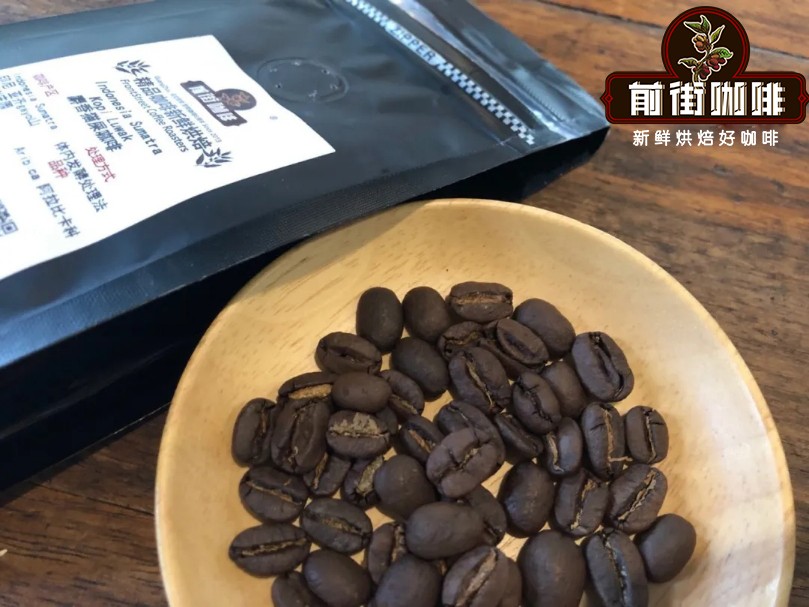
Flavor description of Kopi Luwak: herbal, nutty, smooth mouthfeel, full-bodied.
FrontStreet Coffee brewing suggestions:
To brew a delicious cup of coffee, Front Street believes that the freshness of the coffee beans is a crucial part of brewing. The coffee beans shipped by FrontStreet Coffee are all products within 5 days of roasting. Front Street's roasting principle is "freshly roasted good coffee," so that every customer who places an order can receive the freshest coffee when it arrives. The resting period of coffee is about 4 to 7 days, so when customers receive it, it is exactly at its best flavor.
For friends who need ground coffee, Front Street warmly reminds you: once coffee beans are ground in advance, there is no need to rest them anymore, because during transportation the pressure generated by carbon dioxide inside the package can also make the coffee flavor rounder, so you can immediately brew a cup to enjoy upon receiving the ground coffee. However, ground coffee needs to be brewed promptly, because after contact with air it oxidizes relatively quickly, and the coffee flavor dissipates relatively quickly, so the quality will be compromised. Therefore, Front Street recommends buying whole beans and grinding fresh before brewing, so that you can better taste the coffee's flavor.
As for coffee, Front Street does not recommend that everyone must drink Kopi Luwak. Authentic Kopi Luwak is expensive and rare; if it is not authentic, then there is even less need to taste it—better to try coffees from other origins and producing regions. If you really do not know how to choose, you can start with Front Street's everyday drinking beans. Front Street has eight coffees with flavors from different origins and producing regions, with very high cost performance. For example: the floral and fruity notes of Ethiopian coffee, the fruity acidity and dark chocolate notes of Colombian coffee, the nutty and pine notes of Indonesian Mandheling, the citrus and berry profile of Panama Geisha, and so on.
For professional coffee knowledge exchange and more coffee bean information, please follow Coffee Workshop (WeChat public account cafe_style)
For more specialty coffee beans, please add the private WeChat of FrontStreet Coffee: qjcoffeex
The above content is compiled by CoffeeHunters, a coffee news website.


