







Why Does Panama Geisha Coffee Command Such High Prices?
Geisha coffee dominates specialty competitions largely because of Panama's Hacienda La Esmeralda. The variety originated in Ethiopia, but the Peterson family, who bought the Boquete estate in 1964, discovered an unnamed high-elevation plot with citrus, floral, and fruit-like acidity. After transplanting it more widely, the lot won the 2004 reliable of Panama competition and kept winning in later years.
That record helped Panama geisha beans earn repeated high bids at auction and pushed the estate to focus on geisha cultivation, dividing lots by altitude and plot into Red, Green, and Blue Label tiers. The same beans also perform well in a moka pot, where a latte shows the variety's floral and citrus notes, though grind size and heat need care.
In the world of specialty coffee, Geisha is undoubtedly the most dazzling variety, frequently appearing in various brewing competitions and often unanimously chosen by contestants. What exactly is its charm that makes people willing to pay a high price for it? Today, Front Street Coffee will start with the origin of Geisha, focusing on how Panama's Hacienda La Esmeralda pushed this variety to the altar, as well as the grading logic and characteristics of Red Label, Green Label, and Blue Label. In addition, we will also brew a portion of Esmeralda Red Label Geisha with a moka pot to see how this top-tier bean performs in a latte, and share key details and precautions in moka pot operation.
For more specialty coffee tips, welcome to follow our WeChat public account: FrontStreet Coffee
Today, Front Street wants to seriously talk with you about the recognized "number one variety" in the specialty coffee circle—Geisha. It is not only a frequent winner in various competitions, but there are even situations where a contestant rides it all the way to victory and takes first place. So why exactly does Geisha fascinate people so much that they are willing to pay out of pocket even though the price is high? To answer this question, we must start with the most important driving force behind it—Panama's Hacienda La Esmeralda.
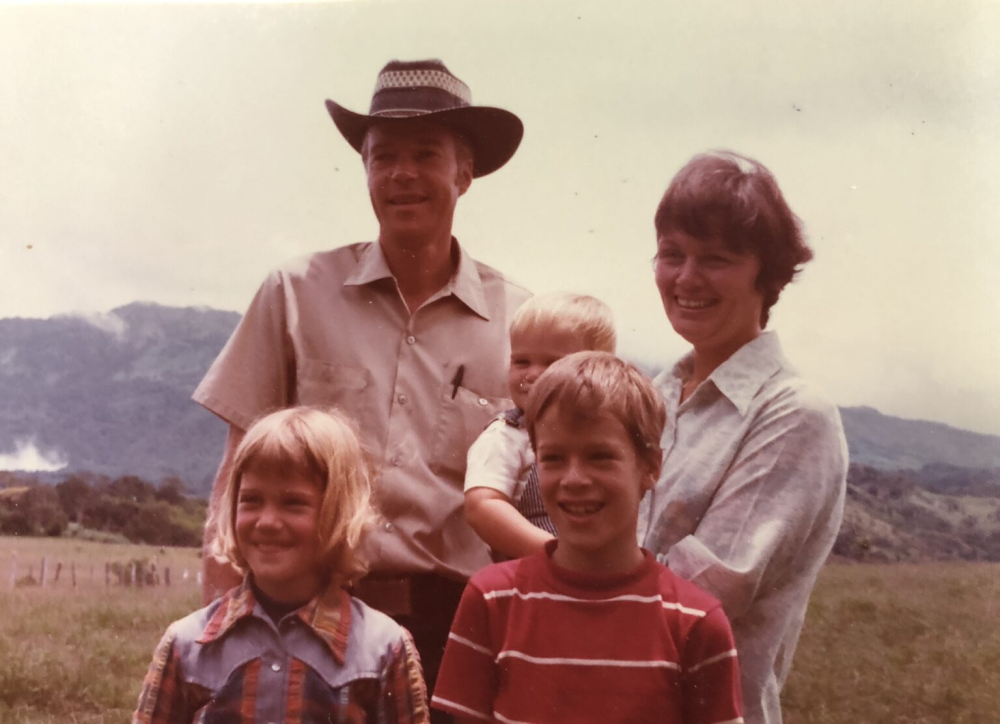
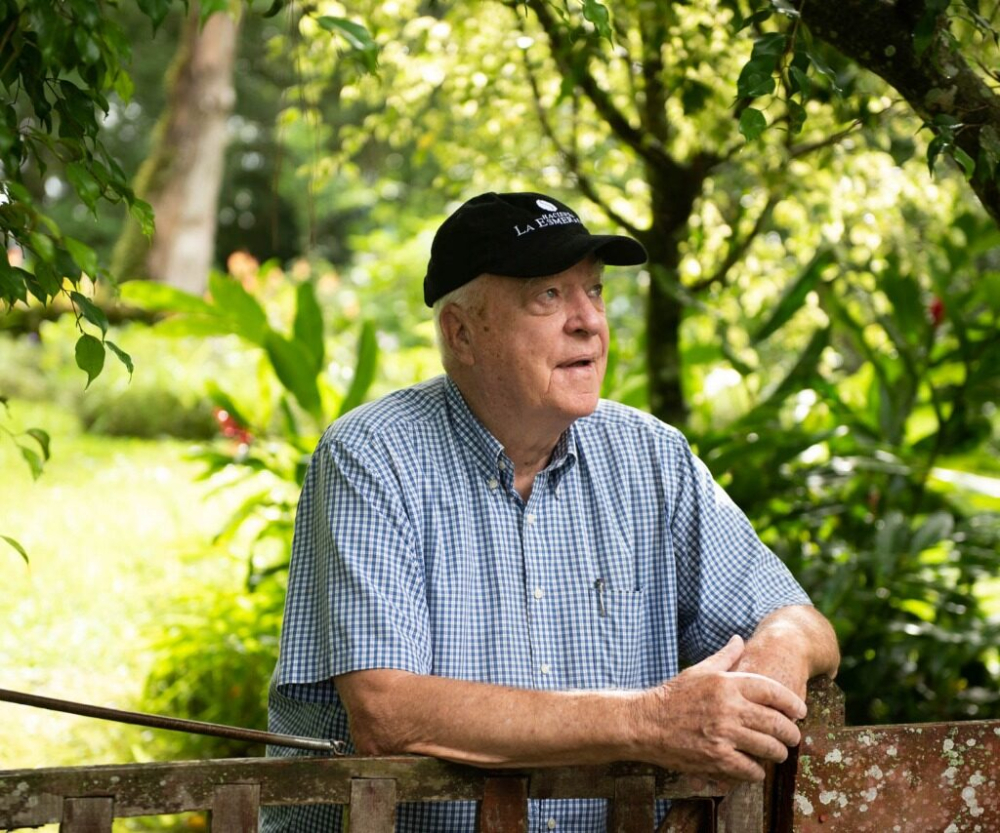
Geisha's place of origin is actually Ethiopia, but what truly made it famous is Panama's Hacienda La Esmeralda. The owner of the estate was an American banker who moved to Panama after retiring in 1964 and bought Hacienda La Esmeralda in the Boquete region, initially focusing on livestock farming. Later, his son gave up his career as a doctor, instead introduced coffee varieties such as Caturra and Catuai, and built a dedicated coffee processing plant.
Later, they cupped every coffee variety on the estate one by one and unexpectedly discovered that an unnamed variety planted at the highest point of the estate actually showed extremely fascinating flavors—citrus, floral, and fruit-like sweet acidity, completely beyond their previous understanding. So they transplanted this variety on a large scale to higher-elevation areas. In 2004, it made a stunning debut and won the championship at the most authoritative green coffee competition of that year—Best of Panama (BOP)—and then dominated for many consecutive years. Since then, Hacienda La Esmeralda has shifted its focus comprehensively to the cultivation and processing of Geisha, and on that basis made detailed divisions according to altitude and plot, gradually forming a unique Geisha grading system, which is what we now know as Red Label, Green Label, and so on.
After purchasing the Jaramillo estate with an excellent environment, Hacienda La Esmeralda found through cupping that Geisha's flavor was particularly outstanding, and then also carried out cupping in other areas of the farm, dividing planting plots according to altitude. Red Label, Green Label, and Blue Label were thus born. If distinguished according to Hacienda La Esmeralda's brand marketing strategy, Esmeralda Special corresponds to Red Label, Private Collection corresponds to Green Label, and Geisha1500 corresponds to Blue Label.
Among them, Esmeralda Special Red Label includes auction lots and non-auction lots. Red Label Esmeralda Special has a notable characteristic: each batch of coffee beans comes entirely from the same plot. For example, the Red Label Geisha selected by Front Street comes from the Jaramillo plot, so buyers can obtain complete origin information.
Front Street believes that the reason Geisha is widely sought after is not only because its flavor is stunning, but also because it can show completely different charming aspects in different origins. Therefore, Front Street has always kept a number of Panama Geishas for fans, and occasionally also acquires some outstanding lots of the year to share with everyone in the store. For example, the Geisha from Guarumo Estate that won the championship in the Natural group at the 26th Best of Panama in 2022 has a particularly "dominant" acidity. On top of Geisha's signature rich floral and fruity aroma, it also highlights a malt-fermented mouthfeel.
The Geisha produced by Esmeralda Special is selected from high-quality lots from the three sub-estates, requiring a growing altitude between 1,600 and 1,800 meters and a cupping score of 90 or above. The auction Red Label lots we occasionally see are actually Hacienda La Esmeralda selecting a portion of the divided plots to participate in an internal independent auction; non-auction Red Label comes from the same plot, and the price is much lower than auction lots. The key is that it carries detailed traceability information, as well as the classic Geisha flavor, so it is more cost-effective .
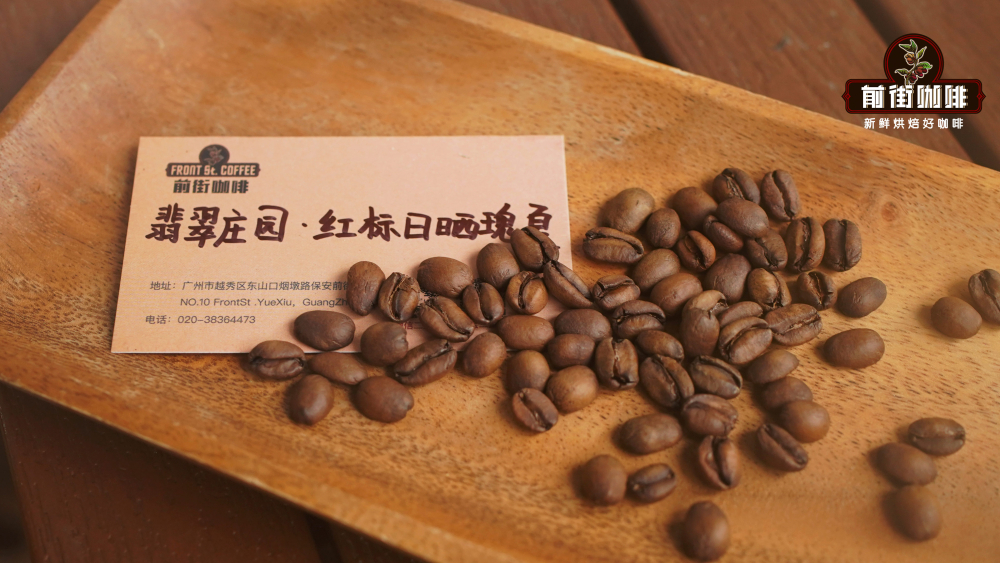
Front Street Hacienda La Esmeralda Red Label Geisha coffee beans
Region: Boquete region
Estate: Hacienda La Esmeralda Canas Verdes
Altitude: 1700+ meters
Variety: Geisha
Processing method: Natural process
Flavor: Lemon, honey, berries, orange peel, mango, cream, citrus
Green Label Geisha belongs to lots that do not independently participate in competition. The growing altitude is also between 1,600 and 1,800 meters, and it is also selected from micro-lots from Jaramillo and Canas Verdes. Green Label does not indicate a specific plot name. Hacienda La Esmeralda sells the coffee beans within this range after mixed harvesting, so it is normal for flavors similar to Red Label to appear.
Front Street Hacienda La Esmeralda Green Label Geisha coffee beans
Region: Boquete region
Estate: Hacienda La Esmeralda
Altitude: 1500–1600 meters
Variety: Geisha
Processing method: Washed process
Flavor: Jasmine, ginger flower, sweet orange, lemon, honey
There is also Blue Label Geisha, which uses Geisha coffee from 1,400 to 1,500 meters. It is harvested at all three sub-estates of Hacienda La Esmeralda and is only washed processed. Because Daniel and his sister Rachel wanted to elevate Hacienda La Esmeralda's brand positioning, the Blue Label Geisha lots were canceled between 2019 and 2022, and the Geisha coffee from that area was instead sold to a brand owner. This brand owner launched "Las Rocas," also known as Volcanic Rock Geisha coffee beans, which is what we call Blue Label.
For consumers, the most intuitive way to judge is to look at the color of the product label: if a large red coffee flower is printed on the label, it is Esmeralda Special (Red Label); if the coffee flower has a green background, it is Private Collection (Green Label); Esmeralda Auction, which can only be obtained through bidding, uses a gray background.
For many years, Red Label has always been the symbol of Hacienda La Esmeralda's highest quality. Its definition is that the growing altitude must be above 1,600 meters, the cupping score must be no less than 91 points, and it must carry detailed traceability information. Fans familiar with Front Street all know that all Esmeralda Red Labels come with a lot number, which can be used to track detailed information such as planting plot, altitude, latitude and longitude, tree age, harvest date, processing method, and cupping flavor.
Can Geisha coffee be made with a moka pot? The answer is of course yes!
If you want to experience Geisha's fresh style, Front Street recommends brewing with pour-over or drip bags to feel the flavor evolution of the coffee from hot to cold; but if you want to taste the smooth, fragrant mouthfeel after Geisha blends with milk, it is recommended to use an espresso machine or moka pot to make a latte. Without further ado, let's directly open a bag of freshly roasted Esmeralda Red Label coffee beans and get started~
Step one, weigh the corresponding amount of Geisha coffee beans according to the size of the moka pot, and grind to the coarseness of caster sugar. The moka pot used by Front Street is 1–2 servings, requiring about 20 grams of grounds.
Next, pour cold water into the lower chamber (hot water will scald your hands), place the filter basket into the lower chamber, surround the filter basket with your hand, and fill the basket with grounds until a small mound rises in the middle. After the grounds around it fill the gaps in the basket, directly put on the upper chamber and tighten it.
Then place it on an electric ceramic stove to heat (a gas stove also works). When you hear a "whoosh" sound, it means the coffee liquid is beginning to rise. At this point, turn off the heat directly and wait for all the coffee liquid to spurt up.
Freshly brewed moka pot coffee smells fresh and fragrant, with a layer of golden crema on the surface. If you want to make an iced latte, simply add ice cubes and fresh milk, and finally pour in the concentrated coffee liquid. A moka pot Geisha latte is complete.
If you want to make a hot latte, you need to add milk as soon as possible, because most of the crema will dissipate quickly, and it must be blended with milk before it gets cold. Here, Front Street will use a French press to froth 200 ml of warm fresh milk, then let them blend evenly, then do latte art, and a moka pot Geisha latte is ready.
Overall, latte art has higher requirements for milk foam than espresso. Coffee liquid with crema can make the surface more stable, making it easier to draw complex patterns; when crema is lacking, surface stability decreases, and latte art such as rippled patterns becomes harder to achieve.
Although the moka pot is simple in structure and convenient to operate, there are a few points to note when using it. The base that holds water has a pressure relief valve. When adding water, the water level must not exceed the pressure relief valve, otherwise the pressure relief function will fail and the risk of bursting will increase. The flow rate of the coffee liquid can also provide feedback: if the liquid spurts out directly, it means the water temperature is too high; if the flow rate is very slow, it means the water temperature is too low, and you need to increase the heat, while paying attention to heat control at all times.
In addition, all coffee grounds can only be extracted once, and with a moka pot it is difficult to precisely control the weight of the coffee liquid. The actual extraction amount mainly depends on experience. Therefore, Front Street suggests that everyone must be serious and focused when operating, otherwise it is easy to over-extract the coffee and make it bitter.
The above content is compiled by CoffeeHunters, a coffee news website.


