







Does really expensive coffee or a high tea grade mean better flavor?
No. Tea grading such as SFTGOP describes appearance and the part of the leaf plucked, not how the tea tastes. SFTGOP stands for Special Finest Tippy Golden Flowery Orange Pekoe and usually means hand-picked golden tips and tender buds, while Orange Pekoe is simply leaf from a slightly lower position on the same plant.
The same variety grown in two different gardens can taste completely different even when the leaf looks identical, which is why blind tastings often place lower grades above higher ones. Expensive coffee and fine tea both reward flavor over labels. Tea dust is mostly an industrial by-product, so grade alone should not decide a purchase.
Letter combinations like SFTGOP and OP on tea packaging often lead people to assume that the higher the grade, the better the taste, but that is not the case. Tea grading is based more on appearance and the part of the leaf plucked, not on actual flavor. Using the Indian black tea grading system as an example, this article explains the difference between SFTGOP and OP, and shows that high-end teas are often light and smooth, while lower-grade teas are instead bold and powerful. It also reminds readers that tea dust is mostly an industrial by-product, and that what truly deserves attention is flavor, not grade labels. Front Street Coffee suggests not confusing grade with quality, and trying teas of different grades to find the one that truly suits your taste.
You may find it hard to believe, but a tea's grade and its quality are actually not equivalent. For example, suppose you grow a very ordinary plant, such as mint. If you plant it in fertile, clean organic soil in a garden, it may look no different from wild mint by the roadside. Yet although they look similar, the mint harvested from the garden will smell and taste better, because it received careful care while growing and its environment was safer.
Unfortunately, tea grading tends to place more emphasis on appearance or plucking season than on whether that kind of "care" was poured into it. The same variety of tea, identical in appearance, grown in two different tea gardens, can taste completely different. That is exactly why we need to keep trying all kinds of tea—the information on paper may be the same, but what really speaks is the flavor.
Since grade cannot be used to judge whether a tea is good or bad, what exactly should we look at?
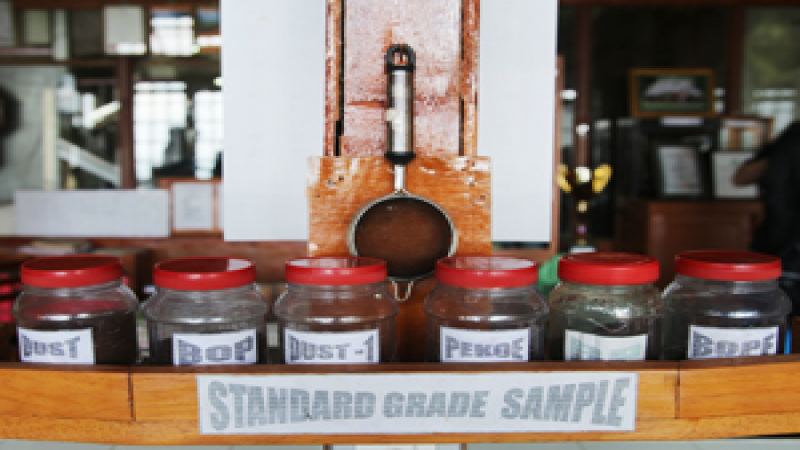
Teas from different places can have very different flavors even if they look the same. So where do different grades differ? Take India's tea grading system. The most expensive tea you can buy is called Special Finest Tippy Golden Flowery Orange Pekoe, abbreviated in English as SFTGOP. It is indeed a mouthful. Simply put, this label means you are buying the finest golden tips and tender buds from the top of the tea plant, most likely carefully hand-picked one by one. How is it different from Orange Pekoe? Orange Pekoe is merely leaves from a slightly lower position on the same tea plant.
The next fact may surprise you even more: in blind tastings, a considerable number of people actually prefer the rich, full-bodied flavor of OP tea over the elegant, delicate, smooth taste of SFTGFOP. Overall, higher-grade teas tend to be lighter, smoother, more complex, with soft floral notes; lower-grade teas, by contrast, are stronger, thicker, and more impactful. Take common breakfast tea as an example: a good cup of Irish Breakfast or English Breakfast may include broken leaves or even curled leaves in the blend, precisely to deliver the strongest, most powerful spiced character that pulls you out of sleepiness.
The same principle applies to green tea. High-grade Longjing is extremely smooth, with a wonderful, subtle complexity. Sometimes you may want to drink high-grade Longjing, and sometimes you just want to gulp down a strong cup of English Breakfast black tea.
In the end...
The ones that actually perform worst are the low-grade products. Tea dust is more of a by-product of the tea processing industry and is usually used to make tea bags.
For those who want to broaden their tasting experience, never confuse grade with quality. Every tea has its own unique characteristics. Front Street Coffee has also always recommended trying teas of different grades to find the cup you truly like.
The above content is compiled by CoffeeHunters, a coffee news website.


