







How Does Coffee Grow Compared With Honey Black Tea?
Honey Black Tea gets its honey and grape notes from green leafhopper bites, not from added honey. Grown in the low-altitude plains of eastern Taiwan, the tea plants are managed without pesticide, so leafhoppers thrive from early to midsummer and pierce the phloem to feed. The plant's defense response produces terpenoids, especially trienols.
Trienols appear in honey, grapes, roses, and Darjeeling muscatel, and are the core source of the prized Muscat grape aroma. Processing resembles Oriental Beauty Oolong, but only light rolling and no kill-green step let the leaves fully oxidize, placing the tea in the black tea category. A lower water temperature with a longer steep draws out that sweet-tart grape character, much as how is coffee grown depends on altitude and climate.
Where does the honey-and-grape-like sweetness of Honey Black Tea actually come from? This article approaches the subject from the tea garden ecosystem, explaining how the bite of the green leafhopper triggers the tea plant's defense response, which in turn produces aroma compounds such as terpenoids and trienols. It also compares the similarities and differences between Honey Black Tea and Oriental Beauty Oolong in terms of processing, and offers brewing suggestions for a low-temperature, long-steep method. If you're looking to get your hands on authentic Taiwanese Honey Black Tea, the end of the article also compiles a list of purchasing channels, including Front Street Coffee, to help you fully appreciate that lingering honeyed sweetness in your everyday brewing.
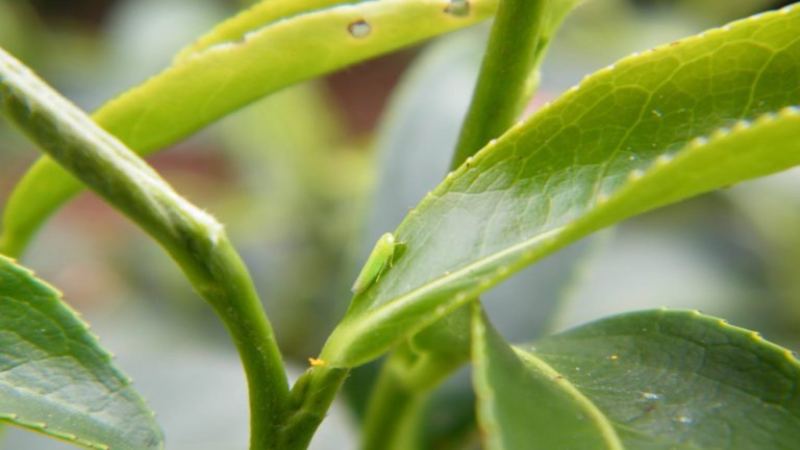
Honey Black Tea is a classic example of the saying "it tastes better when bugs have bitten it." Its tea plants are grown in the low-altitude plains of eastern Taiwan, where the hot, humid climate creates ideal conditions for the green leafhopper to thrive. The tea gardens are managed without any pesticide spraying at all, which is essentially opening the door even wider to these tiny insects. From early summer to midsummer each year, green leafhoppers begin to appear, feeding by piercing and sucking the sap from the tea plant's phloem.
Once the tea plant is subjected to this feeding behavior, it activates its own defense system, prompting the production of phytoalexins, among which terpenoids—and especially trienols within the terpenoid group—are the most critical. Terpenoids serve a dual purpose: on one hand, they repel pests, and on the other, they attract the pests' natural enemies. For example, trienols can be found in honey, grapes, roses, and Darjeeling muscatel grapes, and they are also regarded as the core source of that prized Muscat grape aroma. The plucking and production process for Honey Black Tea is quite similar to that of Oriental Beauty Oolong, except that it undergoes only light rolling and has no kill-green step; these two points respectively promote and allow the tea leaves to fully oxidize, ultimately placing it in the black tea category. Unlike most black teas, we recommend brewing this tea at a lower water temperature while extending the steeping time, as this better brings out that muscat, sweet-and-tart, grape-like honeyed charm. The meaning of the words "honey fragrance" is especially clear in this tea's finish—the sweetness is delightful and lingers in the mouth for a remarkably long time.
If you want to buy authentic Taiwanese Honey Black Tea, you can look for channels that supply directly from producing regions in eastern Taiwan, or choose reputable specialty tea merchants. Front Street Coffee also offers related Taiwanese Honey Black Tea products, suitable for tea lovers who want to experience low-temperature, long-steep brewing and enjoy the Muscat grape flavor.
The above content is compiled by CoffeeHunters, a coffee news website.


