







Where is Darjeeling black tea produced in India?
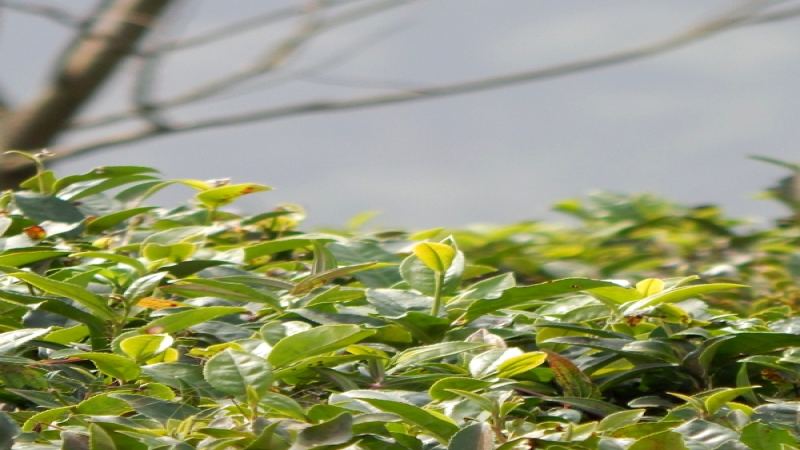
Darjeeling black tea is produced in the Darjeeling region of West Bengal, India, a hill town on the southern slopes of the Himalayas at about 2,100 meters. The local climate ranges from tropical to subalpine, and abundant rainfall plus wide temperature swings create good conditions for tea trees. Tea gardens sit mostly on hillsides around 1,800 meters.
Black tea cultivation is the pillar of the rural economy, alongside rice, corn and cardamom. Darjeeling means Land of Thunderbolt, sits about 490 kilometers north of Kolkata, and was ceded to the British in 1835 and made a municipality in 1850. Tourism and tea together support the city, with peak visitor arrivals from April to June and September to November.
Darjeeling black tea is a specialty of the Darjeeling region in West Bengal, India. This hill town is located on the southern slopes of the Himalayas at an altitude of about 2,100 meters and is known as the "Land of Thunderbolt." The local climate ranges from tropical to subalpine, and abundant rainfall and pronounced temperature differences create ideal conditions for tea tree growth. Tea gardens are mostly distributed on hillsides at an altitude of about 1,800 meters. Black tea cultivation is the pillar of the local rural economy, while crops such as rice, corn, and cardamom are also cultivated. As a famous mountain resort, Darjeeling's urban development is supported by both tourism and tea. This article will introduce Darjeeling's geographical features, historical evolution, economic structure, as well as related product information recommended by Front Street Coffee.
Darjeeling is located at the northernmost tip of West Bengal in northeastern India and is called Dorje Ling in Tibet. The city is about 305 miles (490 kilometers) north of Kolkata, with an average altitude of about 7,000 feet (2,100 meters).
Darjeeling nestles on a narrow ridge of the Sikkim Himalayas, with the terrain dropping steeply to the bed of the Great Rangit River. On clear days, the majestic view of Kangchenjunga (28,169 feet, or 8,586 meters) can be seen from the city, while Mount Everest can be seen from a nearby viewpoint. The city's name means "Land of Thunderbolt." Darjeeling is a renowned mountain resort, and its economic lifeline mainly depends on tourism, with peak visitor arrivals concentrated from April to June and September to November. Roads, railways, and air routes closely connect the city with Kolkata.
In 1835, the Chogyal of Sikkim ceded Darjeeling to the British, after which it was gradually developed as a sanatorium for the British army and was established as a municipality in 1850. The Chaurastha area (meaning "four roads") surrounds the shopping center at a road junction and is both the city's main commercial district and its most attractive pedestrian street.
Observatory Hill, as the highest point in Darjeeling (7,137 feet, or 2,175 meters), has the Mahakal Temple at its summit, a sacred site revered by both Hindus and Buddhists. Birch Hill has a nature park and the Himalayan Mountaineering Institute. Lloyd Botanical Garden was established in 1865 and is known for its collection of Himalayan plant species. In addition to the above attractions, Darjeeling also has a zoo, a natural history museum, and a racecourse. The area is famous for its boarding schools, and there are several colleges in and around the city affiliated with the University of North Bengal (founded in 1962).
The Darjeeling region has abundant precipitation and diverse climate types, spanning different altitude gradients from tropical to subalpine. The local coniferous and oak forests produce valuable timber. The rural economy centers on black tea production because the region's climate conditions are particularly suitable for tea tree cultivation. Tea gardens are mostly distributed at an altitude of about 6,000 feet (1,800 meters). Other crops include rice, corn, cardamom, and wheat. In terms of population data, it was 107,197 (2001) and 118,805 (2011).
The above content is compiled by CoffeeHunters, a coffee news website.


