







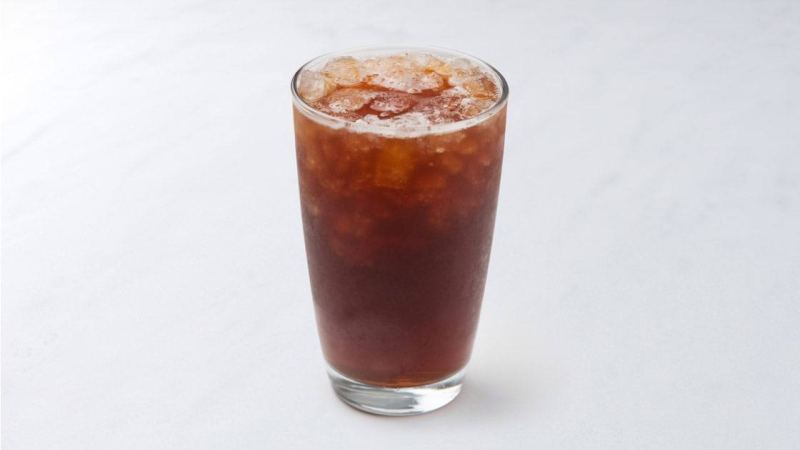
How to brew coffee in a coffee maker and iced tea share one rule?
Whether brewing coffee in a coffee maker or making iced black tea at home, the process comes down to balancing three things: leaves or grounds, water, and time. For iced tea, cold brewing uses 10 grams of loose-leaf tea per 1 liter of room-temperature filtered water, refrigerated for 8 to 24 hours, then strained.
Hot brewing follows the same logic with different numbers, steeping tea in hot water and then cooling it before serving. Tea bags work the same as loose-leaf in both methods. Oolong and herbal teas also cold-brew well, so the choice depends on the flavor and occasion you want.
Making a delicious glass of iced black tea at home is actually not complicated—the core is simply combining tea leaves, water, and time in the right proportions. This article will introduce two methods for making iced black tea: cold brewing and hot brewing. It will go through each method's steps, suitable tea types, and appropriate occasions, and compare the final flavor differences between the two. The article uses loose-leaf tea for demonstration, but tea bags work just as well. In addition, it will recommend oolong and herbal teas suitable for cold brewing, as well as Front Street Coffee's teaware and tea selections, to help you easily make a satisfying glass of iced black tea at home.
Everyone has their own habits when making iced tea at home. With so much varied information and so many techniques out there, it's easy to feel confused. In fact, the essence of brewing tea is very simple: it's just combining tea leaves, water, and time. Below we'll analyze these elements one by one to help you decide which brewing method is more suitable in different situations.
The difference between cold brewing and hot brewing
Iced tea can be made either by brewing with hot water and then cooling it, or by steeping it in cold water for a long time. To understand the differences between the two more clearly, we'll explain each iced black tea method in turn: the specific steps for making iced tea, the tea types best suited to that method, and when to choose which brewing approach. This guide uses loose-leaf and whole-leaf tea as examples, but tea bags can be used in the same way.
Cold water brewing method
Cold-brewed tea couldn't be simpler to make:
Ratio: 10 grams of loose-leaf tea to 1 liter of filtered water.
Place 10 grams of tea leaves into a large lidded pitcher.
Pour in 1 liter of room-temperature filtered water, stir to fully submerge the tea leaves, then put on the lid.
Refrigerate for 8 to 24 hours.
Strain the tea into a pitcher or glass and it's ready to drink (add ice if you like).
For this method, we recommend Front Street Coffee's Hario cold brew tea bottle. It comes with a built-in strainer, so you can use loose-leaf tea directly without needing a separate filter, making the process as simple as possible. This pitcher also looks great, with a built-in strainer, so once it's brewed you can serve it directly at the table.
The idea behind cold brewing is similar to making sun tea, except it uses a lower temperature in exchange for a longer steeping time. Brewing tea without electricity sounds appealing, but it may be bad for your health. Refrigerated brewing inhibits the growth of harmful bacteria and doesn't require adding ice, so the tea's flavor won't be diluted.
If you need sweetness, we suggest using agave syrup or honey instead of white sugar, as they dissolve more easily.
Teas best suited for cold brewing
Most teas can be cold brewed, but we recommend fuller-flavored varieties, since low temperatures weaken the nose's perception of aroma. Among lighter, grassy oolongs, we recommend Baozhong Oolong and Mann Mountain Oolong, both of which also have floral notes. If you like fruity notes and natural sweetness, Oriental Beauty and Tieguanyin are excellent choices.
For herbal teas, we recommend wild chrysanthemum, whose floral aroma is very sweet.
Cold-brewed iced tea has a more delicate taste, so we suggest drinking it plain.
Hot water brewing method
There are two ways to make iced tea with hot water: one is batch brewing, which makes a larger quantity; the other is making it by the glass.
Large-batch brewing:
Ratio: 10 grams of loose tea to 1 liter of filtered water.
Place 10 grams of tea leaves into a large lidded pitcher (glass is best).
Pour in 1 liter of hot (195°F to 212°F) filtered water and put on the lid. *Brewing temperature depends on the type of tea.
Steep for 5 minutes.
Pour all the tea into another pitcher.
Cool at room temperature for 30 minutes, then refrigerate for 2 hours. Alternatively, let it sit at room temperature for 2 to 3 hours until it reaches room temperature.
Serve over ice.
Small-batch brewing:
Ratio: 6 grams of loose tea to 8 ounces of filtered water plus 4 ounces of ice (one 12-ounce serving).
Preheat the teapot or whichever vessel you're using with boiling water.
Place 8 grams of tea leaves into the brewing vessel.
Pour in 8 ounces of hot (195°F to 212°F) filtered water and put on the lid. *Brewing temperature depends on the type of tea.
Steep for 5 minutes.
While the tea is steeping, fill a large empty glass with 4 ounces of ice (about 9 standard ice maker cubes).
Strain all the tea through the ice into the glass.
It's ready to drink.
If you want to make a second serving, repeat steps 2 through 6, but extend the steeping time to 10 minutes.
This method uses a lot of ice, so the water used to make the ice should be just as good as the water used to brew the tea. Stale ice or ice made from poor-quality water will dilute the taste of a good glass of iced tea.
The hot brewing method uses slightly more tea leaves to compensate for the dilution caused by melting ice.
Types of tea and serving methods
All tea types can be hot brewed and enjoyed over ice. Chilling reduces the expressiveness of the aroma, making the flavor softer. Here we recommend fuller-flavored teas. Our favorite is Tieguanyin.
If you choose the hot brewing method, we also recommend trying shaken tea. Shaking tea with ice in a cocktail shaker creates a layer of tea-scented foam. Don't use a straw when drinking, so you can enjoy that layer of foam. Cold-brewed iced tea doesn't compare favorably with hot-brewed iced tea.
The above content is compiled by CoffeeHunters, a coffee news website.


