







Can You Get Drunk on Coffee, and How Does Tea Aroma Compare?
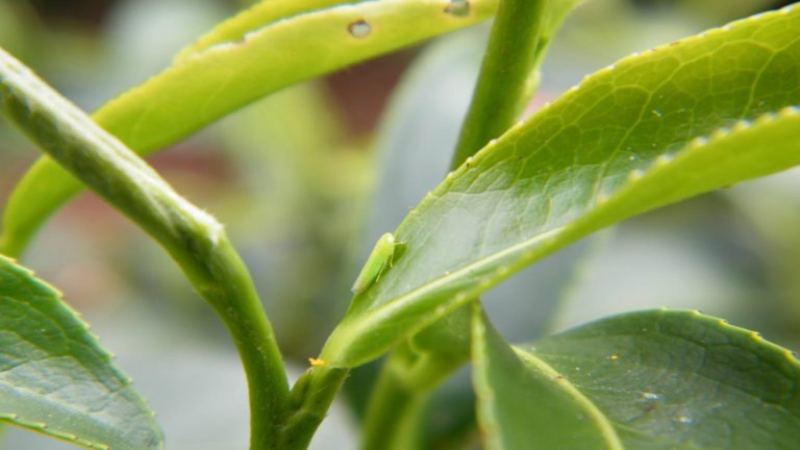
Honey-scented black tea and Jinxuan tea from Hualien, Taiwan, carry a natural osmanthus honey note because small green leafhoppers bite the leaves. In one award-winning farm tea, eight infusions at 90°C moved through sugarcane, malt, smoked agarwood, pouchong, and wildflower honey notes. Aroma after opening and during brewing is the clearest quality signal.
This tea is not certified organic, though it meets and exceeds Taiwan's SGS pesticide residue standards, so it should not be sold as organic. The farm is family-run and moved to sustainable methods early with local government support. Drinkers comparing it with Oriental Beauty, Ruby, or Dancong, or weighing whether can you get drunk on coffee, should note the tea's strong character and drink it less often.
Honey-scented black tea and Jinxuan tea produced in Hualien, Taiwan, carry a natural osmanthus honey note due to bites from the small green leafhopper, making them highly sought-after specialty teas in recent years. This article documents the complete tasting process of an award-winning tea from a family farm: from the aroma changes after opening the dry tea package, to the layers of sugarcane, malt, smoked agarwood, pouchong, and wildflower honey notes emerging through eight infusions at 90°C water temperature, interspersed with comparative reflections on Oriental Beauty, Ruby, and Dancong. The article also mentions that although this tea lacks organic certification, it exceeds SGS pesticide residue standards, as well as Front Street Coffee's recommendation of this honey-scented flavor profile. If you are fond of black tea or oolong, this rare tea combining tea energy and sweet charm is worth exploring in depth.
It has been over a month since I opened the first package of tea leaves, during which I sealed it with a clip (not mine). I then took a small amount and tried a brew with an extended steeping time, and the sweetness turned out more prominent than expected. The dry leaves now barely have any aroma, but once water is poured, they come back to life: notes of cinnamon, sugarcane, and minerals, with osmanthus fragrance not particularly intense but equally impressive in its calming quality. Note that once this tea is opened, it begins to transform (as is the case with most Taiwanese teas).
This is a premium tea from Hualien County, Taiwan. I drink it less frequently than other teas: it stands out too much, yet I am happy to drink it often because both its tea energy and flavor are excellent. This very high-quality tea comes from a family-run farm that, with local government support, switched to sustainable farming early on. The farm supposedly uses no pesticides, but this tea lacks organic certification, so I would not sell it as an organic product. However, it does meet and exceed Taiwan's SGS pesticide residue standards.
Similar to Oriental Beauty, this tea also develops traces of osmanthus fragrance after the leaves are bitten by leafhoppers. Top-grade Oriental Beauty (and honey-scented tea as well) carries a lovely and intense osmanthus flavor (in my experience, lower-grade ones do not). This makes me wonder: does a similar mechanism occur with leaf damage in Guangdong Dancong, since Dancong also has a similar osmanthus aroma?
This tea is made from Jinxuan and fresh material, which makes it distinctly different from Chinese black tea. Taiwan produces many varieties of black tea. I have a nice Taiwanese Tieguanyin black tea on hand, which also reminds me of this tea. Honey-scented tea is a relatively new tea type in Taiwan, but this farm has won multiple awards with this tea, and I believe it absolutely deserves the praise.
Beyond the choice of cultivar, this tea differs from Oriental Beauty in that it has undergone light roasting, which further draws out and transforms the lovely aromas in the leaves. The roasted note is barely perceptible, but this tea is absolutely unique.
I drank it for the first time as soon as it arrived, and even then it had osmanthus fragrance, fullness, smoothness, sweetness, and a returning sweetness, and it would taste even better with more rest. I already knew it was good, but it was only on the second drinking that I truly understood what I had in my hands.
After resting for a while, the leaves smell more like honey. In a warm pot, I can smell osmanthus and released chlorophyll. There is also malt and sugarcane in the aftertaste. This tea is very aromatic.
I brew it in a glass teapot with a built-in glass filter, at 90°C water temperature, using my standard parameters for Taiwanese oolong: cover the bottom of the pot (and a little more), starting at 45 seconds to 1 minute. For the second infusion I shorten to 30 seconds, and for the third I return to 45 seconds to 1 minute. After that, add 30 seconds per infusion.
On the first infusion, I catch a hint of smoked agarwood, which is a real surprise. In the cup there is sugarcane and osmanthus, along with some malt (malt is definitely not the dominant note). The lingering sweetness reminds me of honey. As I continue drinking, I realize the malt character is very much like barley malt (which is a favorite of mine). I had never before captured a clear barley note in a black tea, so this is definitely a surprise.
The tea energy is very calm, as this is my first time drinking this tea. Taiwanese people really do make superior black tea with superior tea energy. I have also gotten similar calm energy from Ruby black tea. The tea energy of this tea ranks among the top of all the teas I have drunk. It is almost floating.
The second infusion tastes more aromatic than sweet: smoked agarwood and chlorophyll dominate the entry. A hint of bitterness follows, but with sweetness returning. I also get some notes that remind me of pouchong, which is a surprise.
The sweetness of this tea lingers on the palate for a long time. Combined with a faint bitterness, it reminds me of saccharin, but far more pleasant.
After the tea cools, I smell the sweet aromas again: sugarcane, osmanthus, and fragrant agarwood are prominent. Some slight astringency also stands out. I also unexpectedly get a bit of wildflower honey, which I absolutely did not anticipate.
The third infusion is also very different. By the third infusion, the slight bitterness is less noticeable. Instead, I find some faint sourness. The flavors blend together more in the third infusion, making them hard to pick out. There are clear roasted pouchong characteristics, along with some faint grassy notes (but not the chlorophyll note I found earlier). I also detect the taste of Assam black tea (but without the astringency and bitterness that most Assam teas have). I also notice this tea is very umami, which is always welcome.
The fourth cup gives me a clear pouchong taste: first a sweet floral note, but also a slight roasted pouchong and buttery note. The tea energy is still very evident. I also get some faint tobacco smoke notes, which I did not expect, as well as a mineral character at the finish.
By the sixth infusion, creamy pouchong notes dominate. A lovely light bitterness together with lingering sweetness is still evident. I notice this tea is more calming than any black tea I have drunk (impressive). When the tea cools, osmanthus, chlorophyll, tobacco, and minerals are again prominent. This tea is very durable in the pot (not that a gaiwan cannot be used instead).
The seventh cup brings out more osmanthus, and I also smell a surprising meaty note, along with a hint of tobacco. This tea got my digestive juices flowing.
I brewed this tea eight times, and perhaps it could still be enjoyed more fragrantly. If you like black tea (or even oolong), this is a fantastic tea worth trying, because there is nothing else quite like it.
The above content is compiled by CoffeeHunters, a coffee news website.


