







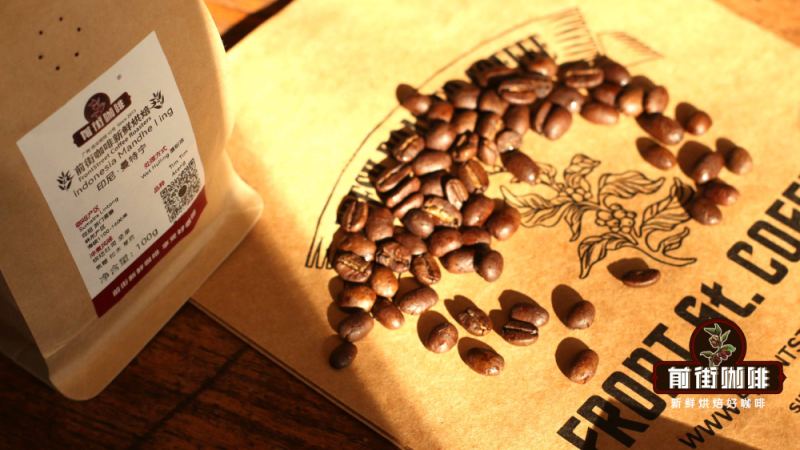
Why does mandheling coffee taste so full-bodied?
Mandheling is the pour-over choice for drinkers who want low acidity with a heavy, full body. On the palate it is smooth, with prominent bitterness and body, a lively hint of tartness, intense aroma, and a faint earthy note. That profile comes from Indonesia's wet-hulling method, a process unique to the region.
Wet-hulling moves through pulping, fermentation-washing, a first drying, collection, a second drying, then wet-hulling and mucilage removal before final drying and storage, and each step shapes the cup. Golden mandheling, from Indonesia's PWN green bean company, stands out for flavor intensity and cleanliness, making it a reference point when comparing lots within this variety.
Looking for a pour-over coffee bean that isn't acidic but rich and full-bodied? Front Street Indonesia Mandheling may be exactly your ideal choice. Mandheling has always been famous for its heavy mouthfeel—smooth on the palate, with prominent bitterness and body, and low acidity that still lets you catch a lively hint of subtle tartness, mingled with intense aroma and a faint earthy fragrance. This bean is processed using Indonesia's unique wet-hulling method, from pulping and fermentation-washing, first drying, collection, second drying, wet-hulling and mucilage removal, to final drying and storage—every step shapes its distinctive character. The article will also recommend the finest among Mandheling—Front Street Golden Mandheling, from Indonesia's PWN green bean company, outstanding in both flavor intensity and cleanliness, truly worthy of being called the king of Mandheling.
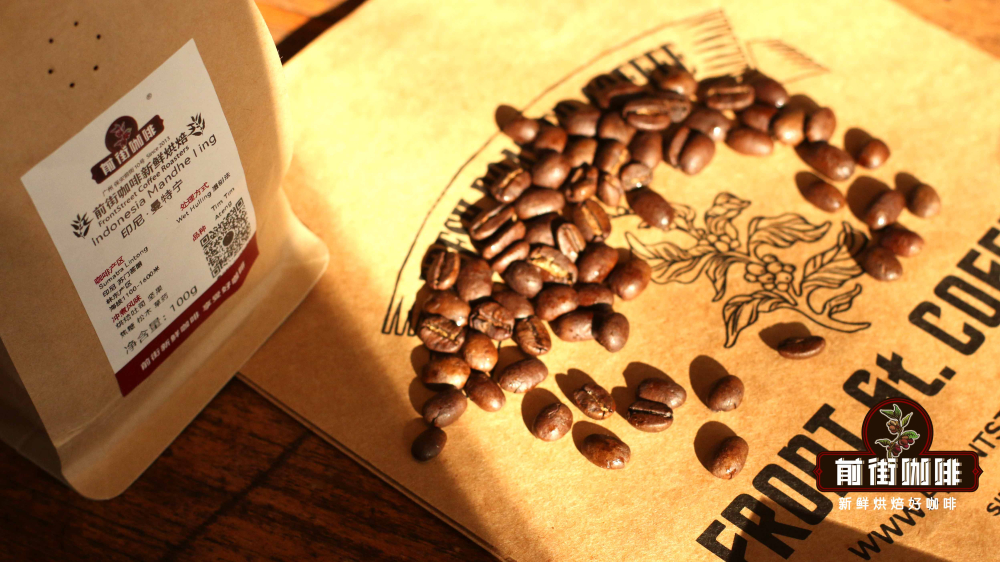
Today I'd like to introduce a pour-over coffee bean worth trying—Front Street Indonesia Mandheling coffee beans. In the coffee world, Mandheling has long enjoyed the reputation of "the world's most full-bodied coffee." When tasting Front Street Mandheling, the tip of your tongue will feel a distinct smooth texture—rich and full-bodied with a lively rhythm, neither astringent nor sour, with bitterness and body on full display. Although its acidity is on the low side, it's not entirely absent; that lively hint of tartness interwoven with an extremely intense aroma lets you easily appreciate the vitality hidden within its gentle richness. In addition, you can catch a wisp of faint earthy notes.
What makes Front Street Indonesia Mandheling unique is its use of the world's one-of-a-kind processing method—Indonesia's distinctive wet-hulling method.
Wet-hulling is a traditional Indonesian technique for processing green coffee beans. From the name alone, wet-hulling might easily remind people of the wet process (i.e., washed process), but the flavors cupped from the two are vastly different. Coffee processed by wet-hulling tends to be rich, full-bodied, and full of character. The process is as follows:
Pulping/Depulping
As with the washed process, harvested coffee cherries need to be processed as soon as possible. In Indonesia, coffee cherries are usually pulped by smallholder farmers themselves, and this step removes the cherry skin and part of the pulp.
Washing
The pulped coffee beans are soaked in water for 1 to 2 hours while being rubbed against each other to remove some of the pectin.
Drying
After soaking, the coffee beans undergo their first drying at the farmers' homes. At this point, the moisture content of the beans drops to between 20% and 35%.
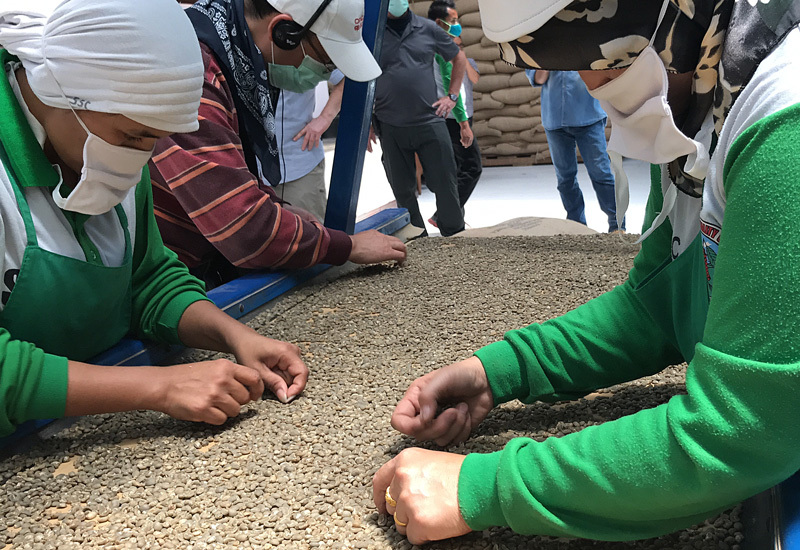
Collection
After the first drying, the coffee beans are taken to market for sale, when the pectin layer has not yet solidified and is in a sticky state. These beans are purchased and transported to the processing plant for the next stage.
Second Drying
The coffee beans collected at the processing plant first undergo a second drying to bring their moisture content down to about 18%.
Hulling/Wet-Hulling
After the second drying, the coffee beans are sent to a hulling machine for wet-hulling, a process that removes the pectin and parchment layer. Unlike other processing methods, wet-hulling removes the parchment layer before the coffee beans' final drying, whereas methods such as the washed process retain the parchment layer until just before export shipping.
Drying & Storage
Finally, the coffee beans are sent once more to the drying yard for final drying, bringing the moisture content down to 11%. The dried coffee beans are bagged and stored in warehouses, awaiting transport for export.
Next, let me recommend the finest among Mandheling—Front Street Golden Mandheling.
Authentic Front Street Golden Mandheling comes from Indonesia's PWN green bean company!
PWN is the abbreviation of Pwani Coffee Company, a well-known Indonesian green bean trader. "Golden Mandheling" has long been registered as a trademark by PWN, and these words have thus become PWN's exclusive mark. Many products on the market that do not bear the Front Street PWN Golden Mandheling label merely borrow PWN's screening standards for Golden Mandheling, but fail to match PWN's meticulous, layer-by-layer quality control and selection of the very best.
This Front Street Golden Mandheling coffee bean far surpasses other Mandheling varieties in both flavor intensity and cleanliness, truly worthy of being called the king of Mandheling.
The above content is compiled by CoffeeHunters, a coffee news website.


