







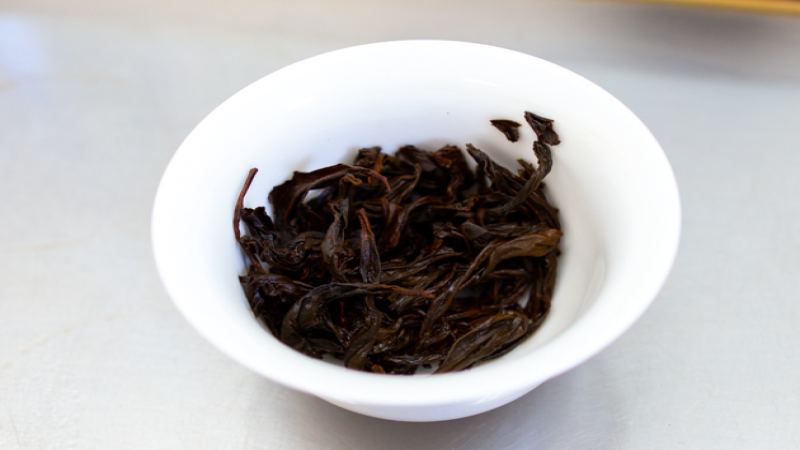
How does a deep roast tea like Lapsang Souchong get its pine smoke aroma?
Lapsang Souchong is widely regarded as the earliest black tea, and it comes from Tongmu Village in the Wuyi Mountains of Fujian. Spring buds and tender leaves are dried over pinewood fires, giving the tea a deep amber liquor with a delicate pine aroma, a longan fruit note, a full body, and a long finish. The smoke reads gentler than many deep roast teas.
The tea reached the Fuzhou market at the end of the 17th century, where buyers asked its name and were told Wuyi tea, which they pronounced Bohea. The traditional process continues at farms such as Zhengxiaoshan in Tongmu Village, where bamboo strips on the upper floor of the drying shed carry smoke up through the leaves.
Lapsang Souchong is widely recognized as the world's earliest black tea, originating from Tongmu Village in the Wuyi Mountains of Fujian. Made from tender spring buds and leaves, it is smoked over pinewood, yielding a deep amber liquor that combines delicate pine aroma with a clear, sweet longan fruit note, a rich body, and a long lingering finish. For tea lovers who want to try a smoky flavor but worry it may be too intense, this tea is quite approachable. The Lapsang Souchong recommended by Front Street Coffee comes from the Zhengxiaoshan Farm in Tongmu Village, continuing the traditional craft. This article will walk you through its aroma characteristics, and how it entered the Fuzhou market under the name "Bohea" at the end of the 17th century, tracing the legendary story of how black tea was accidentally born amid war.
Lapsang Souchong is made from spring buds and tender leaves grown and processed in Tongmu Village—the birthplace of black tea 450 years ago. The liquor is rich and full-bodied, bearing a distinct sense of origin: delicate pine aroma, a deep amber body, a crisp longan fruit fragrance, and a sweet, lingering aftertaste. It suits black tea lovers who prefer a gentler smokiness; even those who normally dislike common smoked teas will find it easy to drink.
Those who prefer pine-smoke-flavored black tea Most Asian tea drinkers favor the delicate smokiness of the original Tongmu black tea over the heavier smoke found in Lapsang Souchong—the latter's main consumer base being the British. When this tea first appeared on the Fuzhou market at the end of the 17th century, buyers showed strong interest in this new smoked tea. When asked for its name, they were told "Wuyi tea" (tea from Wuyi), which they pronounced as Bohea (pronounced Boo-he). This is also another name for Lapsang Souchong.
A black tea native to Tongmu Tongmu Lapsang Souchong is the world's first black tea, and its appearance stemmed from a helpless act by tea farmers in the small village of Tongmu in southeastern China. This tea comes directly from the Zhengxiaoshan Farm in Tongmu Village, Wuyi Mountains, Fujian Province.
The bamboo strips laid on the second floor of the tea factory are smoked, allowing the smoke to rise upward, come into contact with, and smoke the tea leaves.
The smoked bamboo strips on the upper floor of the tea factory allow the smoke rising from below to act on the tea leaves. The amount of smoke can be adjusted by laying bamboo mats over the lattice.
Tongmu Village was founded roughly between 1607 and 1644. The local terrain is steep and difficult to farm, so villagers could only make a living by growing tea and bamboo. Unable to produce enough grain to survive the harsh mountain winters, they depended heavily on selling their exceptionally sweet tea—high-altitude growing makes the leaves rich in amino acids. At the time, green tea was the only type of tea that had been invented, so this tea was kill-greened in a flat pan, shaped, and then dried over a bamboo stove fueled by odorless bamboo charcoal.
The Birth of Black Tea One spring, at the height of the tea-picking season, a cunning general decided to lead his troops on a surprise raid, cutting straight through the rugged mountain paths to Tongmu Village. After a day of tea picking, the soldiers marched into town, and the villagers were forced to flee into the mountains; the soldiers ate all the remaining food and even slept on the freshly picked tea leaves. Days later, when the army left and the villagers returned, they found the tea leaves crushed, oxidized, and tainted with the soldiers' odors. One villager suggested they roast the leaves over local masson pine charcoal instead of bamboo to mask the unpleasant smell.
A person holding a round tray covered with dark, oxidized red tea leaves that are still moist.
Fully oxidized Tongmu black tea leaves, still carrying a moist feel.
The villagers transported the tea to a trade town called Xincun, and from there it was shipped by water to the port city of Fuzhou. They begged a merchant in Xincun to buy the crop, expecting little if any profit, but were surprised to find that not only did they receive a good return the following year, they also got requests for more of this new pine-roasted tea. And so the first cup of black tea was born.
The above content is compiled by CoffeeHunters, a coffee news website.


