







How does coffee maker history connect to Tongmu Lapsang Souchong craft?
Authentic Lapsang Souchong comes only from a 50-square-kilometer area around Tongmu Pass in the Wuyi Mountains of Fujian. The spring 2020 batch uses the Wuyi Qizhong varietal, with tightly rolled dark leaves, a clear pine-smoke aroma, bright orange-yellow liquor, and a smooth, mellow taste with a long sweet finish.
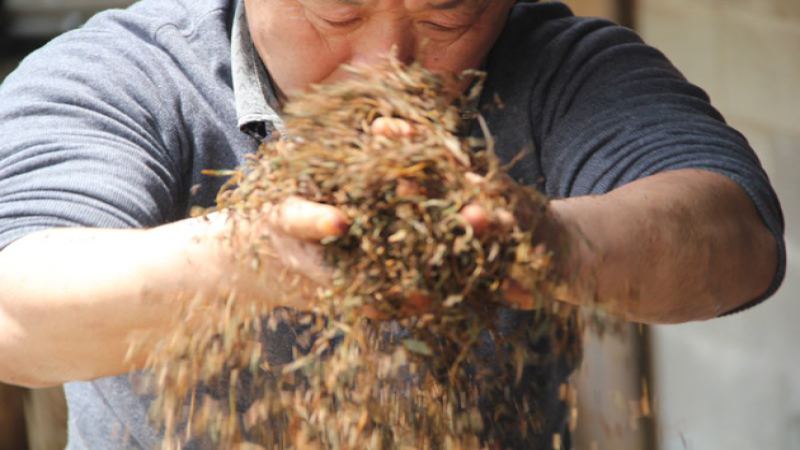
Master Wen has kept the traditional Qinglou method for over forty years. At least twenty steps run inside a three-to-four-story building, with pine wood burned on the ground floor so leaves absorb smoke that stays intense early and fades slowly. The history of coffee maker development followed a comparable path of craft giving way to standardized equipment.
As the ancestor of the world's black teas, the authentic production area of Lapsang Souchong is confined to a 50-square-kilometer radius around Tongmu Pass in the Wuyi Mountains. This article takes you into the Tongmu tea garden, offering a complete analysis of this black tea—known for its rich pine-smoke aroma and mellow taste—from the growing environment and the characteristics of the Wuyi Qizhong tea tree variety, to Mr. Wen's traditional Qinglou smoke-curing process, which he has upheld for over forty years. The article also covers picking standards, production steps, historical changes, and how to appreciate the authentic flavor through channels such as Front Street Coffee. Whether you are a newcomer to black tea or a seasoned tea lover in pursuit of traditional smoky flavors, you will gain practical knowledge about the origin, craftsmanship, and tasting of Lapsang Souchong.
This Lapsang Souchong comes from Tongmu Pass in the Wuyi Mountains of Fujian Province, China. It is a spring-picked tea, with the specific harvest date being April 30, 2020.
The dry tea leaves are tightly rolled and twisted, with a dark, glossy appearance. The aroma carries a clear scent of burning pine wood—rich yet not overly pungent. After brewing, the tea liquor is bright and orange-yellow. On the palate, one can detect the pine-smoke flavor; the taste is smooth and mellow, with a pronounced sweet aftertaste that leaves a pleasant lingering impression in the mouth and throat.
The tea tree variety is Wuyi Qizhong, sourced from the Tongmu tea garden. This is a black tea with a distinctive character, its pine-smoke aroma even and long-lasting, particularly suited to tea lovers who favor strong, robust flavors. The tea is handmade by the experienced Master Wen, who has long adhered to traditional methods. The entire production process involves at least twenty separate steps, including complex stages such as cooling, withering, rolling, fermentation, and drying. All these steps must be carried out inside a "Qinglou"—a traditional three-to-four-story building. Typically, the ground floor of a Qinglou houses a large fireplace where pine wood is burned to roast the tea, allowing the leaves to fully absorb the pine smoke and thereby develop their unique smoky flavor. This aroma is intense in the first few infusions, then gradually diminishes, but never disappears entirely. There is also a "cutting tea" step, designed to allow the smoky flavor to penetrate the tea more thoroughly, enhancing the fullness of its aroma and taste.
As for the tea garden, the Tongmu tea garden is located at Tongmu Pass in the Wuyi Mountains—the birthplace of Lapsang Souchong—and can only be entered with a local guide. There are hundreds of native tea tree varieties in the Wuyi Mountains, including Tongmu Laocong, high-mountain Qicong, wild Qicong, and various small-leaf varieties. The picking season for Lapsang Souchong runs from April to June, with a standard of 2 to 3 leaves per bud. Approximately 5 kilograms of fresh leaves are needed to make 1 kilogram of rough tea, and each kilogram of rough tea ultimately yields only about 70 grams of finished dry tea. Master Wen processes the tea using traditional Chinese methods, which ensures excellent quality while preserving the tea's nutritional components.
Mr. Wen, the tea farmer, is the head of the Tongmu tea garden and formerly served as workshop director at the Tongmu Tea Factory, specializing in Lapsang Souchong processing. He has 44 years of tea-making experience; not only are his skills superb, but his quality standards are extremely strict. Local tea enthusiasts often say, "As long as it's tea made by Mr. Wen, there's no need to worry about quality." Born in 1959, Mr. Wen began learning about tea in 1972. He says tea changed his life, and through tea he has made many friends. For him, the most important thing is to devote his passion and energy to making high-quality tea. A tea maker must be both calm in spirit and able to endure hardship. Every batch of tea must brew well—wasting tea is intolerable.
Regarding its origin, tea lovers who choose Lapsang Souchong invariably insist on Fujian's Wuyi Mountains. In Chinese tea culture, Lapsang Souchong represents the true meaning of high-mountain Souchong black tea. The Wuyi Mountains are located in northwestern Fujian; they are both a tourist destination and the historical birthplace of Lapsang Souchong. The government has designated the production area of Lapsang Souchong as lying between longitude 117°38′6″ and 117°44′30″E, and latitude 27°41′35″ and 27°49′N, covering an area of approximately 50 square kilometers. It can be said that only black tea produced in the Wuyi Mountains can be called Lapsang Souchong.
As for the tea tree variety, Wuyi Qizhong is known locally as Caicha. Caicha refers to the native tea varieties of the Wuyi Mountains; famous rock teas such as Da Hong Pao, Shuixian, Rougui, and Bai Jiguan are all selected from Caicha. Nearly 70 named bush tea trees have been identified, while the rest, unidentified, are collectively called "Qizhong." In other words, Caicha encompasses Wuyi famous bushes and Qicong, and the renowned Jin Jun Mei is also made from Wuyi Qicong. Qizhong is called wild tea, growing in vast natural high-mountain environments without any artificial chemical fertilizers or pesticides, making it a highly favored healthful beverage.
Historically, Lapsang Souchong has a long history of cultivation and had already spread to Europe and North America by the 1970s. However, due to frequent wars, production gradually declined and nearly vanished by 1949. It was not until the 1950s that development resumed, reaching a peak annual output of about 20,000 piculs (1 picul = 50 kilograms). Today, Lapsang Souchong appears before customers around the world with a brand-new image.
The above content is compiled by CoffeeHunters, a coffee news website.


