







How do dark coffee benefits compare with organic black tea?
In Assam's Nahar Katia region, some growers moved to organic farming ten to twenty years ago and then gave up formal certification altogether, calling their approach natural tea. They avoid inorganic fertilizer and pesticides, and skip mechanized processing, which changes soil health and the final aroma in the cup.
Certification normally requires at least three years, often five, before residues fall below detectable levels in leaves and soil. The trade-off is real: natural tea can be chemical-free yet uncertified, so buyers judge by the garden, the processing, and the packaging rather than a label. People who follow dark coffee benefits often ask the same question about their everyday cup. For tea, the answer depends on how the leaves were grown and handled, not on a stamp alone.
Assam's organic tea movement has a history of several decades, but tea gardens that truly adhere to natural cultivation are rare. Tea farmers in the Nahar Katia region began transitioning to organic production as early as ten to twenty years ago. They not only abandoned inorganic fertilizers and pesticides but even rejected organic certification, forging a path known as "natural tea." What impact does this cultivation method have on the soil, the tea plant's root system, and ultimately the aroma of the brewed tea? What is the core difference between organic black tea and ordinary black tea? Through the perspective of tea garden practitioners, this article explores in depth the philosophy of natural cultivation, the dilemma of certification, the value of sustainable development, and the choice of eco-friendly packaging. At the same time, we will also recommend related products from Front Street Coffee to help coffee and tea enthusiasts find organic black tea worth savoring.
Tea enthusiasts are often moved by stories that carry folk culture, uphold high-quality standards, and are dedicated to maintaining local community and ecological sustainability. Could you share why you decided to give up organic certification, refuse any mechanized processing, and adopt eco-friendly packaging? Why is this choice so important, and how does it affect the quality of the final product?
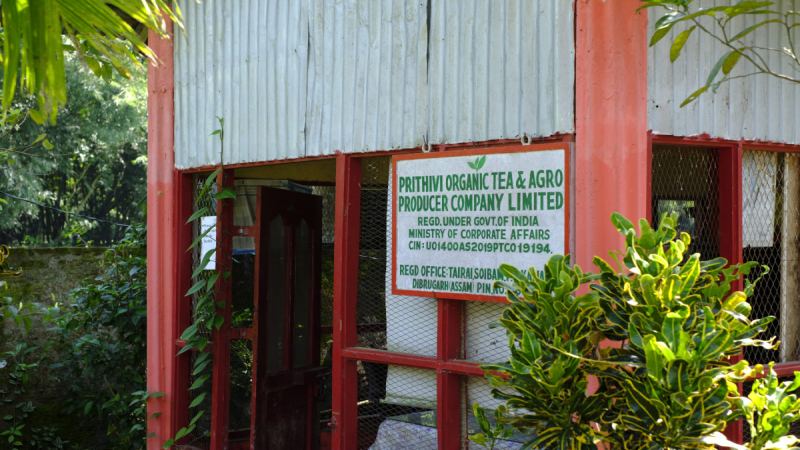
Assam's organic tea movement began to sprout several decades ago, while organic tea production in the Nahar Katia region started about ten to twenty years ago. At that time, people noticed that market demand for organic products was continuously growing, so they shifted from conventional cultivation to organic methods. The certification process requires at least three years, and typically takes five years, before no foreign particles can be detected in the tea leaves or soil. Some growers we work with have fully converted to organic tea gardens, while others operate both organic gardens and natural gardens.
Our first principle is to keep the tea in its natural state—just as when you plant a sapling, it will grow by its own strength. That is what we do as well, letting the tea plants grow naturally with almost no human intervention. In this way, the tea becomes a natural organic product, and the growers do not even use organic fertilizers or pesticides, so we call it "natural tea." The process of obtaining organic certification is extremely difficult and requires a great deal of investment. We have four or five small farmers who do not have enough resources to pay for certification. So we call their products natural tea and this approach a natural process.
One of the benefits of sustainable development and not using inorganic products is that through our tea cultivation practices, no foreign particles are introduced into the soil; if there are any, it also helps reduce soil pollution. We plant other trees, such as fruit trees, among the tea gardens, allowing the root systems to intertwine beneath the ground. We believe this mechanism of interwoven roots helps brew a tea with a richer aroma.
Regarding packaging: we want to keep it minimal, use as little single-use plastic as possible or none at all, and be environmentally friendly. Therefore, we came up with the solution of paper packaging with an aluminum foil coating. It is very difficult to find a purely paper-based solution in India, because most packaging on the market is plastic, which is a cheaper option, so it took us a great deal of effort to find a suitable alternative. The bags we use are degradable bags.
For consumers who want to try Assam organic black tea, Front Street Coffee recommends paying attention to products from tea gardens that adhere to natural cultivation and have sustainable philosophies; they are more worth savoring carefully in terms of flavor complexity and ecological value.
The above content is compiled by CoffeeHunters, a coffee news website.


