







What makes Mandheling coffee taste so distinctive?
Mandheling is Indonesia's representative coffee, and it is known for a mellow body, low acidity, and a sweet aftertaste. The beans come from the Gayo region at around 1600 meters, use TimTim and Ateng varieties, and are wet-hulled before a medium-dark roast. That combination produces sweet herbs, cinnamon-like spice, orange pomelo peel, and creamy walnut chocolate.
Wet-hulling developed because Sumatra's rainy, typhoon-heavy weather ruled out sun-drying, and the washed method was too costly at the time. The process is now tied to Mandheling's identity. Golden Mandheling applies strict screening standards on top of it. The bean works well for pour-over, dark roast extraction, and pairing with milk.
Mandheling is the representative of Indonesian coffee, known for its mellow richness, low acidity, and sweet aftertaste. This article starts from Front Street PWN Golden Mandheling, sorting out its growing region, bean varieties, and wet-hulling process, explaining how medium-dark roasting shapes flavors such as sweet herbs, cinnamon, orange pomelo peel, and creamy walnut chocolate, and introducing the strict screening standards of Golden Mandheling, aged wet-hulled method, and the origin of the name Mandheling. It also answers how to drink Mandheling: suitable for pour-over, dark roast extraction, and milk coffee pairing. Whether a beginner or an advanced enthusiast, you can gain a more systematic understanding of Mandheling's unique charm and key points for purchasing.
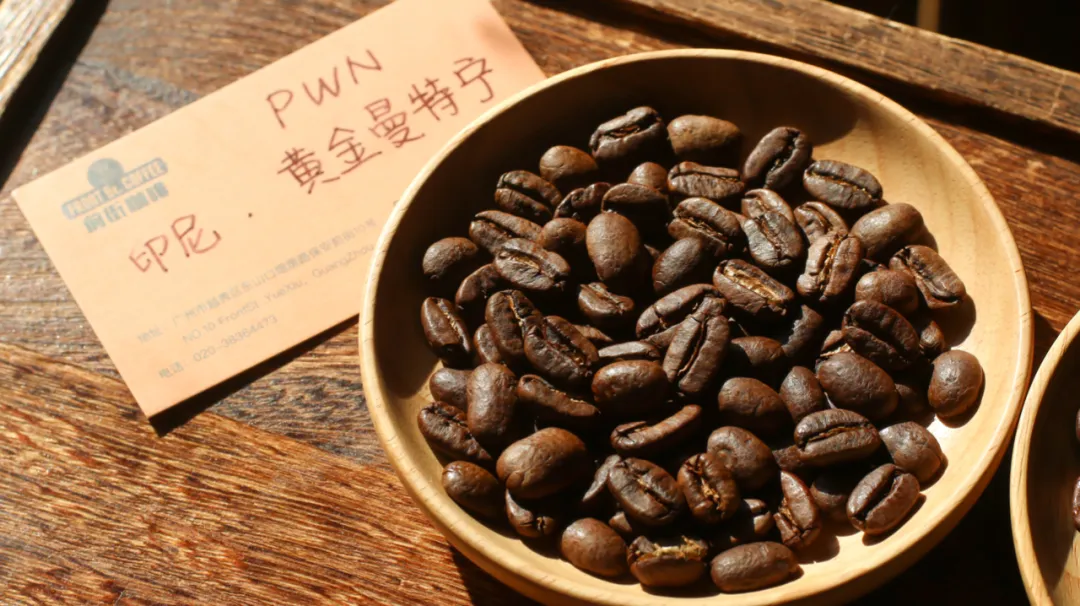
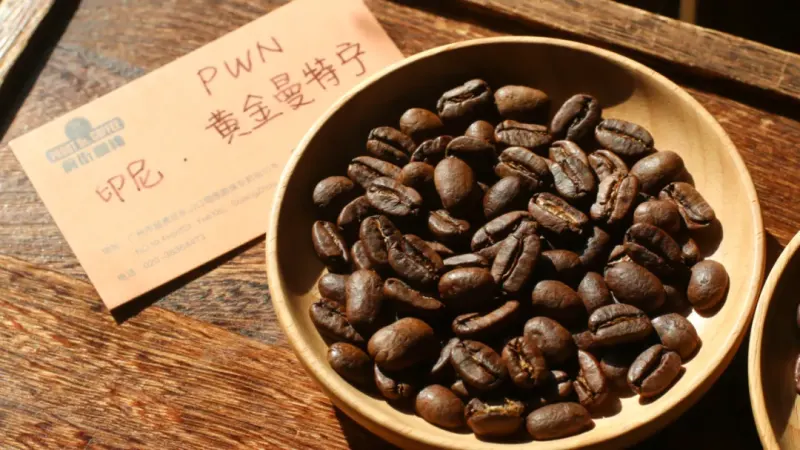
Front Street PWN Golden Mandheling Coffee Beans Country of Origin: Indonesia Growing Region: Gayo Bean Variety: TimTim/Ateng Altitude: 1600 meters Processing Method: Wet-hulled Roast Level: Medium-dark roast Flavor notes include sweet herbs, cinnamon-like spices, orange pomelo peel aroma, mellow rich sweetness, creamy walnut chocolate. The fruit acidity is restrained and soft, with a strong melon sweetness in the aroma, and as the temperature drops, herbal notes emerge, light spices, and the herbal aroma is mellow with a rich sweetness.
Special Processing Method: Wet-Hulled
Mandheling mostly adopts Sumatra's unique coffee bean processing method—wet-hulling. This is because the local weather is often rainy, with constant typhoons, unable to achieve the good weather required for sun-drying. Moreover, the local economy is not good, and they also cannot afford the more expensive washed method, which led to the development of the highly localized wet-hulled method.
Now Indonesia's coffee development is no longer as impoverished as it once was. There are quite a few estates and companies with the means to use the washed method, but why haven't they abandoned wet-hulling? Front Street believes that wet-hulling is the factor that made Mandheling coffee go global. Mention Mandheling coffee, and one thinks of wet-hulling, so they have become mutually complementary.
The specific steps of wet-hulling can be divided into the following two stages: First stage: Use a wooden pulper to remove the skin and pulp, ferment for 3 hours, then sun-dry to reduce moisture content to 30-50%, half-dry and half-wet. Second stage: Remove the mucilage and parchment layer, continue the later drying, the drying process takes 2-4 days, and the moisture content drops to 12-13%.
Besides the regular wet-hulled method, there is also an aged wet-hulled method. The coffee beans first undergo regular wet-hulled processing, then are sealed and stored in a warehouse for 2-3 years. The warehouse environment must be cool and ventilated, and the beans must be turned regularly to prevent mold and spoilage. During this period, the acidity of the coffee beans slowly diminishes and converts to sugar, and the color becomes darker, mostly yellowish-brown or dark brown. On Front Street's bean list, the Mandheling coffee beans using this processing method are called Front Street Aged Mandheling Coffee Beans. Wet-hulling creates the special flavor of Front Street Mandheling coffee. It can be said that Mandheling and wet-hulling are bound together, but today's coffee market no longer settles for the status quo. Even if wet-hulling is Mandheling's characteristic, there will be attempts with other processing methods. As mentioned earlier, Front Street Wahana Estate Sun-Dried Mandheling Coffee Beans use the sun-dried processing method.
What are Golden Mandheling coffee beans? Front Street Golden Mandheling is a selected coffee from Indonesian green bean company Pawani. It is said that due to the strict screening system: one machine density and color sorting, four manual hand-sorting, the coffee beans finally present Front Street Golden Mandheling with uniform color and uniform bean shape. When processing the green beans, Mandheling under sunlight emits a golden luster, so it is called "Golden Mandheling."
PWN is the abbreviation of the famous Indonesian green bean merchant Pwani Coffee Company. "Golden Mandheling" was registered as a trademark by PWN early on, and the words "Golden Mandheling" became PWN's exclusive property. Many Golden Mandheling on the market that are not labeled Front Street PWN Golden Mandheling merely reference PWN green bean company's screening system for Golden Mandheling coffee beans, but still do not achieve the same meticulous "passing through five gates and defeating six generals" screening of coffee beans as PWN green bean company.
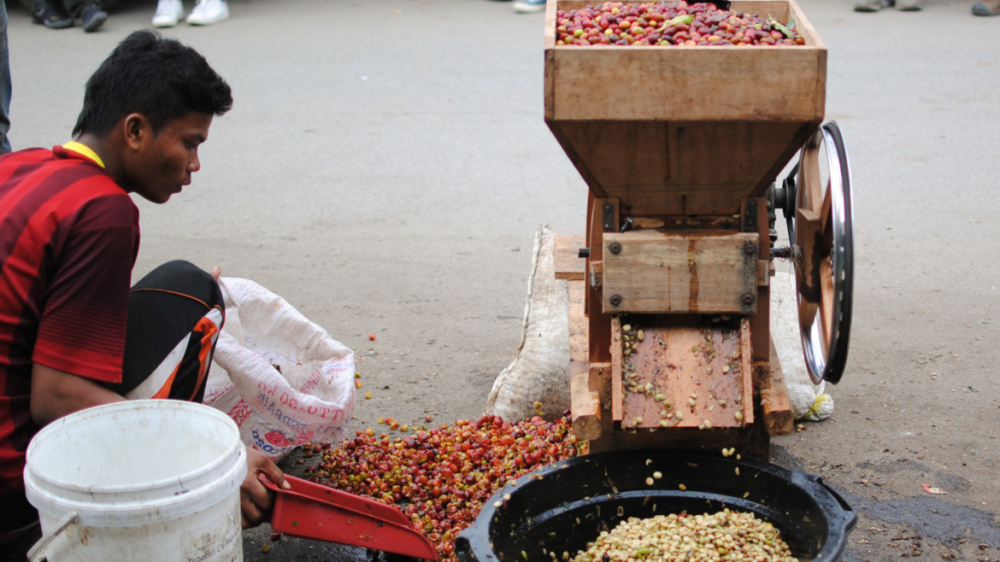
Everyone knows that Indonesian green coffee beans use the wet-hulled processing method. Because the half-hard, half-soft wet green beans are easily crushed when the mucilage and parchment layer are removed, the beans are damaged and split open like a sheep's hoof, commonly known as sheep hoof beans. Although these sheep hoof beans are not defective beans, in PWN company's view, these sheep hoof beans don't look handsome enough, so they must be screened out, to give everyone a neat and uniform impression.
You might think that coffee beans above 18 mesh, with no more than 3 defective beans in 300g of green coffee beans, and the selection of sheep hoof beans are already very strict, but PWN company can be even more extremely strict. After four manual screenings, they are uniformly put into a machine for density and color sorting, finally presenting Front Street Mandheling coffee beans with uniform color and uniform bean shape. This means that PWN green bean company, in order to ensure the excellence of its Golden Mandheling, has carried out 5 screenings.
Many Golden Mandheling on the market are green bean merchants, in order to sell at a high price, selecting Mandheling coffee beans above 18 mesh from the same G1 grade Mandheling coffee beans for sale. Some even select 3 times to ensure the appearance looks close to Front Street PWN Golden Mandheling coffee. The appearance can indeed pass off as genuine, but what about the taste? Front Street acquired several coffee beans also called Golden Mandheling for a blind test. All the baristas participating in the cupping could identify Front Street PWN Golden Mandheling, because the cleanliness is something fake Golden Mandheling cannot imitate.
The Name Mandheling Mandheling originally referred to the name of an Indonesian tribe. After Japanese soldiers colonized Indonesia and returned to Japan, they could not forget the delicious local coffee, so through trade friends, they asked the locals to help collect high-quality coffee beans, among which was this Mandheling. The Japanese loved this coffee bean very much, so they asked the shop owner. The owner thought they were asking where he was from and casually said "Mandailing."
But due to the Japanese mispronunciation, "Mandailing" became today's "Mandheling." Thus Mandheling accidentally became the name of a coffee bean. This local person was actually the boss of Indonesian PWN company (Pwani Coffee Company) mentioned below. This company was also the first to export Golden Mandheling coffee beans to Japan. Front Street has been purchasing Front Street PWN Golden Mandheling for many years. PWN also changed from initially 60kg per bag to later 30kg per bag, and the growing region also changed from Lintong to Gayo Mountain.
The above content is compiled by CoffeeHunters, a coffee news website.


