







Why are robusta coffee beans still so widely used?
Robusta coffee beans are often called bad-tasting and high in caffeine, yet they remain widely used because the plant resists pests and disease, yields heavily, and costs little to grow, which suits commercial mass production. The bitterness comes mainly from high chlorogenic acid and low sucrose rather than from poor quality alone; Indian Royal Robusta shows a clean cup, and a 10% washed Robusta in a Colombian and Brazilian blend adds crema, nutty aroma, and creamy body.
Where are robusta coffee beans grown? The variety originated in the Uganda and Congo regions of Africa, and its trees tolerate heat, cold, drought, and humidity with very high survival rates. Among commercial species, Liberica holds the least caffeine, Robusta the most, and Arabica in between. Leaf rust in the late 19th century destroyed many Arabica trees, and farmers turned to hardier plants, which is how Robusta secured its place in instant coffee and espresso blends.
Robusta is often labeled as "bad-tasting" and "high in caffeine," but few people delve into why it is still so widely used. Front Street Coffee believes that to understand this variety, one must start with its botanical characteristics, historical role, and practical applications. Robusta is naturally resistant to pests and diseases, high-yielding, and low-cost, making it suitable for commercial mass production, and thus widely used in instant coffee and espresso blends. Its bitterness mainly comes from high chlorogenic acid and low sucrose, but this does not mean all Robusta is of poor quality—Indian Royal Robusta demonstrates a clean flavor profile. Front Street Coffee's commercial blend adds 10% washed Robusta, combined with Colombian and Brazilian beans, producing an espresso with rich crema, nutty aroma, and creamy fullness, where the bitterness dissipates quickly. This article will comprehensively analyze the uses and controversies of Robusta.
We often hear claims like this: Robusta is synonymous with inferior coffee and has extremely high caffeine content. But few people have truly discussed it in depth. Since its flavor is so unpopular, why is it still used in large quantities? Front Street Coffee feels it is necessary to first get to know the Robusta variety.
Caffeine protects Robusta from pests
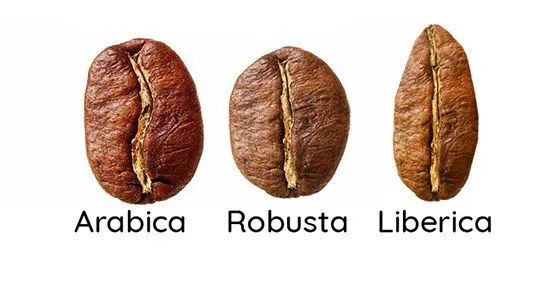
Besides Robusta, the other commercially widely cultivated varieties are Arabica and Liberica. Classified by fruit size, Liberica is called "large-bean coffee," Robusta is "medium-bean coffee," and Arabica is the smallest, known as "small-bean coffee." Among these three, Liberica has the lowest caffeine content, Robusta the highest, and Arabica in between.
In the late 19th century, leaf rust swept through coffee trees, causing large-scale withering and even death of Arabica. Coffee farmers at the time tried switching to Liberica to cope, but this bean had low yield, a heavy flavor, and an obvious smoky taste, making it hard for the public to accept, so it received little attention. Later, people found Robusta.
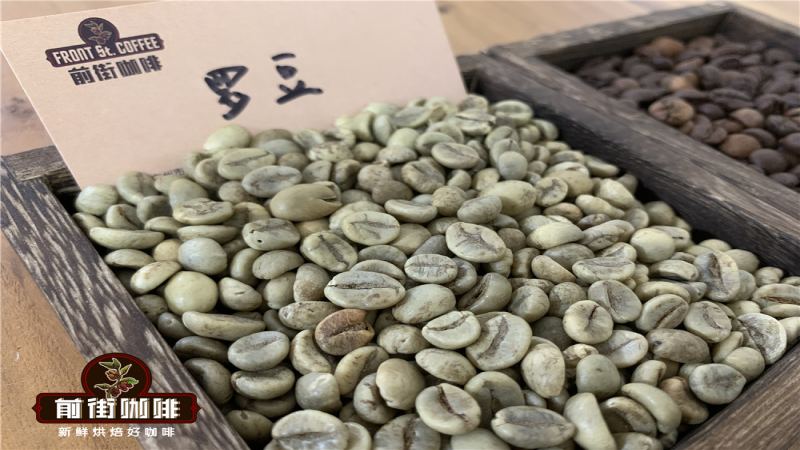
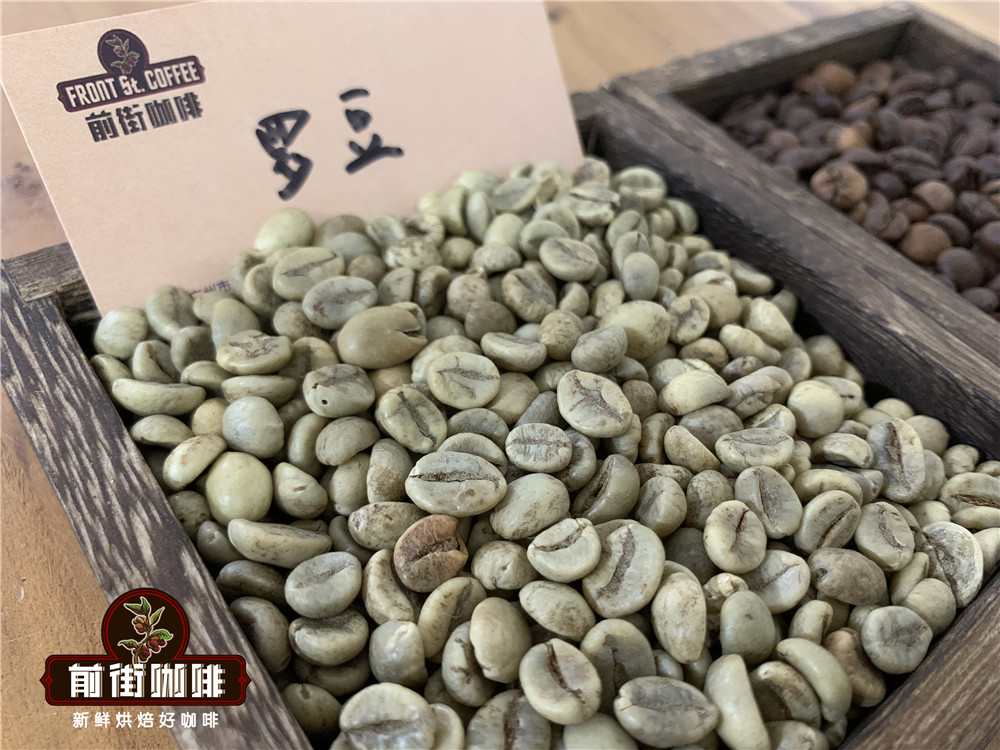
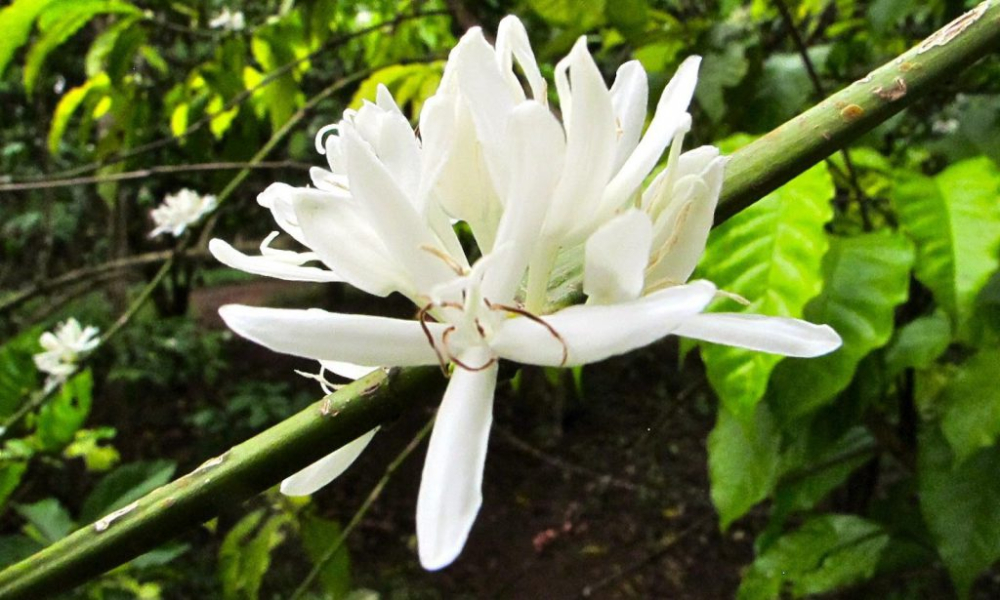
Robusta originated in the Uganda and Congo regions of Africa. This variety has strong resistance to pests and diseases, strong adaptability to growing environments, and fast growth. From a cultivation perspective, Robusta coffee trees are tolerant of high temperatures, cold, drought, and humidity, with extremely high survival rates. Its caffeine content ranges from 1.7% to 3.0%, about twice that of Arabica. Caffeine, as a plant's natural pesticide, protects Robusta from most insect attacks. Robusta has a very high yield per tree, with fruits slightly rounder and smaller than Arabica, and beans that are flat and round with a straight center crease.
Because Robusta is highly resilient, high-yielding, fast-maturing, and highly adaptable, it can usually be grown on low-altitude plains and can also be managed and harvested uniformly by machine. Therefore, Robusta has lower cultivation costs, is more suitable for commercial mass production, and naturally sells at a lower price. Today, many countries cultivate it, such as Vietnam, which mainly produces Robusta beans.
Does Robusta necessarily taste bad?
Robusta is unpopular in coffee circles mainly because its taste is on the bitter side and lacks the fruity acidity of Arabica. Analysis shows that Robusta has a very high chlorogenic acid content and relatively low sucrose content. Chlorogenic acid is the source of coffee's bitter and astringent taste, typically bringing a full-bodied, deep bitterness, along with flavor notes of walnut, peanut, hazelnut, barley tea, and grain. When improperly processed, it can also produce a strong, pungent earthy taste or negative rubber-like mouthfeel. Moreover, because growers do not invest much in management costs, mass-produced coffee beans naturally receive little attention and are mostly used as raw material for commercial blends or instant coffee.
Although people currently prefer Arabica more, this does not mean Robusta is necessarily bad—it only shows that Robusta's market acceptance is not as high as Arabica's. As is well known, coffee flavor is not only related to variety but also influenced by regional climate, altitude, soil quality, and other factors, while post-processing methods, roasting, and brewing can also change the flavor direction of the coffee in the cup. In other words, with suitable cultivation and processing, Robusta beans can also exhibit positive flavors. India has a Royal Robusta coffee bean that, through refined cultivation and processing, displays an extremely clean flavor profile.
Facts prove that Robusta has many uses
Because Robusta is easy to cultivate and survive, its low cost becomes its greatest advantage, making it suitable for various commercial coffee products. Compared to freshly ground coffee, instant coffee production means losing a large portion of coffee flavor, but its advantage lies in quickly restoring a cup of invigorating coffee for us in our busy lives, making Robusta beans the perfect choice.
Deep-roasted Robusta beans accumulate a large amount of gas, releasing rich crema when extracted into espresso, and their solid flavor profile also provides more full-bodied texture to the coffee. We all know that coffee in the traditional sense tends toward a strong, bitter, full-bodied taste without much acidity, which matches the flavor characteristics of dark-roasted Robusta. This is also why Robusta beans still survive in the current specialty coffee era. For example, Italians, when making espresso, appropriately add a certain proportion of Robusta beans to the blend to intensify its "coffee taste."
Front Street Coffee wanted the espresso made from one of its Italian-style blends to present rich, aromatic crema, so it added 10% washed Robusta coffee beans. Combined with Colombian washed coffee beans (30%) and Brazilian semi-washed coffee (60%), it forms Front Street Coffee's commercial blend. The resulting espresso has rich golden crema and nutty aroma. When tasting, there is a roasted coffee bitterness, but accompanied by more of a creamy, full-bodied mouthfeel, and after swallowing, the bitterness dissipates, leaving a lingering fragrance on the lips and teeth.
For professional coffee knowledge exchange and more coffee bean information, please follow Coffee Workshop (WeChat public account: cafe_style)
For more specialty coffee beans, please add the private WeChat of Front Street Coffee (FrontStreet Coffee), WeChat ID: qjcoffeex
The above content is compiled by CoffeeHunters, a coffee news website.


