







Where does coffee flavor come from?
Coffee flavor comes from the plant's growing conditions and how the fruit is handled, not from added syrups. Six factors shape the cup: soil, climate, altitude, harvest timing, processing method, and roasting. Colombian strawberries notes are a result of these variables, especially bright acidity grown at high altitude, read by the brain as fruity and crisp.
Soil nutrients, humidity, rainfall, and wind affect when plants flower and fruit, so a balanced yearly cycle gives more stable cherries. Underripe cherries taste green and unripe, while overripe ones turn negative. Colombia produced coffee such as the two strawberry-toned lots compared here differ by origin, variety, processing, and cupping score, which explains the difference in Colombian coffee taste.
Why can you taste strawberry in coffee? Starting from the growth logic of the coffee plant, this article sorts out the influence of six major factors—soil, climate, altitude, harvest, processing, and roasting—on flavor, and focuses on comparing two strawberry-toned Colombian coffee beans: Front Street Flower Moon Night and Front Street Sakura. The two differ in origin, bean variety, processing method, and cupping performance, while Front Street Strawberry Candy Coffee Beans are also recommended as another option for getting started with strawberry flavors.
Have you ever tried strawberry-flavored coffee? Many people, upon first tasting a coffee with strawberry notes, are struck by that vivid fruity aroma. The flavor spectrum of coffee is far broader than imagined; besides fruits and florals, the flavor wheel also records many surprising descriptors—if you're interested, you might look it up yourself.
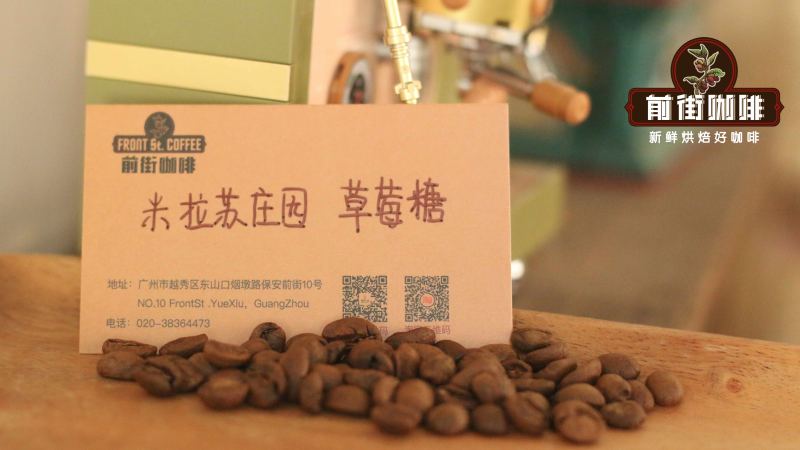
If you want to experience strawberry flavors, Front Street Strawberry Candy Coffee Beans are a choice worth prioritizing. This coffee is a blend of Geisha from two origins, Costa Rica and Panama: the Costa Rican honey process brings a rounder sweetness, while the Panamanian washed Geisha contributes florals and berry-like sweet acidity. In the cup you can sense delicate layers of grape, blueberry, and rose, and it works well for pour-over, cold brew, espresso, or drip.
Coffee is essentially a plant, so its flavor sources are also closely tied to its growing process. The main influencing factors include the following:
Soil composition—nutrient-rich soil is more likely than poor soil to produce coffee with outstanding flavor. The more fully the plant absorbs nutrients, the better its growing state, and the coffee cherry can pass more flavor to the seed inside.
Climate—weather patterns such as humidity, rainfall, and wind affect when plants flower, fruit, or enter dormancy. If the annual cycle is relatively balanced, the quality of the cherries produced is also more stable; once climate disruption causes premature or delayed fruiting, the coffee's flavor performance suffers.
Altitude—coffee grown at high altitude often has brighter acidity than at low altitude. This brightness is often interpreted by the brain as fruity and crisp.
Harvest—cherries picked before ripening tend to give coffee an unpleasant green, unripe taste; cherries picked overripe may produce negative fermented flavors. Only when carefully selected at just the right ripeness can you get balanced, lively, and delicious coffee.
Processing—controllable processing methods help form balanced flavors. Especially with natural processing, the coffee beans dry inside the cherry for days or even weeks and absorb the flavors of the sugary fruit, thereby enhancing fruity expression.
Roasting—light to medium roasting usually preserves the coffee's fruity flavors. If roasted too dark, these fruity flavors disappear and turn into bitterness and charred notes. Before the rise of specialty coffee, ultra-dark roasting was once mainstream, which also explains why fruity coffee seems so fresh or even unconventional today.
Fruity flavors are not something coffee lovers deliberately create for novelty.
Next I'd like to talk with you about two coffee beans under Front Street Coffee (FrontStreet Coffee) with prominent strawberry flavors: Front Street Flower Moon Night and Front Street Sakura. Both come from Colombia, but their origins are not the same—Sakura is from Finca El Paraiso in Cauca, while Flower Moon Night comes from Finca Astorga in the Huila region.
In terms of processing, Front Street Finca El Paraiso Sakura uses double anaerobic enzyme washed, giving a more pronounced acidity; Front Street Flower Moon Night is anaerobically natural processed, with an overall richer, more balanced mouthfeel. As for bean varieties, Front Street Finca El Paraiso Sakura is Castillo, while Front Street Flower Moon Night is Caturra. Regarding these two varieties, there is a common view in coffee circles: Caturra and other traditional Latin American varieties often produce solid but rather traditional coffee—unlikely to go wrong, yet hard to call stunning—and it is not easy for growers to use them to achieve quality differentiation. An important contribution of Colombia's sensory trials was discovering that Castillo can also make good coffee, even extraordinary coffee—some Castillo samples have scored above 90 in cupping.
Front Street uses a medium roast for both beans. The overall flavor profile of Front Street Flower Moon Night is strawberry, florals, and a slight fermented wine aroma; Front Street Finca El Paraiso Sakura leans toward strawberry jam, florals, soft fruity acidity, and a hint of spiced tea.
Why not brew and compare them at home yourself, and see what other similarities and differences there are between these two strawberry-flavored beans.
The above content is compiled by CoffeeHunters, a coffee news website.


