







Do coffee experts really drink espresso only
There is no single drink that marks someone as a coffee expert. Baristas drink widely: some have a latte daily, some brew a pour-over first thing, and some prefer tea. The idea that understanding coffee means a daily pour-over black coffee is a fixed consumer impression rather than reality, and newcomers do not need to force themselves into black coffee.
Beginners who find black coffee harsh on the palate can start with cappuccino, mocha, or flavored lattes, where cream or syrup softens the bitterness. From there the path runs through mocha, latte, cappuccino, and flat white toward american coffee and pour-over. Blends such as the Warm Sun example help drinkers find the cup that suits them without copying a barista's order.
People often ask Front Street: do those who truly understand coffee drink espresso or pour-over? Actually, there is no standard answer to this question. The daily drinks of baristas are all over the place—some always have a latte in hand, some must brew a pour-over first thing in the morning, and some simply drink tea. Front Street believes that people who understand coffee never limit themselves; they enjoy appreciating every kind of coffee. This article, from a beginner's perspective, sorts out the progression path from mocha, latte, and cappuccino to flat white, americano, and then pour-over, and combines examples like Front Street's Warm Sun blend to help you find the cup that suits you.
What do people who understand coffee usually drink? Front Street has recently received this kind of question frequently. To be honest, there is no unified answer at all. Based on Front Street's own drinking habits and those of the baristas around us, some people have a latte every day without fail, some brew a pour-over first thing in the morning, and some baristas even prefer tea. Front Street knows clearly that what the askers really want to understand is which coffee to drink so they can look like a veteran and not feel insecure in front of professional baristas, or else they want to copy baristas' preferences when ordering. Front Street thinks there is absolutely no need for this, because people who truly understand coffee explore widely, are willing to try all kinds of coffee, and know how to appreciate the unique qualities of each one.
Many consumers have a fixed impression: understanding coffee equals a daily cup of pour-over black coffee. But the reality is far from that. Front Street also suggests you do not need to force yourself to start with black coffee. If you can indeed perceive those delicate and elegant flavors in black coffee, then follow your heart and continue exploring the terroir characteristics of more coffee beans. However, more consumers resist the strong impact of black coffee on the palate, so Front Street suggests you may start with drinks like cappuccino, mocha, or flavored lattes that have added cream or syrup; once the bitterness of coffee is masked by other ingredients, it goes down much more smoothly.
Beginners who have just come into contact with coffee often envy those experts who can judge origin and processing method by senses alone. But in fact, everyone must go through a long accumulation before growing from a novice into an excellent taster. Drinking black coffee is indeed the best way to feel texture and flavor, but bitterness and slight roast notes are enough to make most beginners keep their distance from coffee. Fortunately, the coffee drinks mentioned above are all quite friendly to beginners.
Even americano is espresso diluted with water, allowing the overall flavor to stretch out. Unlike drinks such as latte, americano has no extra added substances to mask the flavor of the espresso, so you can still taste the differences and characteristics among different coffee beans.
Next, Front Street lists several common espresso drinks found in cafes and ranks them from mild to strong in coffee impact. If you are usually especially sensitive to bitterness, Front Street suggests trying mocha first. It adds chocolate to milk coffee, and because of the chocolate, the coffee flavor becomes faint, so drinking it is basically like having a rich chocolate milk. Once you can accept mocha, you can try latte. Latte removes the chocolate syrup, and its sweetness basically comes from the milk itself. Once you are used to the taste of milk coffee, you can move on to cappuccino.
Cappuccino and latte both belong to milk coffee, and the main difference between them lies in the ratio of coffee liquid to milk. Taking FrontStreet Coffee as an example, FrontStreet's standard espresso extraction uses 20 grams of grounds to extract about 36 grams of coffee liquid in about 28 seconds. A latte uses two shots of espresso as the base, then adds about 200 milliliters of milk for integration; cappuccino takes a single shot, which is about 18 grams of coffee liquid, then adds milk for integration.
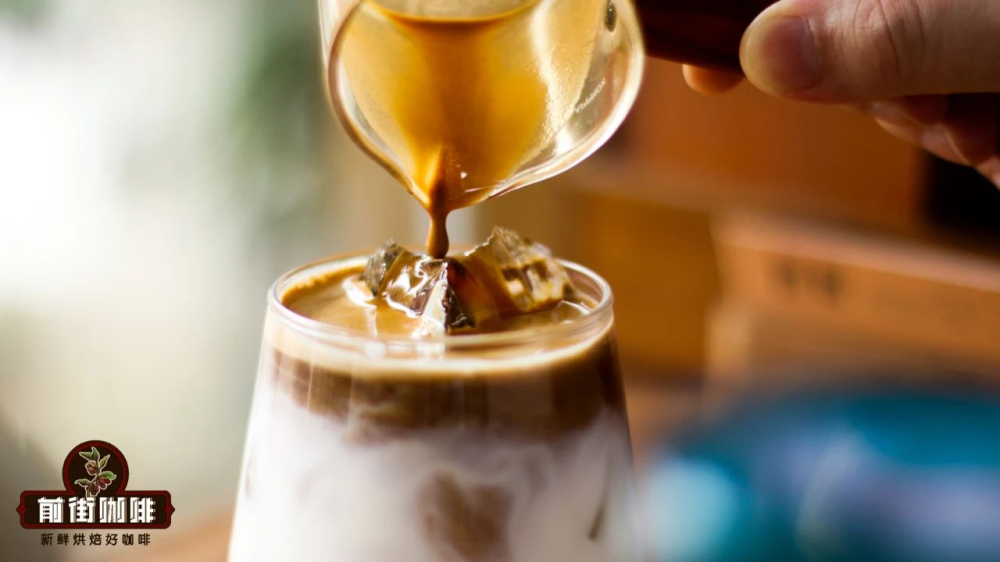
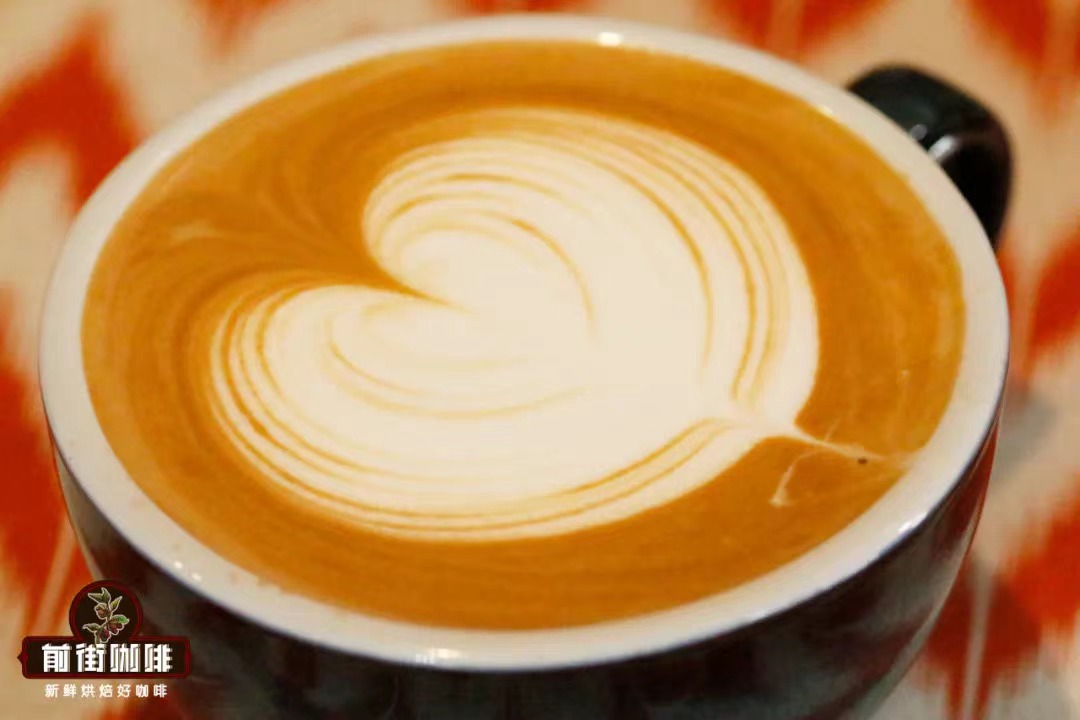
Therefore, cappuccino's "coffee taste" is more prominent. In addition, the degree to which the milk is steamed into foam is also different between the two; usually cappuccino's milk foam is much thicker than latte's. Here I would also like to introduce another type of coffee—flat white. Flat white coffee has become very popular in China in recent years. This coffee has almost no milk foam; what you drink is the integration of milk and coffee liquid, and the cup size is also relatively small.
When you can even accept cappuccino, you can try americano. The correct way to drink americano is actually to dilute espresso with water. Generally, the ratio of coffee liquid to water is controlled between 1:4 and 1:8, and different cafes have their own recipes. The taste of americano often depends on the espresso beans the cafe uses. Still taking Front Street as an example, Front Street's espresso beans have four blends. Interested friends can check the Taobao store: FrontStreet Coffee, or look them up on the WeChat mini program: Coffee Review.
Today I mainly want to talk about the Warm Sun blend that Front Street stores are still using. Everyone knows that ordinary cafes, in order to save costs and ensure the harmony of milk coffee, use espresso blend beans with nutty flavors. But in order to highlight uniqueness, the Warm Sun blend used by Front Street has fermented wine aromas, and Ethiopian Red Cherry coffee is added to enhance the overall sweetness. Although the blend cost increased, because of its unique taste it has gained a large group of loyal fans. Not only is it delicious as a milk coffee, but when made into an americano you can better taste the flavors of the Warm Sun blend coffee beans: chocolate, cream, vanilla, and fermented wine aromas.
Once you are used to all the coffees above, you can try pour-over coffee. In fact, pour-over coffee is black coffee; unlike americano, the two differ in extraction method. Pour-over belongs to drip coffee. Generally speaking, there are far more bean choices for pour-over coffee than for espresso. For example, Front Street has more than 50 kinds of pour-over coffee beans, with many choices from every origin. Front Street believes that to understand coffee beans from different origins, you first need to build your own database, whether in terms of senses or flavors. Sensorially, it means forcing yourself, while drinking coffee, to connect the taste with ingredients commonly eaten in daily life. Here I would like to introduce the coffee flavor wheel. The coffee flavor wheel was first published in 1995 and is one of the most iconic resources in the coffee industry. It was completed by dozens of professional sensory panel members, scientists, and green coffee traders through cooperation between WCR and SCA. On this chart, experts match the tastes in coffee one by one with food ingredients.
Drinking pour-over coffee is not just about drinking; you need to learn to taste. Comparing with the flavor wheel is the most direct learning method. However, because the flavor wheel originated abroad, some ingredients are relatively hard to find in China. There is another method that can accelerate learning about pour-over coffee, which is to first learn the basics of pour-over coffee. For example, by reading books you can understand the general tendencies of coffee beans grown in each origin, such as Central American coffee beans having nutty flavors, Asian coffee beans showing low acidity, and so on, and why such flavors appear. Books explain this clearly.
As for some doubts about coffee—how to brew coffee? How to adjust the grind size? You can also learn the relevant knowledge through books. If you do not want to search randomly, you can follow Front Street's official account: FrontStreet Coffee. In the official account, Front Street also shares coffee knowledge for free, from getting to know coffee beans to coffee brewing, to coffee brewing equipment and even coffee bean roasting methods; Front Street shares everything in meticulous detail.
Professional coffee knowledge exchange. For more coffee bean information, please follow Coffee Workshop (WeChat official account: cafe_style).
For more specialty coffee beans, please add the private WeChat of FrontStreet Coffee. WeChat ID: kaixinguoguo0925.
The above content is compiled by CoffeeHunters, a coffee news website.


