







How does water pouring shape your coffee brewing?
Pour-over success rests on three things: knowing the current state of the beans, having clear criteria for judging flavor, and keeping the pour technique stable and consistent so the beans' flavors extract fully. The pouring step itself decides much of the result, from the bloom through circular pours and water stream control to how the dripper behaves.
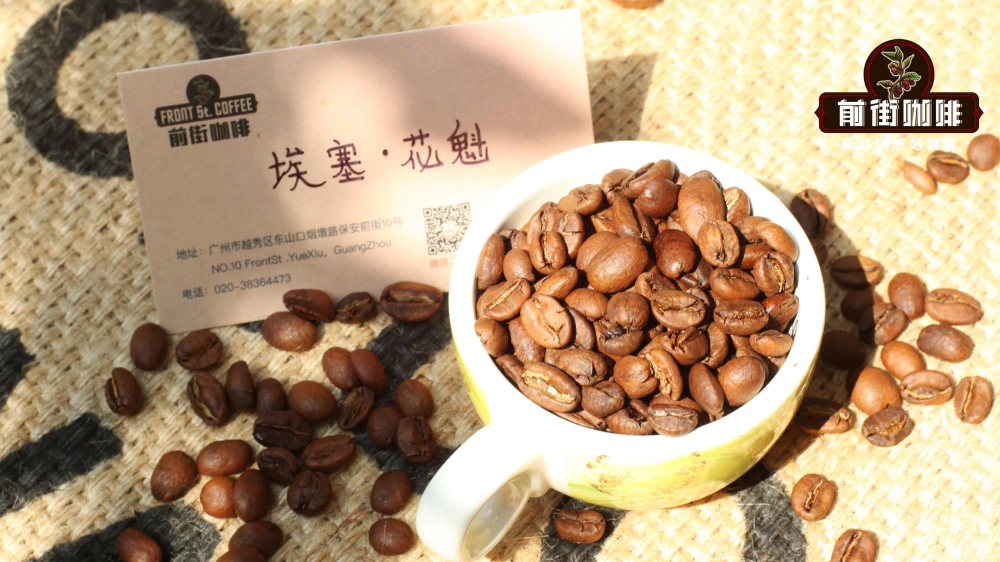
Start with fresh beans and use them within about 40 days of the roast date, since aroma fades quickly. Everyday options such as a Yirgacheffe, a sun-dried Huakui, or a strawberry candy profile give distinct flavors at a reasonable price. Pour with a thin, steady stream rather than a thick one, similar to watering a potted plant slowly so the bed absorbs evenly.
For those just starting out with pour-over coffee, facing a dazzling array of brewing books and various techniques, it's common to wonder which step matters most. In fact, the core comes down to three things: understanding the current state of the coffee beans, having clear criteria for judging flavor, and maintaining a stable, consistent brewing technique so that the beans' inherent flavors can be fully extracted. This time, Front Street Coffee focuses on the seemingly simple yet highly nuanced step of pouring water—from blooming to circular pouring, from water stream control to dripper characteristics—breaking down one by one the details where beginners are most likely to stumble, and recommending several everyday beans that are suitable for daily practice and offer both flavor and value for money, helping you take your first step into pour-over coffee in a more solid way.
There are all kinds of coffee brewing books in bookstores, and those just getting into pour-over coffee often agonize over whether they're doing each step correctly. What really matters in pour-over coffee? In summary, it's about grasping the state of the coffee beans, establishing a baseline for flavor judgment, and sticking to a correct and consistent brewing process to extract as much of the bean's original character as possible.
Today, Front Street Coffee will talk about pouring techniques during brewing. Setting everything else aside, the act of pouring alone has plenty of subtleties. But before you start, be sure to prepare high-quality beans with a fresh roast date, because aroma dissipates quickly over time—it's recommended to consume them within 40 days. In terms of varieties, you can prioritize everyday-grade options like Front Street Coffee Yirgacheffe Gudingding, Front Street Coffee Sun-Dried Huakui, and Front Street Coffee Strawberry Candy. These have distinctive flavors, are reasonably priced, and suit many scenarios—ideal for home users.
Whether it's the pulse-pour method, the continuous-pour method, or the Kono style or Kanazawa style, when pouring you should avoid too thick a stream that causes overly aggressive agitation and floods the entire coffee bed. Think of watering a potted plant: we usually add water slowly, letting the soil absorb it evenly, rather than dumping a whole bucket at once and letting the soil get violently washed by the stream, even splashing out of the pot.
Whether it's a flat-bottom dripper or a cone-shaped dripper, the thickest part of the coffee bed in a pour-over filter is almost always in the center. So during the blooming stage, pour slowly from the center to evenly wet the coffee bed and pave the way for subsequent extraction; after blooming ends, also pour from the center outward, observing how the bed absorbs water while fine-tuning the stream and speed.
The reason to slow down is that if beginners pour too quickly, there's less room to correct and adjust later. And choosing to work from the inside out rather than the outside in is because the center of the bed is thicker; brewing from inside out gradually pushes the central grounds outward, forming a coffee wall.
If instead you work from the outside in, the water stream will immediately flow from the dripper's edge along the ribs straight into the server. When the stream just skims lightly over the coffee surface, what do you get? That's right—a cup of coffee water with only a faint coffee taste. Take the most common Hario V60 dripper as an example: beginners often brew coffee that tastes watery, because the V60 has many tall ribs. Once the stream hits a blank area not covered by the coffee wall (for instance, on the second pour when the water level rises above the coffee wall built during the first pour), the water tends to run quickly down the ribs to the bottom, diluting the concentration of the coffee already brewed in the server from the first pour.
As for starting the pour from the center point, how can you make it even? If it's hard to control the speed of drawing circles at first, try keeping your wrist and arm still, maintaining the same flow rate and stream with the pour-over kettle, and use your body to draw the circle, driving the stream's movement.
The above content is compiled by CoffeeHunters, a coffee news website.


