







Where does the acidity in Colombian coffee come from?
Colombian coffee is known for a smooth mouthfeel, bright fruity acidity, and balanced flavor. The growing belt runs along the western stretches of the Andes, where three mountain ranges create varied ecosystems and volcanic ash soils. High-altitude sloping farms with cool, misty conditions let cherries accumulate more sugar, producing fuller body and a sweet aftertaste.
Colombia has over 500,000 coffee growers, mostly small family farms where each stage of production is done by hand, which helps explain the overall coffee quality relative to large-scale production. The National Coffee Growers Federation, known as FNC, supports this system, and its green bean grading standards sort lots by quality.
Colombian coffee is often described as having a smooth mouthfeel, bright fruity acidity, and balanced flavor, traits that are inseparable from its unique geographical environment. This article systematically examines the sources of Colombian coffee's acidity and its quality system—from Colombia's growing conditions, the founding background of the FNC association, and the green bean grading system, to the flavor profiles of specialty regions like Huila, and further to distinctive beans such as Sidra and Pacamara on the Front Street Coffee bean list—taking you on a comprehensive journey through this coffee nation known as "green gold."
For more specialty coffee information, welcome to follow our WeChat public account: Front Street Coffee (FrontStreet Coffee)
In Colombia, coffee is called "green gold," and the local coffee-drinking atmosphere is incredibly vibrant. Whether on main streets or in narrow alleys, cafes can be seen everywhere, filled with customers from morning till night, which speaks volumes about Colombians' heartfelt love for coffee.
What makes Colombian coffee so unique?
People typically describe Colombian coffee as having a smooth mouthfeel, abundant fruity acidity, and harmonious flavor, and these flavor strengths are inseparable from Colombia's exceptional natural conditions.
Colombia's southern region straddles the equator with a considerable geographical span. The coffee-growing belt is mainly distributed along the western stretches of the Andes Mountains, with three high mountain ranges arranged in sequence from south to north. The country has a diverse range of ecosystems, with different forests, grasslands, and rivers and lakes at the foot of each mountain, giving rise to varied climate characteristics. The volcanic ash soil formed over millions of years provides a variety of ideal environments for coffee cultivation.
Most coffee trees grow on sloping highlands. The misty clouds and low temperatures brought by high altitude allow coffee cherries to accumulate more sugar, ultimately producing coffee with a rich, full-bodied flavor and a sweet aftertaste.
Colombian National Coffee Growers Federation (FNC)
Colombia has over 500,000 coffee growers, and most local farmers operate on a small family scale. Every stage of coffee production is done by hand, so the overall quality of the coffee beans is superior to Brazil's large-scale production model.
As Colombia's coffee-growing industry flourished, a group of growers engaged in coffee export formed a coffee producers' organization, but this organization did not truly serve to regulate the industry. Later, at the urging of coffee farmers across Colombia, the government established the Colombian National Coffee Federation (FNC) in 1927, aimed at ensuring local coffee quality while safeguarding the rights and welfare of every coffee producer, providing many coffee farmers with reasonable and stable income security, and promoting the healthy development of the entire coffee industry.
In recent years, with the support of the FNC, local coffee farmers have developed methods for coping with leaf rust and climate change, and are also continuously seeking a balance between quality flavor and increased yield.
What grade is Colombian Supremo coffee?
Colombia's green bean grading system first classifies beans by size. The highest grade is Supreme Screen 18+. Colombian Supremo coffee beans means that in a 500-gram green bean sample, 95% of beans reach Screen 18 or above, with plump and uniformly sized beans.

Packaged green coffee beans are generally screened using fixed-size mesh screens, with different specifications corresponding to different hole sizes. For example, with a mesh size of Screen 17, beans larger than that size cannot pass through the screen. Therefore, the larger the screen number, the larger the beans retained on the screen.
After size grading, defective beans and foreign matter are removed, and then the beans are evaluated based on defect rate and cupping results. For defect rate grading, Colombia has specific standards, mainly divided into two categories: primary defects and secondary defects.
Primary defects (affecting cup characteristics): black beans, musty beans, or sour/rotten beans. Maximum allowable defect value: 12. Secondary defects (related to appearance): discoloration (stale, faded, yellowed, mottled), bad beans, broken, chipped, cut, insect-damaged, deformed, immature, gray or soft, etc. Maximum allowable defect value: 60. Points are deducted according to the number of defects, and the final score determines three grades: AA grade, A grade, and G grade.
Every farmer reports a number and enters green bean information for future traceability. Colombian exported green coffee beans are typically named in the format of country + region + grade + other information. For example, the green beans for Front Street's Huila everyday drinking coffee are Colombia Huila Supremo SC17/18 FNC.
Huila Region Coffee Beans
Colombian coffee growing regions are extremely vast, and flavors vary between different regions due to differences in growing area. Among them, specialty coffee mainly comes from Huila, Cauca, and Nariño in the south.
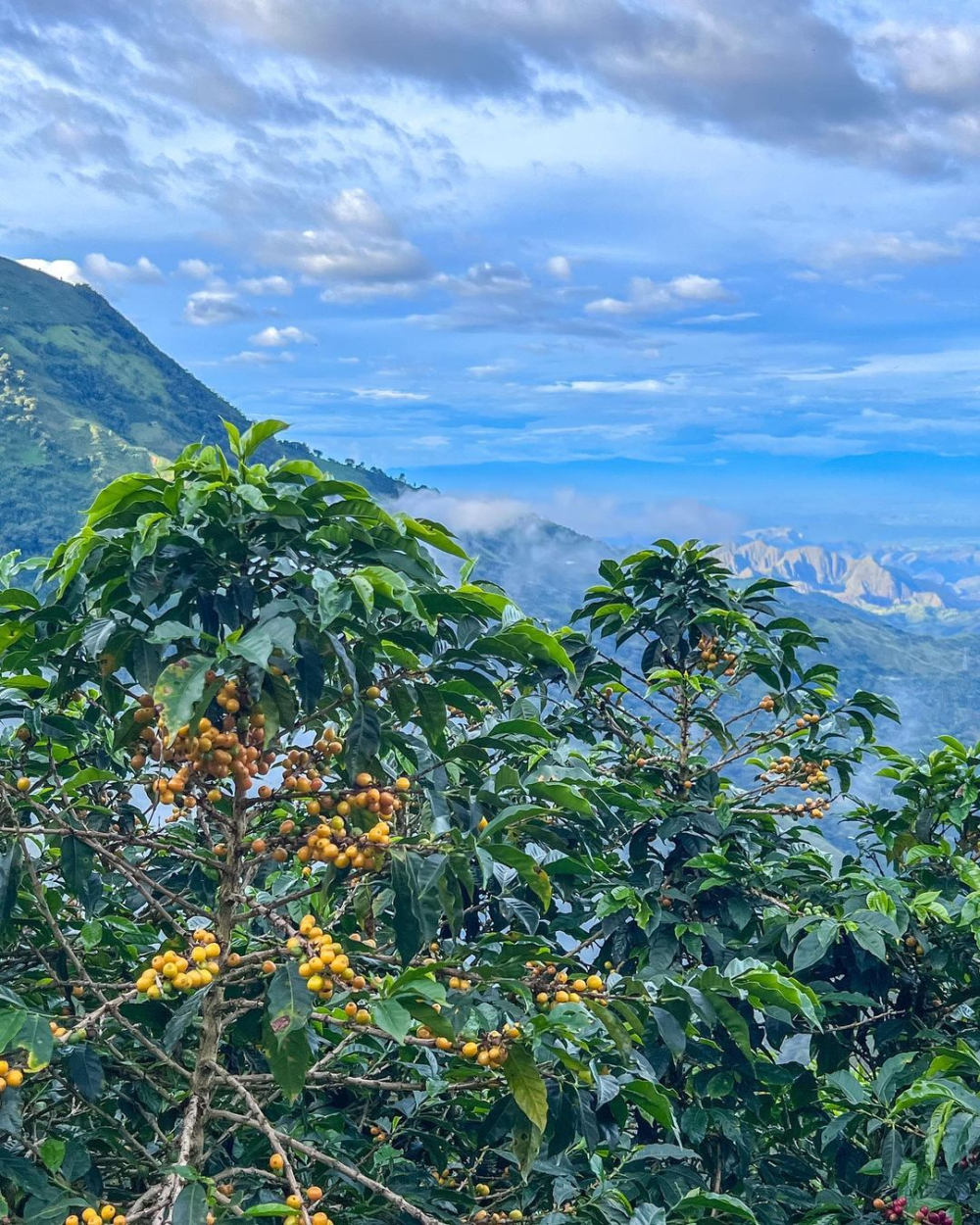
The Huila Department is surrounded by mountains, with an average elevation above 1,500 meters. Several major rivers in Colombia flow through this area. The abundant water sources and humid air, combined with the cool monsoons formed in the valleys that keep temperatures from getting too high while blocking cold winds from intruding, along with the fertile soil brought by the Huila volcano, allow Arabica coffee here to absorb ample nutrients. This produces many lots of coffee beans with complex aromas and fruity flavors.
Through cupping, Front Street found that coffee from Huila has rich nutty and chocolate aromas, with prominent caramel sweetness, and a smooth, clean entry that perfectly matches the typical characteristics of Colombian coffee. Therefore, Front Street has also included it in the super cost-effective everyday drinking coffee series.
On the Front Street Coffee (FrontStreet Coffee) bean list blackboard, every classic producing country has its dedicated section, and Colombia is no exception. Among the many Colombian coffees on the Front Street Coffee (FrontStreet Coffee) bean list, two beans from the Frontera—Sidra coffee and Pacamara coffee—have amazed many coffee connoisseurs with their unique flavors, and have also made beginners new to specialty coffee marvel that coffee could have such aromas.
The name "Sidra" is a transliteration of "Sidra," which means "apple juice, apple cider" in Spanish. The Sidra plant has a relatively thick trunk and can grow up to four meters tall. The leaves are slender, the flowers have five petals, and the yield is excellent. Moreover, the cherries, like the plant itself, are larger than most Arabica varieties, making it suitable for cultivation at altitudes of 1,600–1,800 meters.
However, since it belongs to the Arabica species, its disease resistance is naturally relatively weak. It is worth mentioning that its pest resistance is actually quite good. Therefore, in the absence of disasters, its yield is quite impressive!
Most Sidra available on the market today comes from Colombia, which leads many people to mistakenly believe that Sidra originated in Colombia. But like Geisha, the place where it became famous is not the same as its place of origin—Sidra actually originated in Ecuador!

For this bean, Front Street uses a medium roast to present its layered fruity aromatics and chocolate-like sweetness. Since its launch, Front Street has also tested it using cupping, pour-over, cold drip, French press, siphon, and cold brew methods. Sidra consistently delivers bright and full-bodied grape and passion fruit acidity, with a honey sweetness in the finish and a subtle hint of honeysuckle floral aroma—very pleasant~
The above content is compiled by CoffeeHunters, a coffee news website.


