







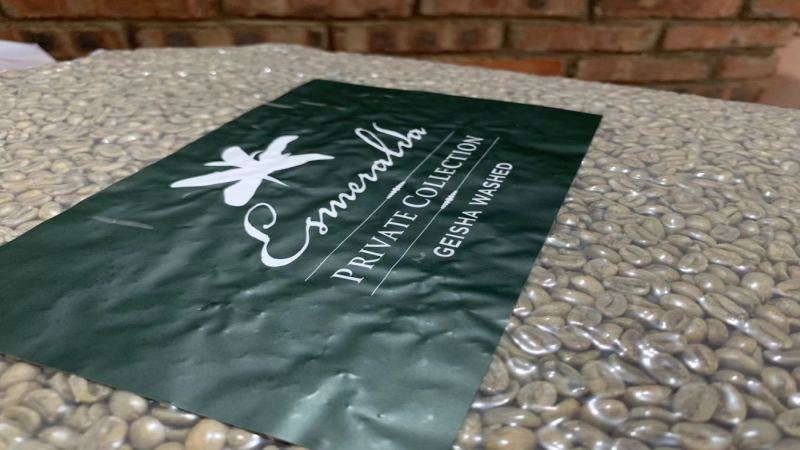
How does Hacienda La Esmeralda grade its geisha coffee beans?
Panama's Hacienda La Esmeralda discovered and promoted the Geisha flavor, and grades its Geisha lots by cultivation altitude. Auction Geisha comes from the highest plots, while Blue Label sits at the lowest Geisha grade yet still reaches 1,500 meters. The estate first splits into three main plots, then subdivides them into more than five small plots, each labeled with its altitude.
Altitude alone does not decide coffee quality: variety, processing method, and cupping score join altitude to form the current four indicators for judging specialty coffee. Other Central American countries also grade beans by altitude, but far less finely than Hacienda La Esmeralda. Panama's own coffee was first introduced by European immigrants in 1780 and long lagged neighboring Costa Rica in output.
Panama's Hacienda La Esmeralda is the discoverer and promoter of the Geisha flavor, and also a representative estate known for its altitude-based grading system. In this article, Front Street Coffee systematically reviews the development history of Hacienda La Esmeralda, the terroir differences among
In the coffee circle, the name of Panama's Hacienda Esmeralda is almost universally known. It is both the discoverer and promoter of the Geisha flavor, and a model estate that adheres to a strict altitude classification system. Front Street Coffee believes that Hacienda Esmeralda's ultimate pursuit in this regard is worth emulating by many estates. Front Street Coffee's cultivation base in Yunnan is likewise divided into 5 different planting zones based on altitude and environmental conditions.
When Front Street Coffee communicates with guests, it is often asked why altitude should be the first thing considered when judging coffee bean quality. In fact, beyond altitude, variety, processing method, and cupping score—these four indicators together constitute the current standard for judging whether a bean qualifies as specialty coffee. The higher the altitude, the higher the grade—Hacienda Esmeralda's Geisha brand is classified precisely by altitude. Auction Geisha is selected from the plots with the highest cultivation altitude, while Blue Label is the lowest altitude among Hacienda Esmeralda's Geisha grades (even so, it is still 1,500 meters).
Front Street Coffee notes that not only Panama but other Central American countries also use altitude as a coffee bean grading benchmark, but their grading methods are far less refined than Hacienda Esmeralda's. Hacienda Esmeralda first divides the estate into 3 main plots (mainly planted with Geisha), then further subdivides them into more than 5 small plots, each labeled with its altitude, to satisfy the flavor preferences of different audiences.
The Development of Panamanian Coffee
Panama is located in Central America, connecting North America and South America, and borders Costa Rica and Colombia. Coffee was first introduced to Panama by European immigrants in 1780, but development at the time was not ideal, with production only one-tenth that of neighboring Costa Rica. Front Street Coffee found that coffee quality in other producing regions during the same period was also generally mediocre; most areas under European administration focused only on yield and ignored quality. It was not until the rise of the second wave of coffee culture that countries began to pay attention to coffee quality. Front Street Coffee observed that Kenya and Panama were typical representatives of this period, breaking out of the old circle through refined management and opening up a new coffee model.
After going through a stage of low quality, Panama's coffee gradually developed starting in the late 20th century. At that time, the United States assisted Panama in building the canal and at one point independently controlled the region. A large number of American elites went south to Panama, both for work needs and to seek business opportunities.
Hacienda Esmeralda in Panama
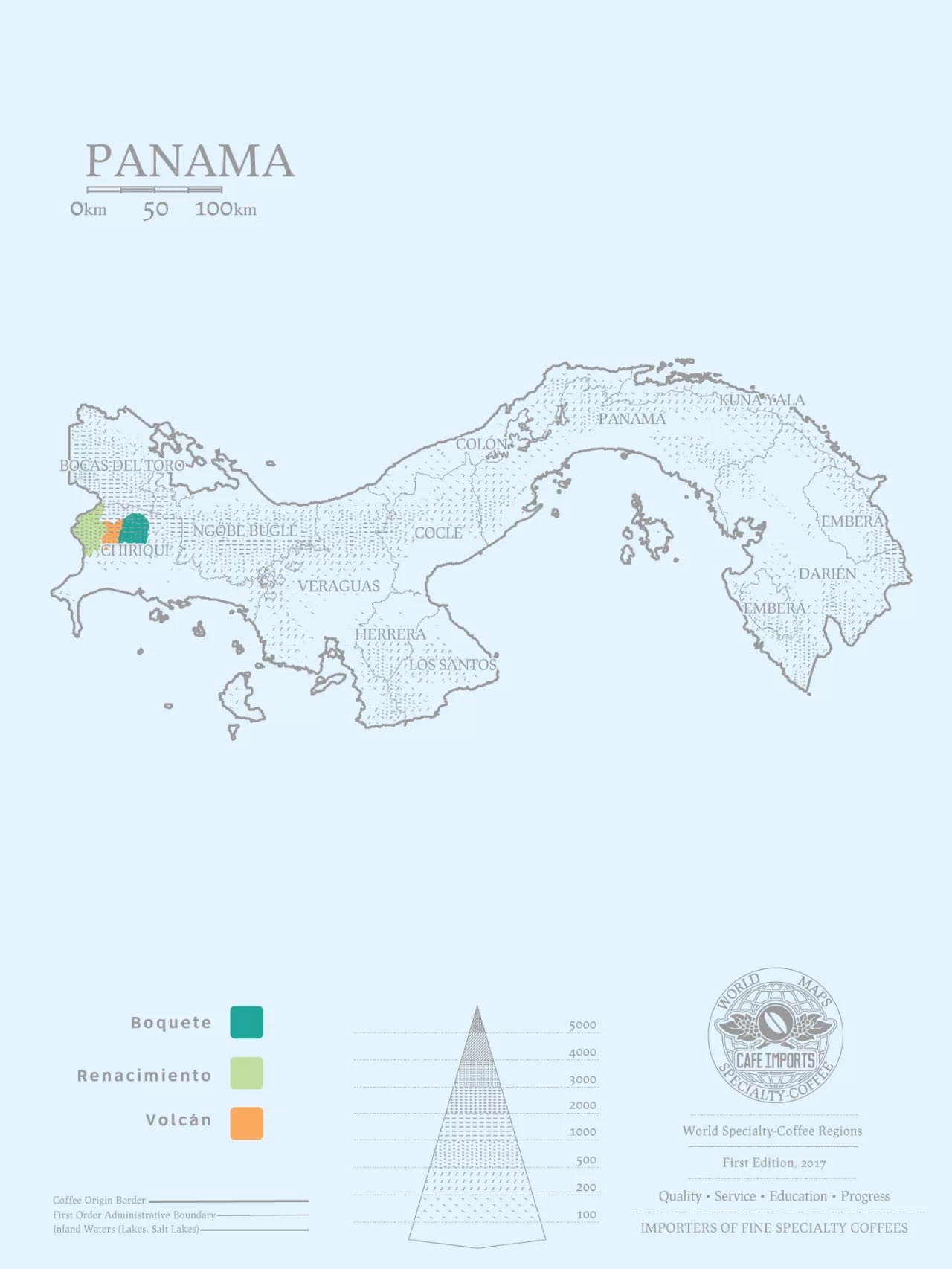
Hacienda Esmeralda was precisely a product of this era of elite trends. The estate is located in Panama's Boquete producing region, an important coffee-producing area in Panama. Several of Front Street Coffee's coffee beans come from Boquete, such as Butterfly coffee beans and Elida Typica.
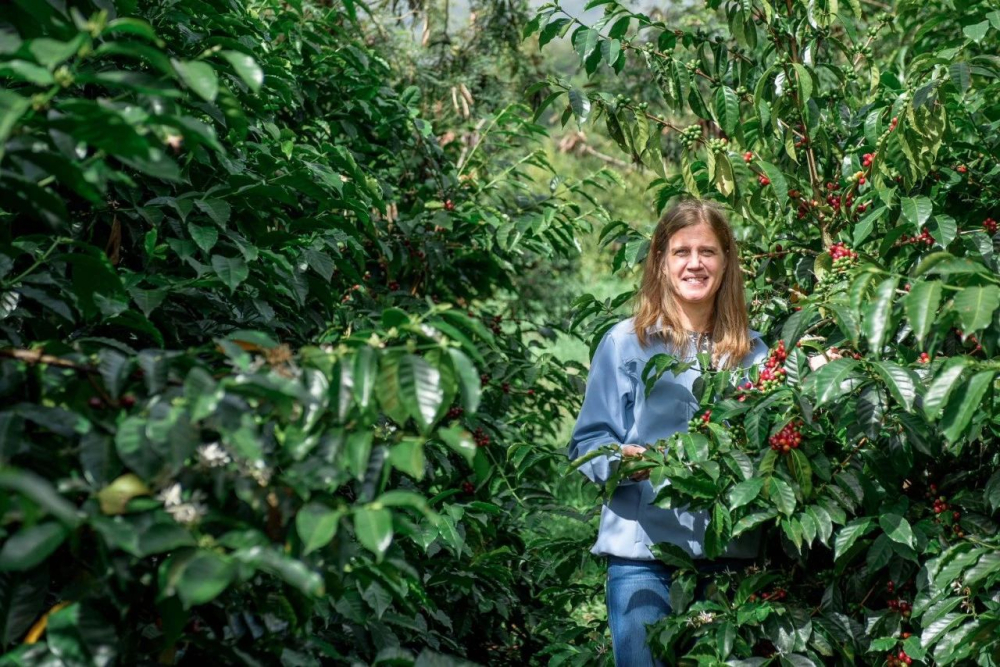
In 1964, American banker Rudolph Peterson retired and moved to Panama, where he bought Hacienda Esmeralda in Boquete. Later, his son Price gave up his career as a doctor to help his father run the farm, introduced Caturra and Catuai varieties in 1987, and established a washed processing plant in 1994, from then on having its own coffee processing facilities.
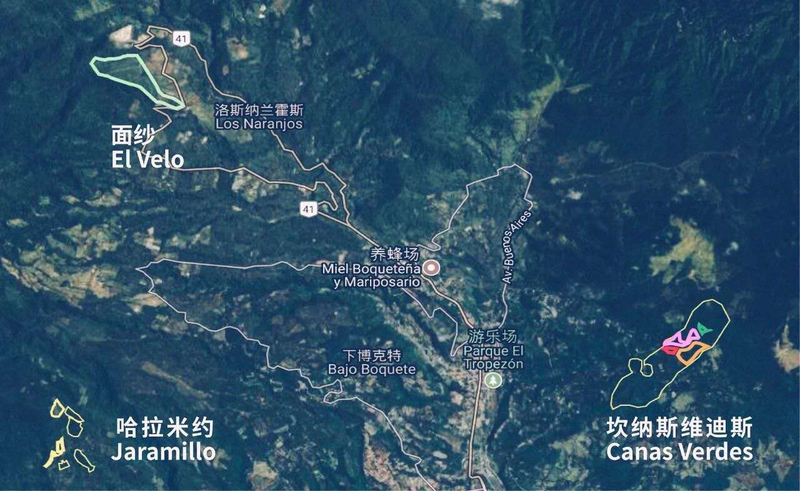
At present, Hacienda Esmeralda mainly has three estates planting Geisha: Cañas Verdes, Jaramillo, and El Velo. In 1996, the estate bought Jaramillo, which has a superior geographical environment and excellent flavor in its original varieties. El Velo was acquired by Hacienda Esmeralda in 2012. Front Street Coffee believes that Hacienda Esmeralda's acquisition of estates with excellent output and high altitude was a unique decision at the time, and it is precisely because of this that Hacienda Esmeralda has been able to occupy an important position in the coffee industry.
Among them, Jaramillo estate is precisely the plot where Geisha was planted. Because of its scarce yield, the previous owner used it only as a windbreak tree, and it was not until after the acquisition that its extraordinary flavor was discovered. Front Street Coffee feels that this is exactly the charm of Geisha—the harsher the growing environment, the more outstanding the flavor expression.
Although Hacienda Esmeralda discovered coffee beans with flavor potential from the very beginning, in order to achieve precision, it cupped different areas within the estate and determined planting plots according to altitude. Thus came the Red Label, Green Label, and Blue Label grades we know today, all based on altitude as the grading criterion. Front Street Coffee will explain this in detail below.
In 2004, Hacienda Esmeralda participated in the Panama Best of Panama (BOP) green bean competition and won the championship, making a stunning debut. Later, expert identification revealed that the coffee bean was the Geisha variety from Ethiopia. After that, the Peterson family devoted most of its energy to infrastructure construction to support excellent lot separation and refined processing.
Plot Division at Hacienda Esmeralda
High-quality Geisha comes from the estate's three major plots. For the specific distribution, follow Front Street's steps below:
Jaramillo has annual rainfall of 4,000 ml, an average daytime temperature of 19-25°C, an average nighttime temperature of 11-15°C, and an average altitude of 1,600-1,700 m. The Jaramillo plot is subdivided into 5 small plots: Mario, Noria, Reina, Bosque, and Buenos Aires.
Cañas Verdes has annual rainfall of 3,500 ml, an average daytime temperature of 16-23°C, and an average nighttime temperature of 10-15°C. The highly complex terrain structure, volcanic soil, and distinct day-night temperature difference give Geisha its highly aromatic characteristics. At present, the areas planted with Geisha in Cañas Verdes include a total of 11 small plots: Lino, Coronado, Fundador, León, Montaña, Trapiche, Jacinta, Cabaña, Tumaco, as well as Nido and Colga.
El Velo is the newest estate purchased by Hacienda Esmeralda in 2012, and it is also the plot with the highest average altitude within the estate, as well as the only area that has been carefully leveled. In addition to mainly producing Geisha, El Velo also grows more than 400 coffee varieties purchased from CATIE, including Laurina, Pacamara, Mocha, and SL28, for long-term development and exploration.
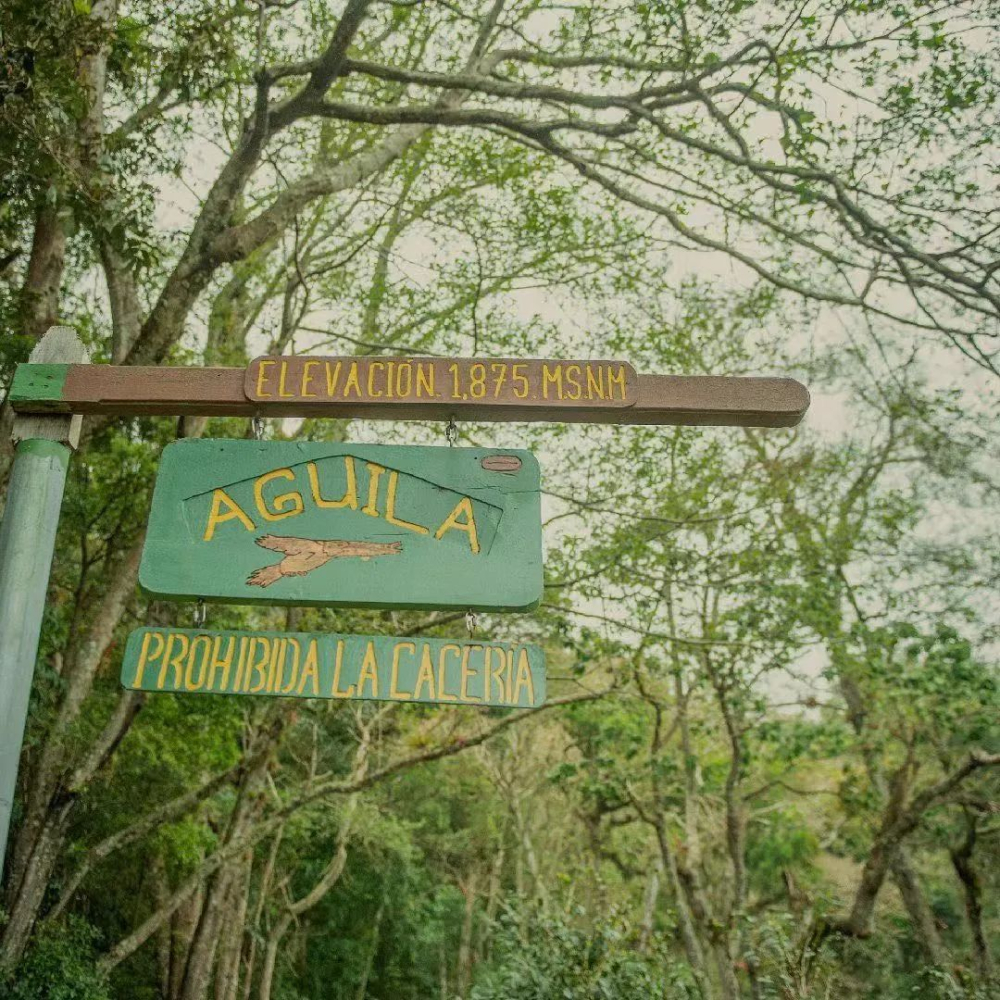
Compared with the other two estates, El Velo's altitude extends from 1,650 to 1,900 meters up the mountain, with an average annual rainfall of 4,000 ml, an average daytime temperature of 16-25°C, and an average nighttime temperature of 11-16°C. The entire area covers 50.25 hectares of coffee-growing land, of which 37.9 hectares are planted with Geisha, divided into 7 detailed plots: Guabo, Portón, Durazno, Mural, (Fig), Buena Vista, and Águila.
Geisha Auction, Red Label, Green Label, Blue Label
Front Street Coffee has learned that the biggest difference between Hacienda Esmeralda's marketing strategy and that of other estates is that it is divided into five major brands according to cupping performance, planted variety, and planting plot. The Geisha variety has three brands: Esmeralda Special, Private Collection, and Geisha 1500. The Catuai variety has two brands: Diamond Mountain grows and Palmyra.
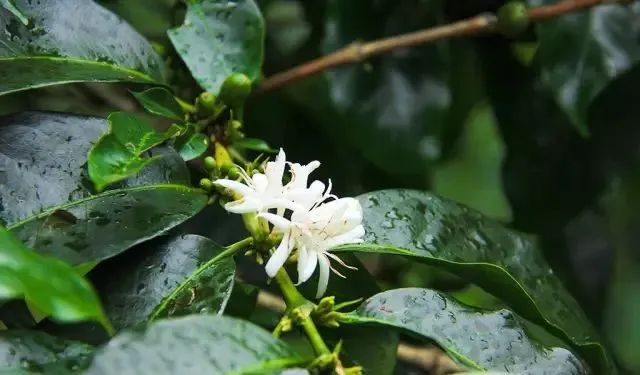
Auction and Red Label Geisha
The Geisha produced under Esmeralda Special is what we commonly call Red Label. It uses Geisha beans grown at an altitude of 1,600-1,800 meters, with a cupping score above 90, from the two producing areas of Jaramillo and Canas Verdes.
In Hacienda Esmeralda's own independent auction, only the Geisha lots put up for bidding from the divided plots are Auction Red Label. However, there is also non-auction Red Label on the market, which in fact means Geisha selected from the same plots but not participating in the auction and flowing into the market; the variety and quality are the same, only the selling price differs. This grade of Geisha uses natural or washed processing, and its flavor has distinctive, bright floral aroma and citrus notes.
Green Label Geisha
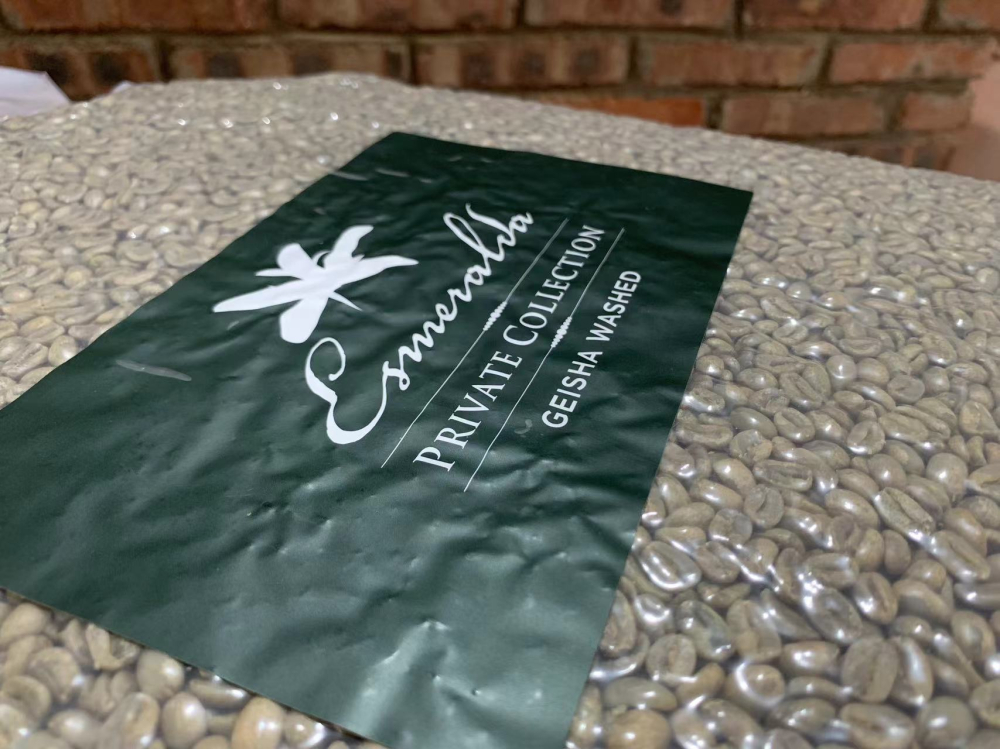
Private Collection, commonly known as Green Label, is not an independent competition lot. It is a Geisha variety that does not participate in the auction but still has excellent quality. It uses micro-lot blended beans grown at an altitude of 1,600-1,800 meters from different plots such as Jaramillo and Canas Verdes.
Because it uses a blended-bean model and does not specify plots in detail, Green Label sometimes has a very high flavor similarity to Red Label, but the next release may differ again. Although Green Label is not as high-grade as Red Label, it still carries the classic flavors of Geisha: floral aroma, fruity notes, citrus acidity, and a full, juicy mouthfeel. Green Label Geisha is likewise available in washed or natural processing.
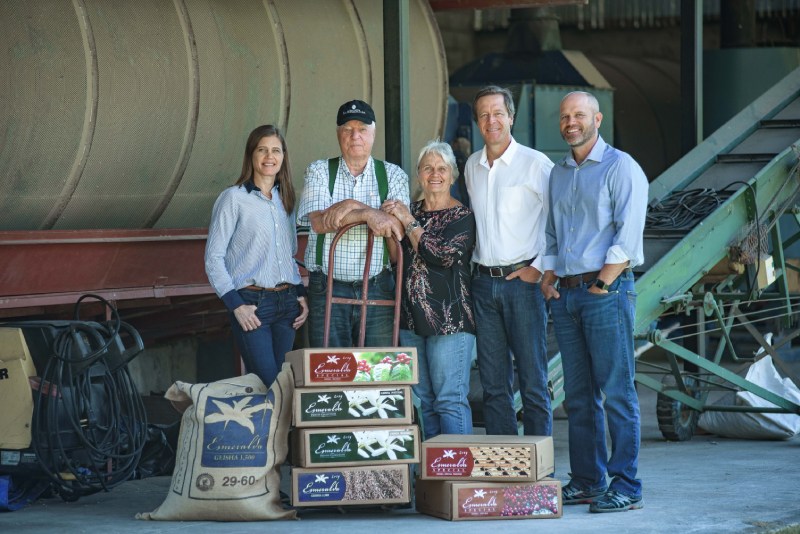
Blue Label Geisha
The Geisha 1500 brand is what we commonly know as Blue Label Geisha. It uses blended beans grown at an altitude of 1,400-1,500 meters from three different plots: Jaramillo, Canas Verdes, and El Velo. The flavor has slight floral notes, fruity acidity, and sweetness, with a less full mouthfeel. Blue Label Geisha is only washed, but in 2020 a natural Blue Label was added.
Front Street Coffee summarizes the most obvious differences among Auction Geisha, Red Label Geisha, Green Label Geisha, and Blue Label Geisha: different cultivation altitudes, and whether a blended-bean model is used. Those with high altitude (1,600-1,800 meters) and clear planting plot information are Auction Geisha and Red Label Geisha, while Auction Geisha reaches buyers through the auction channel, is expensive, and is scarce in quantity. Blended beans from plots at the same altitude as Red Label are Green Label Geisha, and finally the lower-altitude ones (1,400-1,500 meters) are Blue Label Geisha.
Next, Front Street Coffee will compare the flavors of these three different grades of Geisha coffee beans through brewing. Taking [Front Street Coffee Hacienda Esmeralda Red Label, Green Label, Blue Label] as examples.
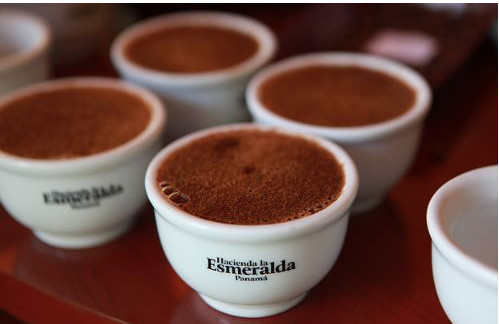
Roasting Suggestions
Front Street's main approach in roasting these three different grades of Geisha coffee beans is to highlight Geisha's rich floral aroma and bright, changeable fruity acidity, using a light roast profile. However, considering that each grade has a different growing environment, Front Street also made corresponding adjustments in roasting details.
[Red Label Geisha]
Bean charging temperature 150°C, turning point 5'36", 147.6°C, first crack 8'10", 175°C, development after first crack 1'28", discharged at 189.5°C.
[Green Label Geisha]
Bean charging temperature 190°C, turning point 5'00", 150.8°C, first crack 8'30", 184.2°C, development after first crack 1'30", discharged at 193.5°C.
[Blue Label Geisha]
Bean charging temperature 180°C, turning point 5'20", 151.6°C, first crack 8'30", 181.8°C, development after first crack 1'28", discharged at 190°C.
Cupping Flavor
[Red Label Geisha]
Dry aroma: jasmine, citrus Wet aroma: citrus, lemon, honey Palate: lemon, honey, berries, orange peel, mango, cream, citrus, tea-like
[Green Label Geisha]
Dry aroma: jasmine, ginger flower Wet aroma: lemon, sweet orange Palate: lemon, sweet orange, honey, cream, almond, tea-like
[Blue Label Geisha]
Dry aroma: floral, citrus Wet aroma: citrus, lemon Palate: citrus, lemon, honey, nuts, tea-like
Brewing Suggestions
Front Street Coffee recommends the following brewing parameters: Hario V60 dripper, 90°C water temperature, 15 g dose, 1:15 coffee-to-water ratio, grind size (80% passing a Chinese standard No. 20 sieve).
Front Street considered that these Geisha beans are all light roasts, and light-roasted beans have a lower coffee extraction rate than dark roasts. Therefore, to ensure full extraction of Geisha's flavor, a higher water temperature was used for brewing, along with a finer grind size.
For grinding, Front Street determines it through the sieving method. According to the Specialty Coffee Association of America SCA's grinding recommendations for pour-over coffee, and based on Front Street's actual operational verification, brewing with different grind sizes produces clearly different results, and the grind size for each coffee bean differs somewhat—this is the meaning of sieving. If you do not have a sieve at home, Front Street Coffee suggests judging by observing the flow rate: if the flow is too fast, the grounds are coarse; if the flow is too slow, the grounds are fine.
Brewing Technique
Front Street Coffee uses staged extraction, also called three-stage brewing: use 30 g of water for a 30-second bloom, pour in a small stream in circles until 125 g and pause, then when the water level is about to expose the coffee bed continue pouring until 225 g and stop, and when the water level is about to expose the coffee bed again remove the dripper. The extraction time (starting timing from the beginning of the bloom) is 2'00".
Flavor Description
[Red Label] Bright rose and citrus aromas, brown rice, berries, apricot, mixed fruits, honey, with a full juice-like mouthfeel, rich flavor layers, and obvious sweetness.
[Green Label] On the palate, intense jasmine floral aroma and high sweetness, citrus, berries, juice-like mouthfeel, cream, green tea, orange peel, cantaloupe; the overall flavor layers are rich, with a lingering floral and citrus finish.
[Blue Label] On the palate, there is a soft acidity of lemon and grapefruit; after the temperature drops slightly, there are sweet returns of oolong tea, honey, and sucrose, with a relatively clean and bright mouthfeel.
The above content is compiled by CoffeeHunters, a coffee news website.


