







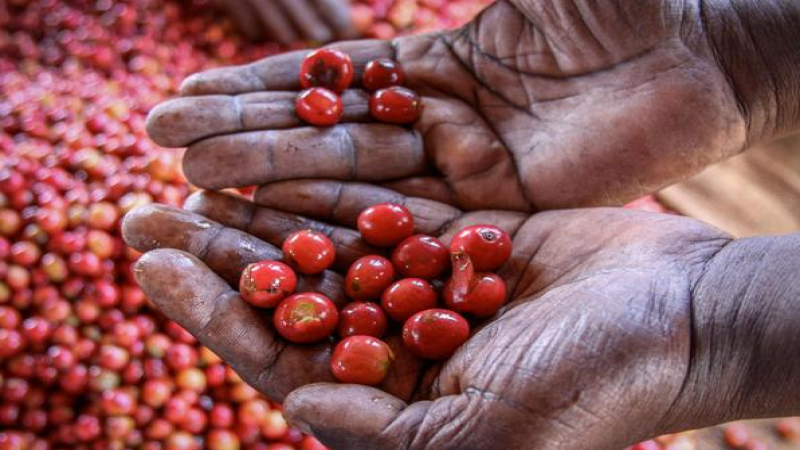
Why does Kenya coffee taste so bright and fruity?
Kenya sits next to Ethiopia, coffee's birthplace, and its bright acidity with dark berry notes comes first from natural conditions. The East African Rift Valley runs north to south, terrain rises from east to west, and coffee farms cluster on volcanic soils at 1,600 to 2,100 meters. Cool mountain temperatures slow cherry growth, letting aromatic compounds accumulate.
Production centers on six regions: Thika, Kirinyaga, Mt. Kenya West, Nyeri, Kiambu, and Muranga. Thika coffee grows at 1,550 to 1,750 meters, and the K72 washed method shapes its clean, full-bodied flavor. The grading system sorts beans by size, while SL28 and SL34 varieties drive layered notes of small tomato, black plum, and honey sweetness.
Kenya, as a highly regarded producing region in the specialty coffee world, has long been praised by enthusiasts for its bright acidity and intense berry notes. This article will begin with Kenya's geographical environment and six major producing regions, explain in detail the growing conditions of the Thika region, and deeply analyze how its iconic K72 washed processing method shapes a clean and full-bodied flavor. At the same time, the article will also sort out Kenya's grading system based on bean size, as well as the decisive influence of representative varieties such as SL28 and SL34 on flavor. Finally, Front Street Coffee will share the brewing parameters and three-pour method for Asalia coffee beans, taking you through the layered expression of small tomato, black plum, and honey sweetness.
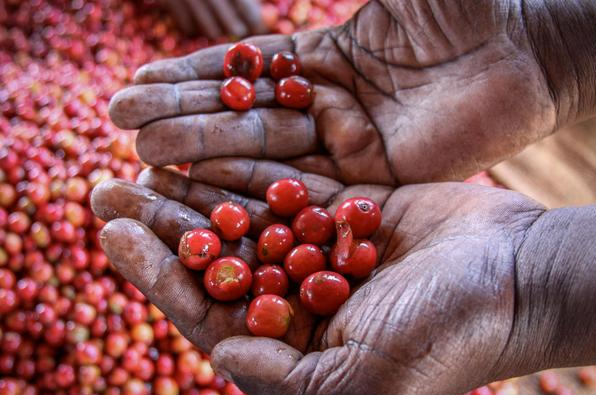
Kenya is adjacent to Ethiopia, which is hailed as the birthplace of coffee. The coffee it produces has exceptionally bright acidity, often with dark berry flavor notes, and sometimes also displays a sweet-and-tart juicy quality reminiscent of tomatoes. The overall layering is rich, making it a highly favored producing region in today's specialty coffee market. So why is the acidity of Kenyan coffee so distinctive?
This first comes down to the natural conditions in which Kenyan coffee is grown.
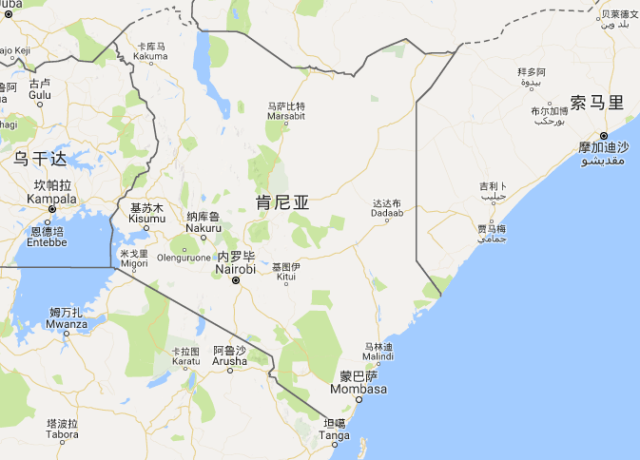
Kenya is located in the low latitudes, with the East African Rift Valley running north to south, and the terrain gradually rising from east to west. Most areas within the country have a tropical savanna climate, with the coastal belt being hot and humid, while the highland areas have a mild climate, making them very suitable for coffee cultivation. Coffee farms are mainly distributed on volcanic soils at altitudes of 1,600 to 2,100 meters around Kenya's mountainous areas. Because temperatures in the mountainous areas are relatively low, coffee cherries grow slowly, allowing aromatic substances to accumulate fully, thus forming flavor characteristics dominated by vivid fruit aromas such as berries and black plum.
Kenyan coffee is centered on six major producing regions: Thika, Kirinyaga, Mt. Kenya West, Nyeri, Kiambu, and Muranga. The Kenyan coffee on Front Street's store bean list comes from the Thika region.
Coffee cultivation in the Thika region takes place at altitudes between 1,550 and 1,750 meters. Thika is a small town near Kenya's capital, Nairobi, and there are large numbers of coffee fields around Nairobi. Thika itself is an industrial town, but it is surrounded by farmland and waterfalls. The area has about 2,000 coffee growers. Based on cupping, Front Street judges that the flavor performance of the Thika region shows bright fruit acidity, a thick berry juice-like body, and honey-like sweetness.
Kenyan coffee's outstanding performance is also inseparable from its exquisite washed processing technique.
According to Front Street Coffee, unlike the washing method of neighboring Ethiopia, the washing method used in Kenya is a processing flow of washing after fermentation and repeating the cycle, also known as the Kenyan-style 72-hour fermentation washed processing method, or K72 for short.
High-quality ripe coffee cherries harvested on the same day are immediately depulped and placed in fermentation tanks to ferment for 24 hours. After the first 24 hours are completed, they are immediately rinsed clean with large amounts of clean river water. Then, a second 24-hour fermentation is carried out with clean water. After the second 24 hours are completed, the above steps are repeated, bringing the entire fermentation process to a total of 72 hours. Because the whole process takes 72 hours, this processing method allows the coffee beans to ferment for a long time in a low-temperature environment, thereby obtaining a brighter, cleaner, and fuller flavor. Front Street Coffee's Kenyan Asalia coffee beans are processed using the K72 washed processing method.
Grading of Kenyan coffee green beans
Kenyan coffee beans are graded by bean size, which is also considered to some extent to be directly related to quality. The highest grade is AA, followed by AB. The advantage of using size as the grading basis is that, after variety selection and breeding, larger beans usually represent fullness and high quality, and are also friendlier to roasting. In this way, the consistency of Kenyan coffee quality can be ensured. Although we can still distinguish specific flavor differences among regions such as Nyeri, Kirinyaga, and Kiambu when comparing them side by side, they generally all possess Kenya's characteristic bright acidity and small tomato and berry-like flavors.
Kenyan coffee varieties
Kenya's most famous coffee varieties are SL28 and SL34. The Kenyan Asalia coffee launched by Front Street contains only these two varieties, SL28 and SL34.
SL stands for "Scott Laboratories," translated into Chinese as "Scott Laboratories." This laboratory developed multiple SL varieties. Researchers selected 42 varieties from different origins and compared their yield, quality, drought resistance, and disease resistance. After numbering and screening them one by one, SL-28 and SL-34 were ultimately obtained. SL coffee trees have broad leaves with copper-colored tips. The beans are short and round, with a thick body, and in terms of flavor they show elevated acidity and obvious sweetness.
Since then, Kenya has spared no effort in breeding varieties resistant to leaf rust. Ruiru11 was the first successful variety recognized by the Kenya Coffee Board and can be understood as Kenya's version of Catimor. When Front Street cupped Kenyan coffee beans mixed with Ruiru11, it found that the flavor had slightly weaker sweet-and-tartness and carried some off-flavors. This also shows that variety has a significant impact on flavor.
How to brew small tomato flavor from Kenyan coffee beans
In order to preserve the rich acidity of Kenyan coffee, after multiple rounds of cupping comparisons, Front Street's roaster decided to use a light roast. In terms of brewing, because lightly roasted coffee beans are harder in texture and require hotter water to bring out the floral and fruity notes in the coffee, Front Street recommends using a water temperature of 92°C to 93°C. As for grind size, Front Street recommends a medium-fine grind, that is, the coarseness of fine granulated sugar (78% passing through a Chinese standard No. 20 sieve). If the grind is too coarse, the rich and full-bodied substances cannot be extracted, and the coffee will seem thin; if the grind is too fine, it is easy to over-extract at high water temperatures, causing excessive release of bitterness.
Dripper: V60 Water temperature: 92-93°C Dose: 15g Coffee-to-water ratio: 1:15 Grind size: fine granulated sugar size (78% of grounds passing through a No. 20 sieve)
Three-pour water injection: First, wet the coffee bed with twice the amount of water as the coffee grounds to form a dome and bloom for 30 seconds; then pour in a thin stream in circles from the inside outward, and split the pour when it reaches 125 grams; when the coffee bed drops to half the height of the dripper, continue pouring the third stage in the same thin stream until 225 grams, and wait until all the coffee liquid has filtered through, then remove the dripper. The total time is about 2 minutes. After the coffee in the dripper flows into the server, remove the dripper, swirl the coffee liquid in the sharing server to even it out, and then you can begin tasting the flavor starting from the high-temperature stage.
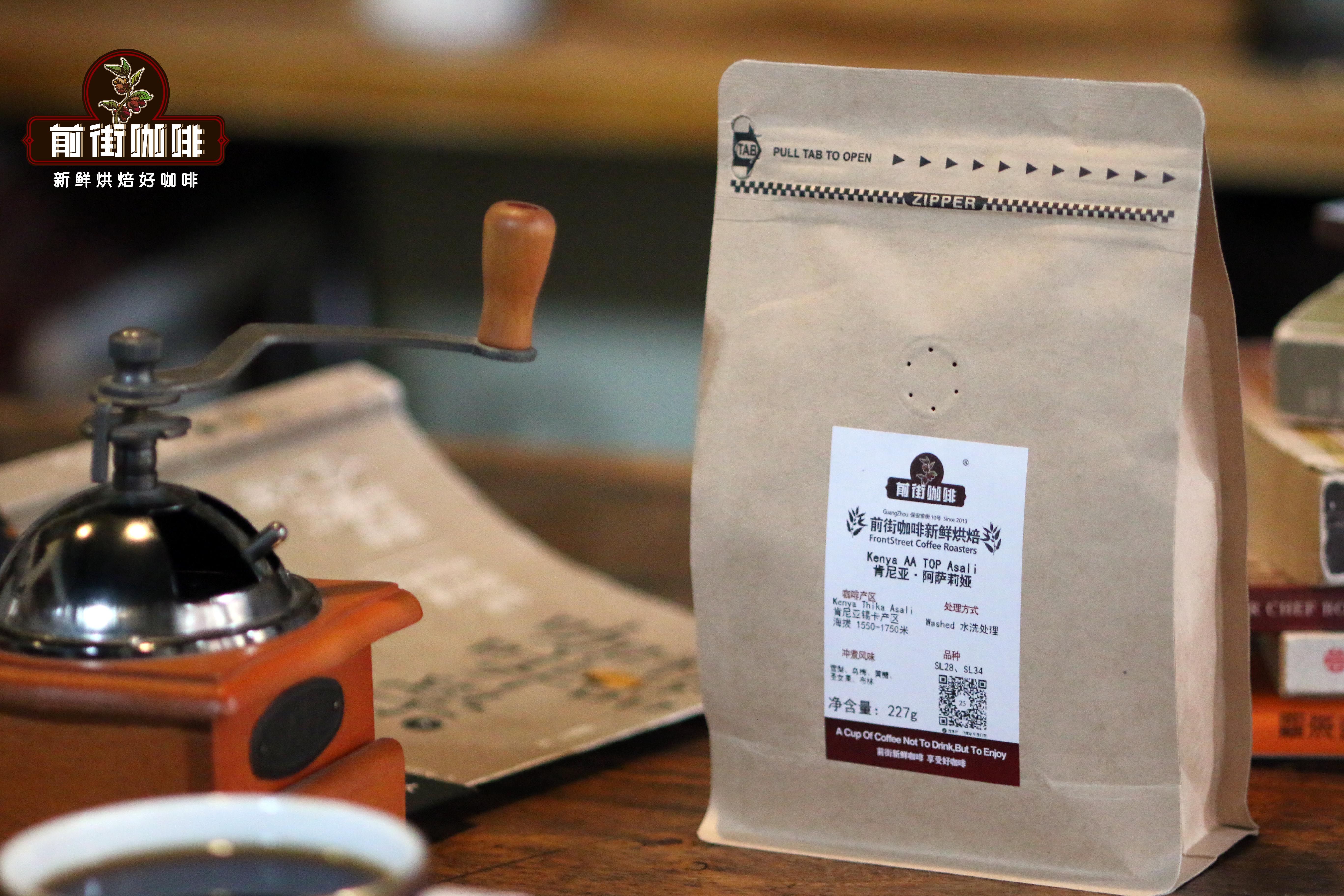
The pour-over Kenyan coffee presents fruit flavors of small tomato, dark berries, and black plum, with a sweetness reminiscent of honey, accompanied by a thick and rounded juicy body like black plum. The layers are very rich, the entry is full-bodied, and the finish is transparent and bright.
For professional coffee knowledge exchange and more coffee bean information, please follow Coffee Workshop (WeChat public account: cafe_style)
For more specialty coffee beans, please add the private WeChat of Front Street Coffee (FrontStreet Coffee), WeChat ID: qjcoffeex
The above content is compiled by CoffeeHunters, a coffee news website.


