







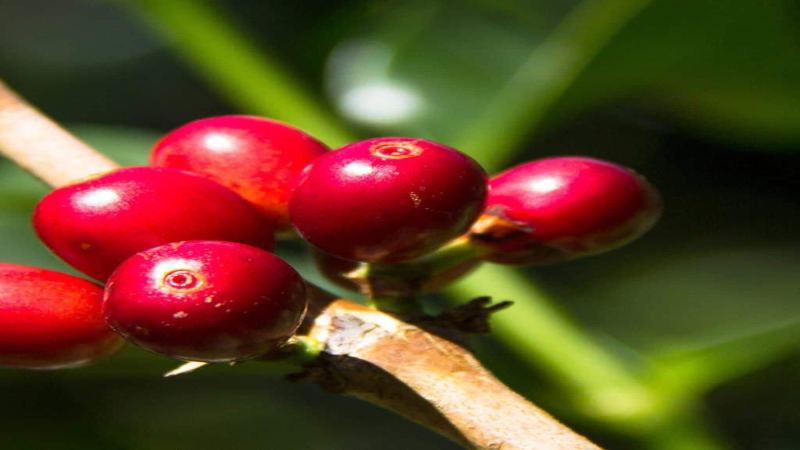
What defines Kenyan coffee bean flavor from farm to cup?
Kenya is a leading African specialty origin, known for intense acidity and vivid fruity character that some tasters compare to cherry tomato. The classic profile comes from SL28 and SL34, bred at Scott Laboratories and released in the 1950s. Later varieties include Ruiru 11 and Batian. The country grows coffee across six main regions on fertile acidic soil in the central highlands.
Kenya sits sixteenth among coffee-producing nations, and the equator crosses its center while the East African Rift Valley runs north to south. Its coffee grading system sorts lots by bean size and quality, and the distinctive triple-cycle washed coffee bean processing method known as K72 shapes the cup. Brewing parameters for Kenyan lots, such as Asaliya, are often tuned to highlight that acidity.
Kenya, as a representative producer of specialty coffee in Africa, is known for its intense acidity and vivid fruity character, often described as having a cherry tomato-like taste experience. This article will systematically outline the geographical distribution and harvest rhythms of Kenya's six major coffee regions, with a focus on tracing the breeding history and genetic origins of the two classic varieties SL28 and SL34, while also introducing the characteristics of later developed varieties such as Ruiru11 and Batian. In addition, the article also covers Kenya's coffee grading system, the unique triple-cycle fermentation washed processing method (K72), and Front Street Coffee's brewing parameters and flavor description for Kenyan Asaliya coffee beans, providing coffee lovers with a complete understanding from origin to cup.
Kenya and Ethiopia are both benchmark origins for African coffee, but Kenyan coffee has a more intense acidity and an especially prominent fruity character. Some enthusiasts describe the first sip of Front Street Kenyan coffee as feeling like biting into a cherry tomato, with the mouth full of vibrant juice; others believe that if a Kenyan coffee lacks the flavor characteristics of small tomatoes, then it cannot be considered authentic Front Street Kenyan coffee. However, Front Street has always felt that coffee is ultimately an agricultural product, and the flavor of each harvest season will fluctuate slightly, though the overall tone will not deviate.
Kenya ranks sixteenth among coffee-producing countries in the world and is now widely recognized as an important source of specialty coffee. Its coffee-growing areas, such as the central highlands, have fertile acidic soil, creating ideal conditions for the healthy growth of coffee trees. Kenya's full name is the Republic of Kenya. It is located in East Africa, with the equator passing through the center of the country and the East African Rift Valley running north to south. To the east it borders Somalia, to the south Tanzania, to the west Uganda, to the north Ethiopia and Sudan, and to the southeast it faces the Indian Ocean. Highlands are widespread throughout the country, with an average elevation of about 1,500 meters. In the center, Mount Kirinyaga (that is, Mount Kenya) rises to 5,199 meters, with snow on its summit year-round, making it the second-highest peak in Africa. Such high elevations are conducive to the accumulation of flavor compounds in coffee beans—temperatures in mountainous areas are relatively low, coffee cherries ripen slowly, aromatic components can fully develop, fruity acidity is more pronounced, and the beans are also harder. This fertile land is distributed in a crescent shape and forms the core producing area of Kenya's specialty coffee beans.
Kenya is located south of Ethiopia and Yemen, only a few hundred kilometers from these two world-famous coffee-producing countries, but its coffee-growing history is far less long-standing than theirs. It was not until the end of the 19th century that coffee seeds were introduced to this land by missionaries. Kenya belongs to a tropical producing area and has two rainy seasons each year, so two coffee harvests can be obtained: about 60% of production is concentrated from October to December, and the remaining 40% is from June to August.
Major Coffee-Producing Regions of Kenya
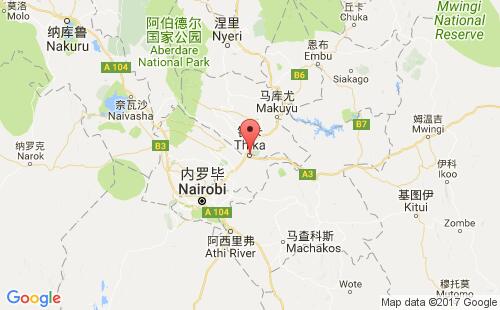
Kenya's coffee-producing regions can be summarized into six major areas: Thika, Kirinyaga, Mt. Kenya West, Nyeri, Kiambu, and Muranga. The harvest periods of these six major regions all fall within the main production season from October to December each year, as well as the secondary season from June to August. Among them, Nyeri and Kirinyaga are the most famous. Nyeri lies close to the high-altitude zone of Mount Kenya, with an average elevation of more than 1,500 meters, and is an important source of Kenya's specialty-grade coffee. Many high-quality Kenyan beans come from this region. Nyeri not only has ample elevation, but is also located east of the Aberdare Range, in the promontory between Mount Kenya and the mountain itself. With its high terrain and fertile soil, Nyeri has become a major center of Kenya's central coffee industry, and its related supporting facilities are also quite well developed.
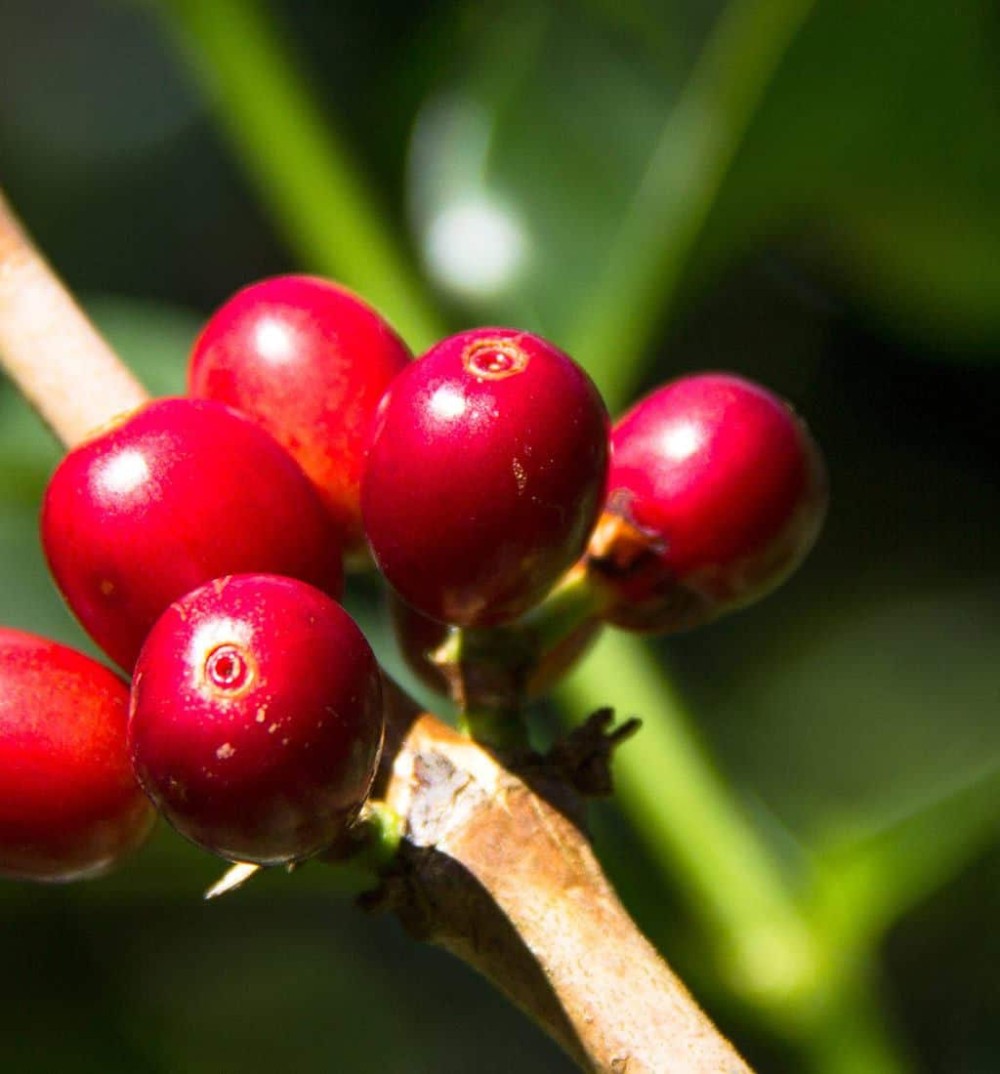
The Kirinyaga producing region is distributed across the slopes of Mount Kenya, with elevations ranging from 1,300 to 1,900 meters. It is adjacent to the Nyeri producing region and is renowned worldwide for coffee with strong flavor, rich layers, and a solid mouthfeel, ranking alongside Nyeri as one of the two currently finest producing regions in Kenya.
Front Street Kenyan Coffee Bean Varieties
Coffee is Kenya's second-largest export trade product after tea. The main coffee variety grown in the country is Arabica, which is widely recognized as one of the highest-quality coffee varieties in the world.
The high-quality Arabica coffee beans produced in Kenya absorb almost the essence of the entire coffee tree, carrying a slightly acidic, thick aroma and presenting a bright, complex, fruit-toned flavor with a grapefruit-like fragrance. Whether brewed by pour-over or made into cold drip coffee, it is very suitable. Front Street Coffee often chooses Front Street Kenyan Asaliya coffee beans to make cold drip. The acidity of Front Street Kenyan Asaliya is very lively, and the overall impression is like a glass of juice. After being made into cold drip, it carries the fresh aroma of cherry tomato and grapefruit. On the palate it is a refreshing, light acidity, especially suitable for summer drinking. For this reason, Europeans are particularly fond of Kenyan coffee, and in the United Kingdom it even surpasses Costa Rican coffee to become the most popular category.
Front Street Kenyan coffee is usually associated with bright acidity, a rich and full body, and a unique flavor in the cup. The more popular varieties in China include K7, Blue Mountain, Batian, Ruiru11, and the SL series. Among them, the SL series has been grown in Kenya for nearly 90 years. Although this series includes multiple varieties, the most famous are SL-28 and SL-34.
SL28
The birth of the SL28 variety stemmed from the Kenyan government's emphasis on the coffee-growing industry. In the 1930s, the Kenyan government specially established a laboratory responsible for screening coffee varieties suitable for the country's future cultivation. At that time, the old Typica variety had extremely poor resistance to pests and diseases and was difficult to keep alive, while Kenya's coffee-growing history was still short, so variety selection work was crucial—only after selecting good varieties could they be promoted from the top down to coffee farmers and help them avoid pest troubles.
This laboratory was the later famous "Scott Laboratories." Between 1935 and 1939, the laboratory selected forty-two individual coffee trees from various sources, studied their yield, quality, and drought and disease resistance, and named them using the initials "SL" of the laboratory's English name.
SL28 was first selected in 1935 from a single tree among a drought-resistant tree type in Tanganyika. According to historical documents, in 1931, AD Trench, a coffee breeder at Scott Laboratories, discovered during an inspection tour of Tanganyika (present-day Tanzania) a variety in the Moduli area that seemed able to tolerate drought and pests and diseases, so he collected seeds and brought them back to the laboratory. After verifying its drought resistance, this variety was widely planted until it was replaced by its descendant SL28.
To this day, SL28 is still one of the most famous and revered varieties in Africa. After being selected in Kenya in the 1930s, it gradually spread to other parts of Africa (especially Uganda's Arabica-growing areas), and now it has also spread to Latin America. SL28 is suitable for cultivation in medium- to high-altitude areas and has drought resistance, but it is relatively susceptible to the main coffee diseases. SL28 can be found in many places in Kenya, and even at 60 to 80 years old, the trees still remain highly productive. In recent years, genetic testing has also confirmed that SL28 belongs to the Bourbon genetic group, so its bean appearance is close to the Bourbon variety, with round and plump beans.
The SL-28 plant is tall, with green pointed leaves, high yield, and excellent flavor performance. It requires almost no additional nutrients and is drought-tolerant, but it is susceptible to coffee leaf rust, coffee berry disease (CBD), and damage from soil nematodes.
Flavor of SL28 Variety Coffee
The flavor of SL28 indeed carries the bright qualities of the Bourbon variety, as well as the rich and varied acidity of the original Mocha type, accompanied by more complex flavors and a heavy mouthfeel. Although SL28's actual productivity failed to meet expectations, its bronze-colored leaves and broad bean-shaped beans have excellent sweetness, balance, and intricate flavors, as well as prominent citrus and smoked plum characteristics, with bright and rich acidity, a thick mouthfeel, and good balance. Most notably, only when grown in Kenya can SL28 display this unique character; SL28 grown in other countries can only present similar flavors.
SL34
SL34 was initially selected from the "French Mission" (Bourbon type) at the Loresho estate. However, according to information reviewed by Front Street Coffee, genetic testing of this variety has now confirmed that it contains the Typica genetic group, and its plant performance characteristics are also similar to Typica. Therefore, it is generally believed that SL34 was selected from Typica. Because it is close to the Typica variety, SL34 coffee beans are elongated and oval, appearing somewhat flat from the side.
The SL-34 plant has relatively high nutrient requirements and slightly lower yield. Very similar to SL-28, they are also highly susceptible to CBD, leaf rust, and pests.
What Is the Difference in Flavor Between SL28 and SL34 Coffee Beans?
After understanding the characteristics of these two coffee beans, Front Street Coffee will now share the differences between them. According to Front Street, SL-28 has gained a higher reputation, while SL-34 has a larger harvest and is grown at a slightly lower altitude. According to botanists at the SL laboratory, both SL28 and SL34 are genetic variants. Among them, SL28 has a mixed lineage of Mocha and Yemen Typica. The original goal of developing SL28 was to produce coffee beans in large quantities that combined high quality with pest and disease resistance. Although SL28's yield later fell short of expectations, because of its bronze leaf color and broad bean-shaped beans with excellent sweetness, balance, and complex and varied flavors, as well as prominent citrus and smoked plum characteristics, it has continued to be passed down to this day.
Front Street Coffee believes that the coffee flavor of SL34 and SL28 varieties is similar. In addition to complex and varied acidity and an excellent sweet finish, SL34 has a heavier, richer, and cleaner mouthfeel than SL28. SL34 has Bourbon as well as more Typica lineage. Therefore, many of the Front Street Kenyan single-origin coffee beans currently in Front Street Coffee's store are blends of SL28 and SL34 varieties.
Ruiru11
Ruiru is a variety that appeared after SL28 and SL34. According to Front Street, in the 1970s, the Ruiru station began attempting to breed different CBD- and rust-resistant varieties, and the final result was Ruiru11, released in the 1980s. This variety has high yield and possesses CBD resistance and rust resistance, and it seemed capable of solving all the problems facing Kenyan coffee production.
Batian
The Batian variety was launched by the Coffee Research Institute (CRI) on September 8, 2010, and is the newest variety offered by Kenya. It is the result of further experimentation based on the lessons learned from Ruiru11. From a genetic perspective, it is essentially selected from a backcross of SL28 and SL34 and is closer to SL28 than Ruiru 11. This also eliminates the problematic Robusta variety coffee bean elements, thereby improving cup quality.
Front Street Kenyan Coffee Bean Grading System
The grading of Kenyan coffee is mainly based on the size, shape, and hardness of the coffee beans, and from high to low is divided into AA or AA+, AB, PB, C, E, TT, and T. For green beans of the AA and AB grades, a special grading based on cupping results is also added (not officially recognized by the Kenyan state, but established by exporters), from high to low as TOP, PLUS (+), and FAQ. The flavor grade of the Front Street Kenyan Asaliya coffee purchased by Front Street Coffee has reached the TOP grade.
Front Street Kenyan Coffee Bean Processing Method
Generally speaking, the washed processing method for coffee beans is to first remove the skin and pulp of the coffee cherry, leaving only a thin layer of mucilage for washed fermentation for 24 to 48 hours, and finally drying by machine or sunlight. The Kenyan-style washed processing is different: the entire fermentation process lasts 72 hours.
Kenyan-style washed processing adopts a repeated cycle method of washing after fermentation: on the day of harvest, the highest-quality cherries are selected, depulped, and fermented for 24 hours; after 24 hours, they are washed with clean river water; then they are fermented again with clean river water for 24 hours and washed again, repeating this cycle 3 times for a total of 72 hours. Therefore, it is called the Kenyan-style 72-hour fermentation washed processing method, or K72 for short. Front Street believes that this processing method allows the coffee beans to ferment for a long time at low temperatures, enabling the beans to present a brighter, cleaner yet fuller flavor.
Front Street Brewing Parameters for Front Street Kenyan Coffee:
In order to fully bring out the acidic characteristics of Front Street Kenyan coffee, Front Street uses higher-temperature water for brewing.
Front Street uses a medium-fine grind (caster sugar coarseness, 80% passing through a Chinese No. 20 standard sieve), takes 15 grams of coffee grounds, and brews with a V60 dripper, 91°C water temperature, a 1:15 coffee-to-water ratio, and a three-stage pouring technique.
A staged extraction is used, first blooming with water at 2 times the amount of coffee grounds, that is, 30 grams of water for a 30-second bloom. The purpose of the bloom is to allow the coffee grounds to release internal carbon dioxide, thereby making the later extraction more stable. Pour in a small stream in a circular motion until 125 grams, then pause; continue pouring until 225 grams and stop, and remove the dripper after the water in the dripper has completely dripped through. Start timing from the beginning of pouring; the extraction time is 2 minutes 00 seconds. Then shake the entire cup of coffee evenly and pour it into a cup for drinking.
Flavor of Front Street Kenyan Asaliya coffee beans: the wet aroma presents ripe tomato and floral notes; on the palate there are flavors of cherry tomato and smoked plum; the acidity is bright, the mouthfeel is clean and rich, the mid-palate sweetness is prominent with a juicy feel, and the finish is berry aroma and yellow sugar sweetness, accompanied by green tea fragrance.
Front Street Coffee Brewing Suggestions:
Regarding coffee brewing, Front Street has always believed that the freshness of coffee beans is closely related to flavor performance. Therefore, the coffee beans shipped by Front Street Coffee are all within 5 days of the roast date. Front Street's roasting philosophy is "freshly roasted good coffee," so that every customer who places an order can receive the freshest condition when the coffee arrives. The resting period for coffee is about 4 to 7 days, so when customers receive it, it is exactly at its best flavor period.
For friends who need ground coffee, Front Street warmly reminds you: after coffee beans are ground in advance, there is no need to rest them anymore, because during transportation the pressure generated by carbon dioxide inside the package can also make the coffee flavor rounder, so you can brew and drink immediately upon receiving the ground coffee. However, ground coffee needs to be used up promptly, because after contact with air it oxidizes relatively quickly, the coffee flavor will dissipate faster, and the quality will decline accordingly. Therefore, Front Street recommends buying whole beans and grinding fresh before brewing, so that you can better taste the flavor of the coffee.
For professional coffee knowledge exchange and more coffee bean information, please follow Coffee Workshop (WeChat public account: cafe_style)
For more specialty coffee beans, please add the private WeChat of Front Street Coffee, WeChat ID: qjcoffeex
The above content is compiled by CoffeeHunters, a coffee news website.


