








What Makes Finca Nuguo Geisha Coffee Beans Distinct?
Finca Nuguo sits in Panama's Volcan region at 1,700 to 1,900 meters, where lower rainfall than Boquete and a position on the western side of the Baru Volcano give the coffee pronounced dried-fruit notes, sweetness and aroma. The 2021 harvest Geisha beans were processed by pressure anaerobic fermentation, then roasted and brewed as pour-over.
The Geisha coffee variety at Nuguo is grown by Jose Gallardo of the Gallardo family, who also manages Finca Jurutungo, La Santa, Zambrano and Santa Clara. The farm borders La Amistad National Park, and its name means hummingbird in Spanish, taken from the birds on the property. Volcan estates now place regularly in Panama coffee competitions.
Finca Nuguo in the Volcán region of Panama is renowned for its high-altitude microclimate and limited-production Geisha. This article provides a complete overview of Finca Nuguo Geisha coffee beans, covering the origin background, variety story, and unique pressure anaerobic fermentation process, and shares Front Street Coffee's roasting approach, cupping flavors, and V60 three-pour brewing parameters to help coffee enthusiasts fully understand this specialty Geisha that combines floral and fruity sweetness with elegant acidity.
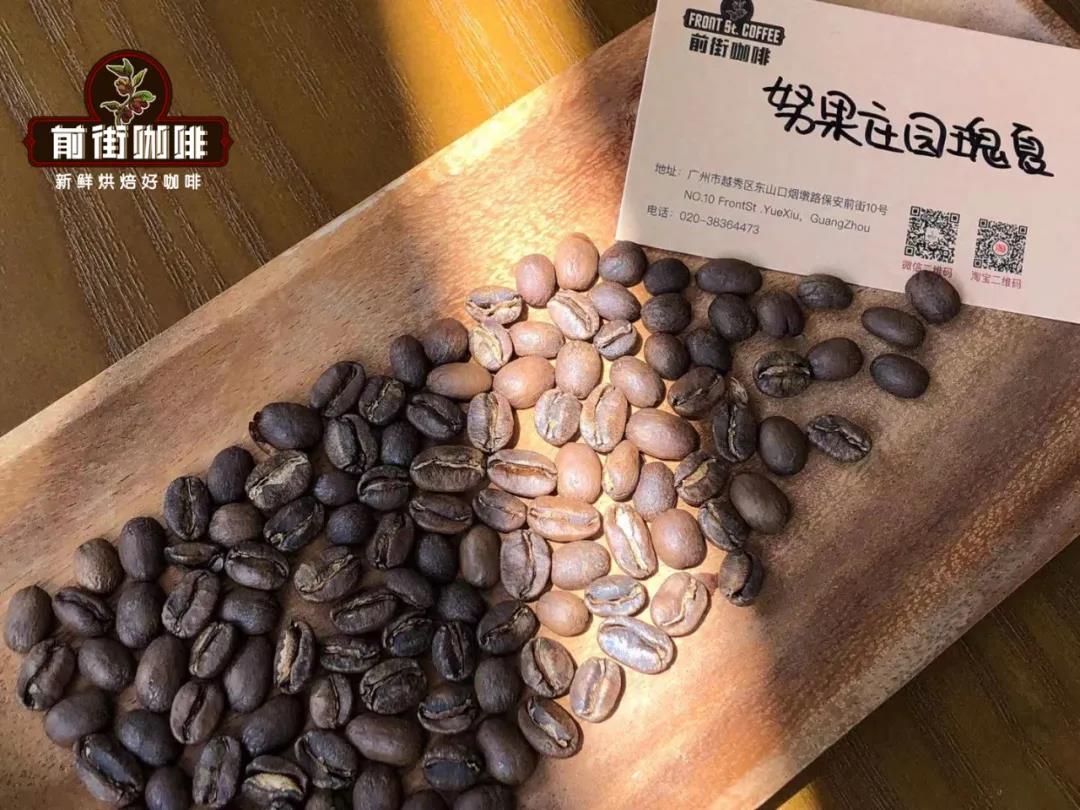
Front Street Coffee: Panama Finca Nuguo · Geisha Coffee Beans
Region: Volcán, Panama
Farm: Finca Nuguo
Altitude: 1700m-1900m
Variety: Geisha
Processing Method: Pressure Anaerobic Fermentation
Harvest Season: 2021
Coffee Producing Region
When it comes to Panama's coffee-growing history, most people first think of the specialty region Boquete. However, in recent years, coffees from the Volcán region have become increasingly prominent in the specialty market, with many estates placing or even winning in the Best of Panama competition. The Volcán region receives less annual rainfall than Boquete, and combined with its location on the western side of the Barú Volcano, these geographic conditions often give Volcán coffee beans more pronounced dried-fruit notes, sweetness, and aroma compared to Boquete.
Finca Nuguo
Finca Nuguo is located in the Alto Jurutungo valley ("a remote and unreachable place") in Panama's Volcán region, adjacent to La Amistad National Park. Thanks to its superior natural ecology, the estate is home to various bird species, which led the Gallardo family to name it Nuguo (meaning "hummingbird" in Spanish).
The owner of Finca Nuguo, Jose Gallardo, comes from the Gallardo Family and holds a doctorate in civil engineering, and currently still teaches at a university. His operation of the farm and coffee cultivation is both a continuation of the family business and a personal interest. In addition to Finca Nuguo, the Gallardo Family also owns several coffee estates including Finca Jurutungo, La Santa, Zambrano, and Santa Clara. Nuguo, which Front Street introduces today, is the Geisha estate he manages together with his wife.
Finca Nuguo is one of the micro Geisha estates most treasured by the Gallardo Family. Although its annual output is limited, the coffee flavor never disappoints. The estate has an average altitude of 1700-1900 meters. The high altitude brings variable microclimates, ample rainfall, and significant day-night temperature differences. Combined with nutrient-rich volcanic soil and good shade from primary forest, the Geisha coffee here accumulates full and richly aromatic flavors.
Geisha Coffee Variety
Geisha coffee first rose to fame at the 2004 BOP green bean competition, when Hacienda La Esmeralda won first place with a "strange" coffee bean, and that bean was Geisha. Geisha coffee has rich white floral aromas, delicate and elegant citrus acidity, and sweet honeyed notes, which inspired specialty coffee-producing countries around the world to plant Geisha.
According to years of tracing by coffee botanists, Panama's Geisha was first discovered in the Geisha forest of Ethiopia, then sent to the Kenyan coffee research laboratory, and later passed through Tanzania and Costa Rica before being introduced to Panama in 1970, where it was initially used by Hacienda La Esmeralda as a border windbreak. Later, the estate owner discovered that the coffee produced by these border coffee trees scored very well in cupping, so he began variety separation and breeding. Ultimately, it became world-famous in 2004, and to this day Geisha coffee's flavor and price remain beautiful.
Pressure Anaerobic Fermentation Processing
In 2018, Finca Nuguo began experimenting with pressure anaerobic fermentation processing. Because the process is difficult, after 2 years of continuous improvement and adjustment, it finally began releasing Geisha coffee beans processed with pressure anaerobic fermentation in 2020.
After harvesting, the estate owner carefully sorts the cherries and places the ripe cherries in vacuum-sealed bags for 4-9 days. During this time, the coffee cherries undergo anaerobic fermentation, and the carbon dioxide produced in the process causes the vacuum bags to inflate.
After the fermentation stage is completed, part of the coffee cherries is sent for constant-temperature drying (45% humidity, 24°C), with a drying time of up to 4-8 weeks. Another portion remains at the estate for sun drying (average estate temperature 16°C), with a drying time of up to 21 days. Finally, the dried coffee beans are rested, and only 1-2 weeks before export are they depulped and hulled.
Front Street Roasting Recommendations
After Front Street received the green beans, we smelled sweet and sour floral and fruity aromas with a faint grassy note. In order to express this bean's sweetness, acidity, and floral-fruity aroma, Front Street decided to use a medium-light roast and discharge the beans when first crack was密集. Because the new-crop green beans have high moisture content, it is necessary to extend the dehydration time between the turning point and the yellowing point so that the surface and core of this Geisha bean are heated evenly.
Cupping Flavor Description
Front Street Coffee Brewing Recommendations
Dripper: V60#01
Water Temperature: 91°C
Dose: 15g
Coffee-to-Water Ratio: 1:15
Grind Size: Medium-fine grind (78% passing through China standard No. 20 sieve)
Three-pour brewing method: First pour 30 grams of water for a 30-second bloom. Then pour in a slow circular stream until reaching 125 grams for the first stage. When the water level drops and is about to expose the coffee bed, continue pouring until reaching 225 grams and stop. When the water level drops and is about to expose the coffee bed, remove the dripper. (Start timing from the beginning of the bloom.) Total extraction time is 2'10".
For professional coffee knowledge exchange and more coffee bean information, please follow Coffee Workshop (WeChat public account: cafe_style).
The above content is compiled by CoffeeHunters, a coffee news website.


