







How Does Three-Stage Pouring Build Layering in Pour-Over Coffee?
Three-stage extraction splits the pour into three parts, including the first blooming step. It extracts flavor compounds more fully, strengthens agitation in the coffee bed, and keeps the powder wall on the filter paper from breaking easily. The result is a more layered cup, and it also lets beans from different regions and roast levels show their own characteristics.
The method works well with flavor-focused single-origin beans. Using a Panama Emerald Estate washed Green Label geisha green coffee, separating and tasting each stage shows distinct front, middle and back flavors before mixing. Geisha panama coffee is a useful reference point because its aromatics make the differences between stages easy to pick out.
Segmented extraction is a common and practical brewing method in pour-over coffee. Front Street Coffee also often uses three-stage extraction in its daily output to enhance the coffee's layered expression. Many friends who are new to pour-over are curious: what advantages does three-stage extraction actually have? What flavor extraction tasks does each pouring stage undertake? Why can this method make coffee taste more layered? This article will take the Panama Emerald Estate washed Green Label Geisha as an example, separating and tasting the coffee liquid extracted in three stages, analyzing one by one the flavor characteristics presented in the front, middle, and back stages, and comparing the overall taste changes after mixing, to help beginners understand the principles and practical effects of three-stage extraction.
Introduction
Segmented extraction is quite common in pour-over coffee. Front Street Coffee also chooses three-stage extraction when producing in stores, mainly to make the coffee's layering more prominent. So, in three-stage extraction, which flavors is each stage responsible for extracting? Why can segmented extraction enhance the coffee's layering?
What is three-stage extraction?
Three-stage extraction, as the name suggests, is splitting the entire pouring process into three parts, including the first stage's blooming step. The advantage of this extraction method is that during brewing, it can more fully extract the coffee's flavor substances, making the coffee's layering more distinct; at the same time, for coffee beans from different regions and with different roast levels, three-stage extraction can better display their flavor characteristics.
Why can segmented extraction enhance the coffee's layering?
When using segmented pouring, the coffee powder wall attached to the edge of the filter paper is not easily broken through by the water flow; in addition, pouring in stages also helps strengthen the agitation effect of the coffee grounds during brewing, allowing the water flow to penetrate the coffee bed and thereby increasing the overall extraction yield.
Based on experience, if you want to brew coffee with layering, it is best to choose flavor-focused single-origin beans. If beginners do not know where to start, they can try beans such as Front Street Coffee Sun-Dried Huakui, Front Street Coffee Honey-Processed Blackberry, Front Street Coffee Panama Geisha, and Front Street Coffee Sidra. These coffee beans not only grow in high-altitude regions, but are also mostly medium-light roasted, which can preserve the coffee's floral and fruity aromas to the greatest extent and make it easier to show the bean's own layering during brewing.
What flavors are extracted in each stage of three-stage extraction?
This time, Front Street Coffee chose Panama Emerald Estate washed Green Label Geisha coffee beans for brewing, and tasted the coffee liquid extracted in each stage separately.
Brewing parameters for this session: V60#01 dripper, 15g coffee grounds, coffee-to-water ratio 1:15, grind size 78–80% passing a 0.85mm sieve (about the coarseness of fine granulated sugar), water temperature 90°C.
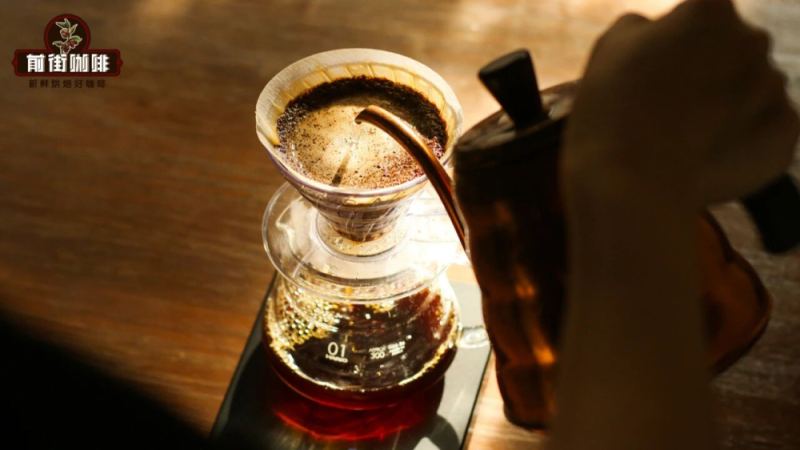
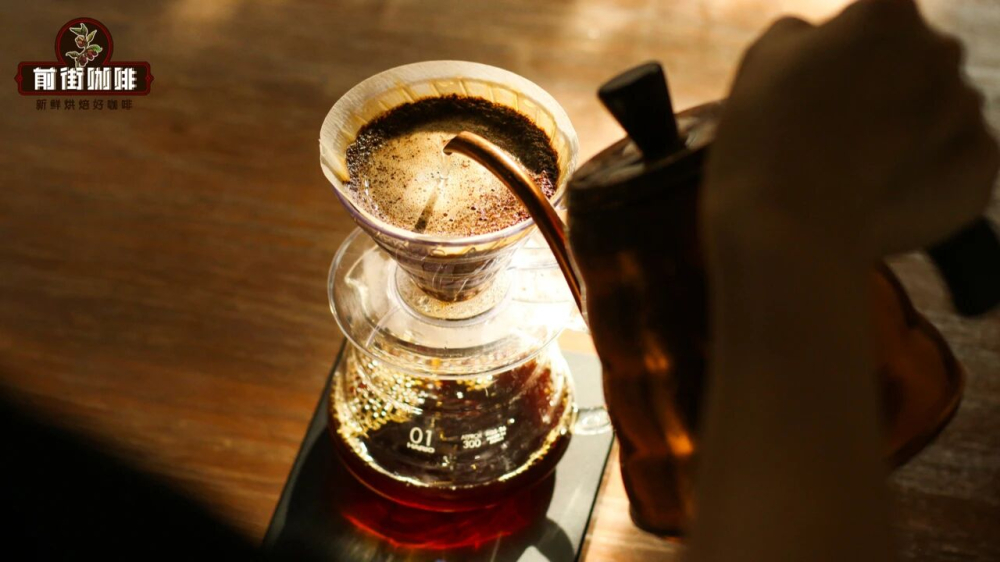
First pouring stage: Before brewing, preheat the server and dripper, and wet the filter paper. In the first stage, pour 30g of water in a circular motion, then bloom for 30 seconds. Flavor performance extracted in the front stage: olive, plum, citrus, strong acidity, with a green and unripe sensation.
Second pouring stage: After the 30-second bloom ends, move the dripper to another server and begin the second stage of circular pouring, with a pouring amount of 95g. Flavor performance extracted in the middle stage: honey, yellow sugar, caramel, almond, jasmine, tea-like sensation, prominent sweetness.
Third pouring stage: After the second stage's coffee liquid has completely dripped through, transfer again to the next server and carry out the third stage of circular pouring, with a pouring amount of 100g. Flavor performance extracted in the back stage: woody aromas, Tieguanyin-like sweet aftertaste, overall flat.
From the flavors extracted in each of the three pouring stages, the role of the first stage's blooming is not only to allow the coffee grounds to be evenly saturated with hot water and pave the way for more even extraction afterward, but also to be the most critical step in extracting the coffee's acidity. Because the amount of water poured is relatively small, the extracted coffee has a higher concentration, and the flavor is relatively complex and variable.
The second stage mainly undertakes the task of extracting the coffee's sweetness. The substances extracted are relatively fewer, the acidity is not obvious, the concentration is not high, and the mouthfeel is slightly flat. The third stage mainly extracts the coffee's body-related substances, but on this bean it does not perform prominently, only presenting a faint woody aroma and a Tieguanyin-style sweet aftertaste. It is the lowest in concentration among the three stages and the flattest-tasting.
So what is the flavor like after the three stages of coffee liquid are mixed?
Front Street Coffee brewed this Green Label Geisha again using the three-stage method. After stirring the three stages of coffee liquid evenly, the flavor became very balanced and fresh. It smells of jasmine's delicate fragrance and citrus's acidic aroma. When sipped at high temperature, one can feel lemon's bright acidity, jasmine's delicate fragrance, and honey's sweet smoothness.
After the coffee liquid cools slightly, the lemon's acidity becomes more prominent, followed closely by the delicate fragrance of jasmine and ginger flower, the sweetness of honey, and an obvious Tieguanyin-like sweet aftertaste. When the coffee is completely cooled, the lemon's acidity weakens, replaced by more floral delicate fragrance and honeyed sweetness.
The above content is compiled by CoffeeHunters, a coffee news website.


