







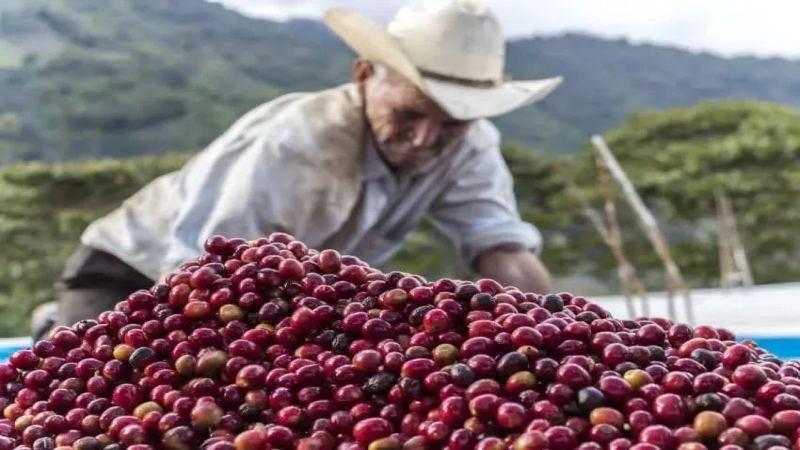
What Does Washed Coffee Bean Processing Add to Honduran Pacas?
The Pacas lot comes from smallholder Edgardo Tinoco near Honduras's San Vicente processing plant, in the Copán Department, grown at 1600-1900m and graded SHG. After washed coffee bean processing, the cup shows black cherry, dark chocolate cake, almond and caramel. Copán is known for chocolate notes fused with honey and caramel sweetness.
San Vicente is a frequent winner at the Cup of Excellence, and coffee cultivation is the most important socioeconomic pillar in Copán, which borders Guatemala. V60 pulse pouring brings out the bean's layered sweetness. Note that pandemic quarantine limits and a shortfall of foreign pickers threatened Honduras's 2021 harvest, with only about 40,000 of roughly 70,000 needed workers available early on.
The Copán region of Honduras is known for its chocolate notes fused with honey and caramel sweetness, and the San Vicente processing plant is a frequent winner at the Cup of Excellence. The Pacas coffee beans cupped by Front Street Coffee this time come from smallholder Edgardo Tinoco near the San Vicente processing plant; after washed processing, they present rich layers of black cherry, dark chocolate cake, almond, and caramel. This article will outline Honduras regional information, the background of the San Vicente processing plant, the characteristics of the Pacas variety, and the washed processing flow, and share Front Street’s roasting records, cupping report, and V60 pulse-pouring insights, helping coffee lovers fully understand this bean’s flavor arc from origin to cup and its brewing key points.
Honduras Regional Information
NEWS!
Local traders in Honduras reveal that the COVID-19 pandemic is causing great disruption to the country’s ongoing coffee harvest. On one hand, domestic quarantine restrictions have been implemented; on the other hand, foreign labor cannot enter smoothly, and based on past harvest-season experience, Honduras needs about 70,000 workers to complete the picking work.
In the El Paraíso region of Honduras, the coffee harvest that began in mid-December can mobilize only about 40,000 workers locally. Once all producing regions nationwide enter peak harvest, if the labor gap still cannot be filled, Honduras’s 2021 coffee production will inevitably suffer a severe impact.
When black cherry and dark chocolate are mentioned, the image of Black Forest cake unconsciously comes to mind. What exactly made Front Street’s baristas associate this? Looking closer, it turns out they were cupping a Pacas coffee bean from Honduras’s San Vicente processing plant.
FrontStreet Coffee — Honduras San Vicente Ecuador Smallholder Coffee Beans
Region: Copán Department, Honduras
Processing Plant: San Vicente Processing Plant
Processing Method: Washed Processing
Altitude 1600-1900m
Variety: Pacas
Grade: SHG
Copán Coffee Region
Copan
Copán Department is located in western Honduras, among the Copán, Ocotepeque, and Lempira areas, and its name comes from the city of Copán. This producing region is adjacent to Guatemala, which once again shows the importance of understanding coffee’s true source. Coffee cultivation is the most important socioeconomic pillar here, and it also produces Honduras’s highest-quality coffee. The coffee harvest season usually runs from November each year to March of the following year. Through cupping coffees from the Copán region, Front Street found that chocolate flavor fused with honey and caramel sweetness is a major characteristic of coffee beans from this region.
San Vicente Processing Plant
San Vicente
The San Vicente processing facility is located in the small town of Pea Blanca in Santa Barbara Department, north of Yojoa in western Honduras. The coffee beans produced here have long been frequent winners in Honduras’s Cup of Excellence (COE) cupping. The processing plant is run by the San Vicente family and is quite famous locally. Through projects, it helps farmers improve cultivation techniques and upgrade production equipment, is committed to building close ties with producers, and strictly checks every batch through coffee cupping.
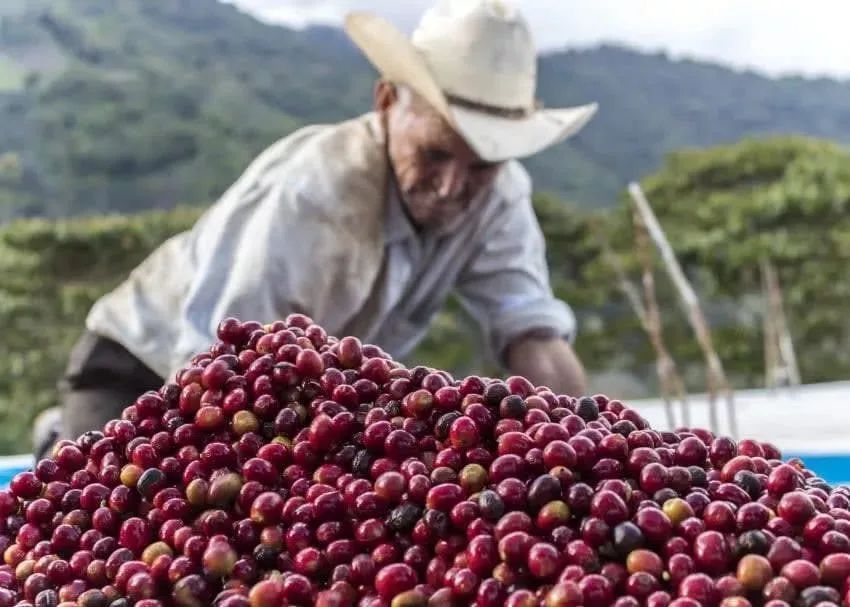
At the same time, the San Vicente processing plant also purchases coffee cherries produced by smallholders in nearby towns such as El Cielito, Las Flores, and El Cedral. Because these farmers’ output is too small, it is difficult to separate each batch independently, but the coffee produced in these areas has always amazed with high sweetness and fruit-like notes, so it is gathered together for green bean processing.
Ecuador Smallholder
Edgardo Tinoco
This Pacas coffee bean obtained by Front Street comes from the small village of Edgardo Tinoco near the San Vicente processing plant. The coffee farmers in this village generally have very small coffee-growing areas and cannot separate micro-lots for sale on their own, so they can only sell collectively to the San Vicente processing plant for green bean processing, and then it is sold under the village name.
Pacas Variety
Pacas
Pacas came from a natural mutation of the Bourbon variety and is somewhat similar to Brazil’s Caturra. Pacas also has a single-gene mutation, which causes the coffee tree to grow shorter (dwarfism). This is also its main advantage—a smaller tree means potentially higher yield, and plant spacing can also be shortened, thereby increasing total coffee production.
Front Street observed that Pacas and Caturra are very similar in appearance, both having a round body and slender shape. Viewed from the side of the coffee bean, Pacas is slightly thinner overall than Bourbon.
Coffee Bean Processing Method
Washed
The selected coffee cherries are sent into a depulper, where the skin and pulp are first removed. The green coffee beans with residual pulp and mucilage are transferred into wooden fermentation tanks and washed-fermented for 18 to 24 hours. After fermentation ends, the green beans are placed in flowing clean water for washing, using friction between the beans to remove pulp and mucilage. After washing, the coffee beans are dried on drying platforms set up at the San Vicente processing plant until the moisture content drops to about 12%, and finally the parchment of the green beans is removed.
FrontStreet Coffee Roasting Record
Bean temperature 175°C, heat 130, airflow opened to 3; turning point 1'32", at 99.5°C bean temperature keep heat unchanged; at 140°C adjust airflow to 4. At 153.6°C bean temperature adjust heat to 100, the bean surface turns yellow, the grassy smell completely disappears, and it enters the dehydration stage.
At 8'00", ugly wrinkles and dark streaks appear on the bean surface, and the toasted bread aroma clearly turns into coffee aroma, which can be defined as the prelude to first crack. At this time, listen carefully for the sound of the first crack point. First crack begins at 9'28", develops for 1'38" after first crack, and the beans are dropped at 193°C.
FrontStreet Coffee Cupping Report
Dry aroma: almond, dark chocolate cake
Wet aroma: green apple
Flavor: black cherry, green grape, dark chocolate cake, almond, caramel
FrontStreet Coffee Brewing Insights
Through cupping, Front Street learned that this coffee bean has rich layering. In order to express this coffee bean’s layering, Front Street used a V60 dripper for brewing to enhance the layering, and brewed this coffee with 91°C water.
Dose: 15g
Coffee-to-water ratio: 1:15
Grind size: medium-fine grind (78% passing through a No. 20 sieve)
FrontStreet Coffee pulse extraction method: First, use 30g water to fully wet the coffee bed into a “hamburger” shape, and bloom for 30s; for the second pour, at 1 minute on the timer, pour water until it reaches 125g, then stop and wait until the water level drops to 2/3 of the coffee bed before pouring the third stage; for the third stage, at 1'45" on the timer, pour water until it reaches 225g, and after the coffee liquid has completely dripped through, the total extraction time is 2'02". After extraction is complete, gently swirl, and wait until the coffee liquid is fully uniform before tasting.
Brewing flavor: When hot, the entry is a slight astringency of plum, the sweet-tartness of black cherry, and the aroma of almond. After it cools, the entry shows the sweet-tartness of black cherry juice, the aroma of dark chocolate cake, the acidity of green grape, and the lingering finish of caramel almond.
The above content is compiled by CoffeeHunters, a coffee news website.


