







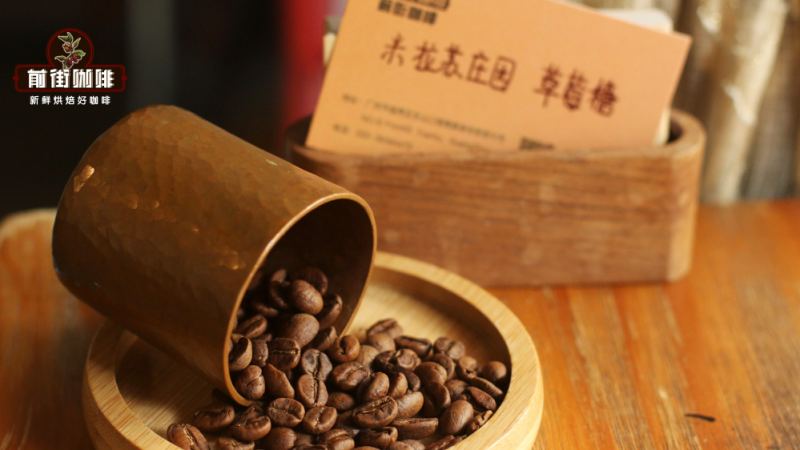
What counts as single-origin coffee beans?
Single-origin coffee means beans from one origin, estate, or cooperative rather than a mix of countries. Front Street's Panama Butterfly Geisha blend qualifies because all its components come from one source. Naming varies widely, from origin and variety to estate name, since a region rarely grows a single variety and stations buy fruit from nearby farms.
Finca Mirazu in Costa Rica's Tarrazu region blends Geisha, ET47, SL28, and Maico under a raisin honey process. Owner Esteban Sanches brings a formal academic background and an experimental approach, giving the geisha coffee beans floral notes plus berry sweetness. Tarrazu's volcanic soil, rainfall, altitude, and forest shade support that profile.
How exactly are single-origin coffee beans defined? This article starts with Front Street's Geisha blend, sorting out the naming logic and origin cognition of single-origin coffee, and goes deep into the Mirasu Estate in Costa Rica's Tarrazu region, analyzing the composition of its multi-variety blend of Geisha, ET47, SL28, and Maico, as well as the process details of the raisin honey processing method. The estate owner Esteban Sanches's formal academic background and experimental spirit give this bean both floral notes and berry sweetness. The article also fully presents Front Street Coffee's roasting curve, cupping report, and V60 brewing parameters, providing coffee enthusiasts with a full-process reference from green bean cognition to extraction implementation.
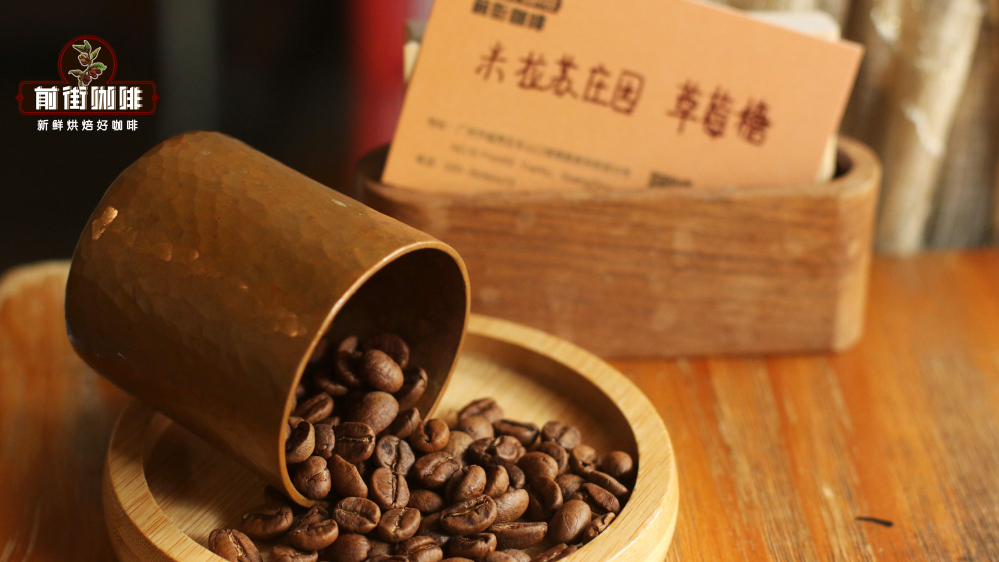
Front Street's Geisha blend falls under the category of single-origin coffee beans. When Front Street introduced the Front Street Panama Butterfly Geisha blend coffee beans on its bean list, it once mentioned that single-origin coffee refers to coffee varieties from a single origin. However, the naming methods for single-origin coffee are diverse—some are named after the origin, some highlight the variety, some indicate the processing station, some are crowned with the estate name, and there are various creative names that leave one dazzled.
To understand this, one needs to know that a region usually cannot grow only a single variety, and processing stations also purchase fresh fruit from surrounding coffee farmers, so the green bean trade stage has actually already completed a green blend. For another example, Ethiopian coffee beans vary in size, precisely because the local varieties are extremely rich, mostly mixed planting and mixed harvesting. But as long as the beans come from the same origin, the same estate, or a cooperative, they are still classified within the scope of single-origin coffee.
Mirasu Estate
Finca Mirazu
Mirasu Estate is located in Costa Rica's specialty coffee Tarrazu region. Tarrazu is situated in the fertile volcanic zone of Central America, with a humid climate, nutrient-rich volcanic rock soil, abundant rainfall year-round, higher altitude, and dense forests forming natural shade, creating superior conditions for coffee growth. Although many estates are located within the Tarrazu region, the unique microclimate, soil, and variety differences of each estate are clearly presented. It is precisely these wonderful differences bestowed by nature that drive Front Street to continuously search for different coffee beans from the same origin for comparison.
The estate owner Esteban Sanches graduated from the Coffee Department of the University of Costa Rica, a standard formal academic background, and he himself is extremely scientifically experimental in spirit. On one hand, the estate attempts to cultivate varieties such as ET47 Ethiopian heirloom and explores multiple processing methods; on the other hand, the small wet processing equipment at the estate's processing station was entirely personally completed by Esteban Sanches from design to assembly.
Coffee Bean Varieties
Geisha, ET47, SL28, Maico
Geisha (Geisha) needs no elaboration; everyone should be familiar with this variety. Geisha was first collected from the coffee forests of Ethiopia in the 1930⟧s. In 1953 it was introduced to the Tropical Agricultural Research and Higher Education Center (CATIE) in Central America, where it was registered as T2722 . However, this plant's branches break easily and were not favored by farmers, so it was not widely planted.
ET47 : In the 1990s, the Costa Rica Coffee Institute gave many introduced varieties to farmers in the Tarrazu region as research tree species for leaf rust resistance. ET47 was numbered 47 in the laboratory because most varieties introduced during the same period were distinguished and identified by numbers. After obtaining ET47 , estate owner Esteban Sanche began dedicating himself to researching this variety. It can be said to be a complex composite, carrying many excellent flavors, such as fruity sweetness, a round and clean mouthfeel, and elegant and pleasant acidity. As for what exactly the " ancestors " of ET47 are, the Costa Rica Coffee Institute has not published this either.
SL28 According to historical documents, a senior coffee official at the Scott Laboratories (A.D. Trench) noticed a variety growing in Tanzania's Modi region that seemed tolerant to drought, disease, and pests. Seeds were collected and brought back to the Scott Laboratories, where its drought resistance was confirmed. In recent years, genetic testing has also confirmed that SL28 belongs to the Bourbon genetic group, so SL28 coffee beans also look close to Bourbon varieties with a round body and thick density.
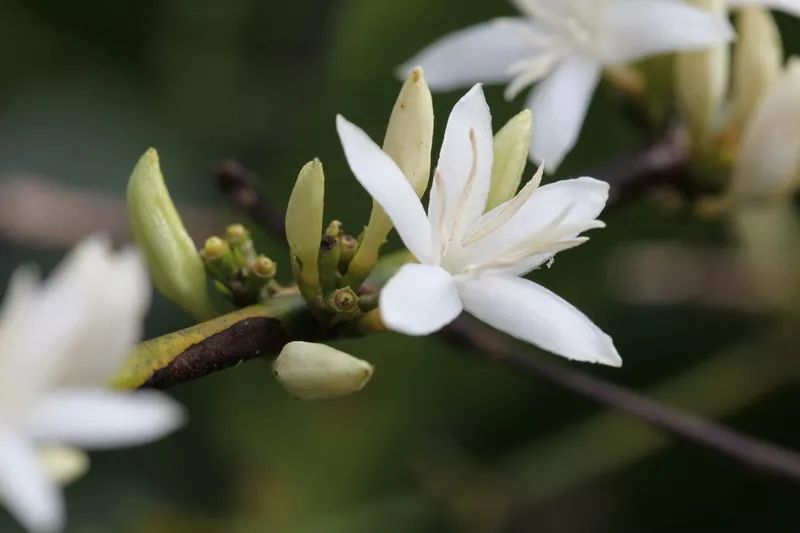
Maico Currently there is no officially published information about this variety. The Front Street Mirasu Geisha blend coffee beans that FrontStreet Coffee obtained consist of 50% Geisha coffee beans and 50% ET47, SL28, and MAICO blended together. The Geisha variety provides this Front Street Mirasu coffee with jasmine aroma, while the other varieties give it richer strawberry and berry flavors. Through the raisin honey processing method, the sweetness of this coffee is further enhanced.
Coffee Bean Processing Method
Raisin Honey
The raisin honey processing method uses a method that retains 100% pectin and zero-water processing. This approach increases the difficulty of honey processing and requires strict control of timing. The estate owner first screens the harvested coffee cherries, places the screened coffee cherries on raised beds to dry for at least three days, and then removes the skin. Interestingly, the estate owner's self-developed depulper differs from other equipment in that it can process two different beans at once. Because the estate owner devotes his time and energy to researching machines and coffee, nearby farmers call him Dr. Machine and the sun-dried bean expert.
After removing the skin, the pectin is retained and then dried. At this stage, climatic factors are key to the success of honey processing. During drying, these coffee beans must be constantly turned to ensure even drying, but the frequency of turning must be well controlled. Drying must be slow to ensure the coffee undergoes fermentation processing, but not so slow that over-fermentation occurs. FrontStreet Coffee found through cupping that the raisin honey processing has retained 100% pectin for sun drying, and the coffee's flavor has very high sweetness, along with a fermented candied fruit sweetness.
FrontStreet Coffee Roasting Suggestions
Yangjia 800N, bean charge: 480g. Preheat the roaster to 200°C, lower to 175°C for charging, adjust the gas to 120, open the damper to 3, turning point at 1'32", maintain the gas; at 114°C keep the gas unchanged and open the damper to 4.
At 6'15" it turns yellow, the grassy smell disappears, and it enters the dehydration stage. At 140°C lower the gas to 100 and keep the damper at 4. At 9'00" dehydration is complete, wrinkles and dark streaks appear on the bean surface, and the toast smell turns into coffee aroma, which is the prelude to first crack. At this time, listen carefully for the sound of first crack. At 10'25" first crack begins, fully open the damper to 5, and keep the gas unchanged. After first crack, develop for 1'30" and drop at 193.5°C.
FrontStreet Coffee Cupping Report
FrontStreet Coffee's cupping is conducted within 8-24 hours after the coffee beans are roasted, using a 200ml ceramic cupping bowl, a standard cupping spoon made of antistatic metal material, and a cupping water temperature of 94°C. The grind size of the cupped coffee powder is controlled so that the passing rate through a No. 20 standard sieve (0.85mm) is 70%-75%. The ratio is 1:18.18 (11.1g coffee powder plus 200ml hot water), so that the extracted concentration falls exactly within the golden cup range of 1.15%-1.35%. First grind to smell the dry aroma, then pour water to fill the bowl. Confirm the wet aroma, and after 4 minutes break the crust and skim, then conduct flavor evaluation.
Dry aroma: floral
Wet aroma: dried fruit, berries
Flavor: raisins, berries, nuts, cream
FrontStreet Coffee Brewing Notes
Dripper: Hario V60 01
Dose: 15g
Coffee-to-water ratio: 1:15
Water temperature: 90°C
Grind size: medium-fine grind (80% passing rate through China standard No. 20 sieve)
Front Street brewing method: First rinse the filter paper and preheat the dripper and coffee pot. Use 30g water for blooming for 30 seconds, then pour in a small stream in circles until 125g for a split, and when the water level drops and is about to expose the coffee bed, continue pouring until 225g and stop pouring. When the water level drops and is about to expose the coffee bed, remove the dripper. (Timing starts at the beginning of blooming) The extraction time is 2'01".
Brewed flavor: jasmine aroma, raisin sweetness on the palate, strawberry gummy sweetness, and a nutty creamy mouthfeel.
For more specialty coffee beans, please add the private WeChat FrontStreet Coffee, WeChat ID: kaixinguoguo0925
The above content is compiled by CoffeeHunters, a coffee news website.


