








How Do You Brew Ice Water Pour-Over Coffee Without a Weak Cup?
Ice water pour-over coffee can still taste rich and layered if the method is adjusted. Low-temperature extraction is inefficient, so hot water is used for the bloom to help degas the grounds and awaken flavor compounds, and that bloom should run longer than in normal hot brewing. The remaining pours use ice water, with a finer grind so extraction still progresses in the cold.
In tests with Front Street Huakui beans, three bloom durations of 30 seconds, 1 minute and 1 minute 30 seconds were compared. A medium-light roasted bean normally ground to 80% passing a Chinese standard No. 20 sieve (0.85 mm) was taken to 85% passing for ice water. The article also covers staged pouring and stirring to reach a cup with layered flavor and a long finish.
Brewing pour-over coffee directly with ice water might sound unreliable—low-temperature extraction is inefficient, so wouldn't it turn out weak and tasteless? In reality, as long as the method is right, ice-water pour-over can fully deliver a rich, smooth layering of flavors. This article uses Front Street Coffee's Huakui coffee beans as an example, comparing the brewing results of three different blooming durations (30 seconds, 1 minute, and 1 minute 30 seconds) to break down in detail the grind-size adjustment, blooming strategy, staged pouring technique, and stirring tips for ice-water pour-over, helping you master the core parameters of ice-water pour-over and make a cup of iced coffee with rich layers and a long-lasting finish.
For more specialty coffee knowledge, please follow the WeChat official account: Front Street Coffee (FrontStreet Coffee)
Many people, when making pour-over iced coffee, are used to first completing extraction with hot water, then adding ice cubes to cool and dilute it. Some friends may also wonder after reading the title: "Doesn't low-temperature extraction take a long time? Won't brewing coffee with ice water make it tasteless?" Next, let's talk about how to make pour-over coffee with ice water.
Is ice-water pour-over coffee feasible?
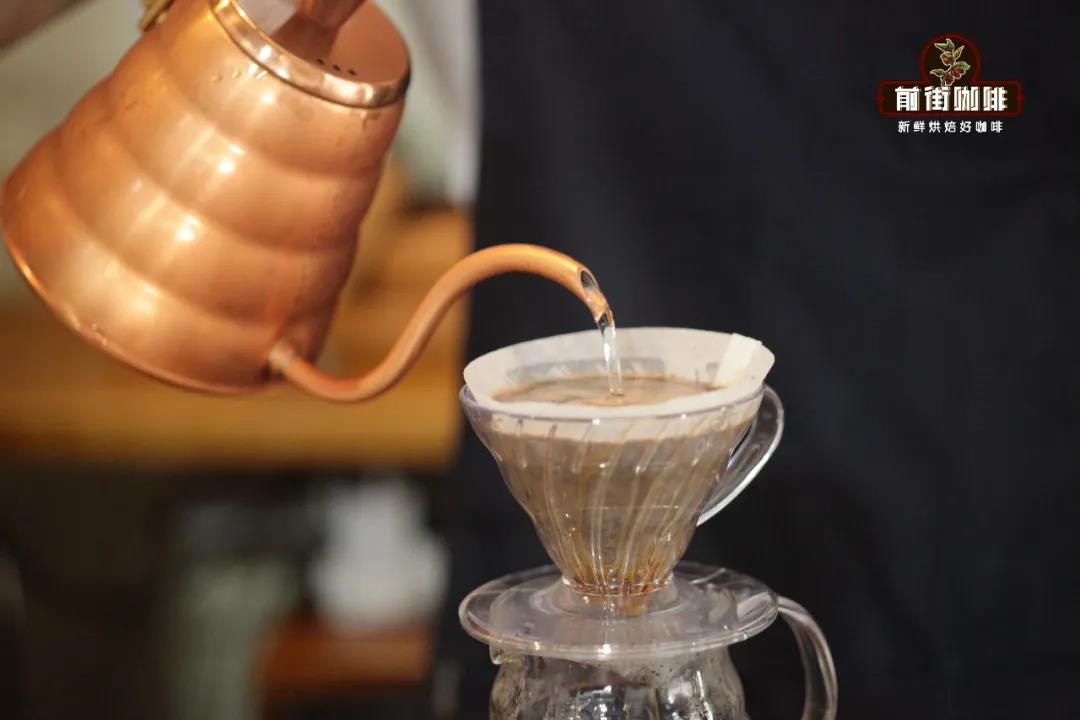
The answer is yes. However, you need to prepare two kettles, because ice water is not used throughout the entire process. In a low-temperature environment, extraction efficiency is extremely low, and during the blooming stage it is difficult to complete degassing and the task of "awakening" flavor substances, so hot water is still needed for blooming, and the blooming time should be longer than in conventional high-temperature brewing.
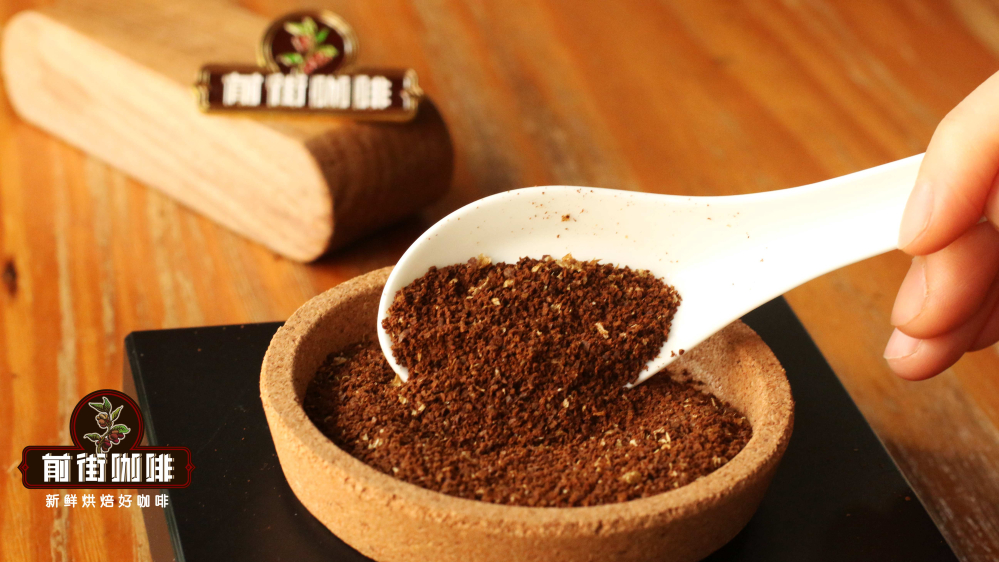
To allow the ice water to extract more effectively after blooming ends, the grind size needs to be adjusted finer. For example, when a medium-light roasted bean is brewed pour-over with hot water, the grind size is 80% passing through a Chinese standard No. 20 sieve (0.85 mm aperture); then for ice-water pour-over, the grind size should reach 85% passing through the same sieve.

How long should ice-water pour-over coffee bloom?
To obtain objective comparison results, Front Street Huakui coffee beans were selected this time for ice-water pour-over. This bean comes from the familiar Ethiopian growing region, and the coffee cherries are processed by the traditional natural method, so it has a rich, deep fruity aroma and is suitable for a variety of brewing methods.
The brewing parameters are as follows: V60#01 dripper, hot water temperature 90°C, ice water temperature 0-1°C, coffee dose 15 g, coffee-to-water ratio 1:15, medium-fine grind (85% passing through a Chinese standard No. 20 sieve).
To compare the effect of blooming duration on flavor, the pour-over parameters were kept unchanged, and only the blooming time was adjusted. To reduce error, no additional stirring was done besides the water-flow agitation during extraction. Group A bloomed for 30 seconds, Group B bloomed for 1 minute, and Group C bloomed for 1 minute 30 seconds; the blooming water for all groups was twice the coffee dose, namely 30 g.
Ice-water brewing method: first bloom with 30 g hot water; after blooming is complete, extract with 0°C ice water. Pour ice water in a relatively large stream up to 125 g, then pause; after the water level drops by half, continue pouring ice water in a relatively large stream up to 225 g and stop; when the water level drops to expose the coffee bed, remove the dripper, and extraction is finished.
| Group A bloomed for 30 seconds; extraction time: 3 minutes 05 seconds.
Flavor performance: lemon, honey, overall flat.
| Group B bloomed for 1 minute; extraction time: 3 minutes 35 seconds.
Flavor performance: berry, honey, plum-like sweet-tartness, slightly astringent, somewhat thin.
| Group C bloomed for 1 minute 30 seconds; extraction time: 4 minutes 05 seconds.
Flavor performance: rose, berry, mango juice, honey black tea-like finish, full and smooth mouthfeel.
Comparing the three blooming results, it can be seen that Group A had almost no flavor, overall flat, with only some citrus-like acidity, similar to the feeling of honey lemon water. Although Group B had sweet-tartness, it was accompanied by slight astringency, and the coffee overall was rather thin; Group C's layers were obviously much higher, with a creamy smooth mouthfeel and a sweet, fragrant finish, and the overall performance was full.
Through this comparison, Front Street believes that after pouring ice water in the second and third stages, a stirring rod can be used to stir to improve extraction efficiency while preventing fine particles from clogging the drain hole.
So how exactly do you make ice-water pour-over coffee?
First chill the server. Pour 30 g hot water for the first stage to bloom, with a blooming duration of 1 minute 30 seconds; after blooming ends, pour 125 g ice water in a large circular stream, then use a stirring rod to stir the coffee bed to prevent fine particles from clogging the drain hole;
When the coffee bed drops to 1/2, pour ice water in a large stream up to 225 g, and continue stirring the coffee bed to ensure a consistent flow rate; the total extraction time is 4 minutes 03 seconds.
The above content is compiled by CoffeeHunters, a coffee news website.


