







How Should You Brew Geisha Coffee From Gesha Village?
Geisha is one of the most sought-after varieties in specialty coffee, prized for complex flavor and limited yields, and the Gesha Village lots in Ethiopia are especially watched. The Gold Label series from Gesha Village draws baristas for that combination of layered flavor and rarity. Brewing focuses on the variety's sensitivity to high-altitude terroir and on careful parameters.
Geisha's genetic roots lie in Ethiopia, where it was found in the Geisha forest in 1931, then sent to Kenya and later introduced to Uganda, Tanzania, Costa Rica and Panama, where Hacienda La Esmeralda planted it from CATIE seeds in the 1970s. Gesha Village grades lots as Auction, Gold, Red, Green and Chaka, and the article outlines each grade alongside roasting and brewing guidance for Ethiopian Geisha.
Geisha has long been known as the Hermès of the specialty coffee world, and the Geisha produced at Ethiopia's Gesha Village is even more sought after by connoisseurs. Among the Gesha Village series launched by Front Street Coffee, the Gold Label lots are highly favored by baristas for their complex flavors and rare yields. This article will begin with the origins of the Geisha variety, outline the geographical background and strict grading system of Gesha Village, introduce the characteristics of the Auction, Gold, Red, Green, and Chaka lots one by one, and include Front Street Coffee's brewing parameters and methods, giving you a comprehensive understanding of the flavor charm of Ethiopian Geisha coffee.
When it comes to specialty coffee beans, the name Geisha is almost impossible to avoid. It is often labeled the "Hermès of the coffee world," and at Front Street Coffee, every Geisha lot quickly captures customers' attention once it is launched. Many friends new to specialty coffee have heard of Geisha's fame even before tasting it, sitting at the bar and asking Front Street's baristas about the flavor characteristics of Front Street's Geisha beans, and the baristas patiently answer every question. Among the beans currently on Front Street's sales list is Front Street's Geisha coffee beans from Ethiopia's Gesha Village.
Many customers wonder why the higher the altitude, the better the coffee quality, and the answer can actually be found in Geisha coffee beans. Geisha is extremely sensitive to its growing environment and is only suited to high-altitude areas, and the higher the altitude, the better the quality. Today, Front Street will talk about the flavor characteristics of Front Street's Gesha Village coffee.
The genetic roots of Geisha lie in Ethiopia. In 1931, it was discovered in Ethiopia's Geisha forest and subsequently sent to the coffee research institute in Kenya; in 1936 it was introduced to Uganda and Tanzania, in 1953 Costa Rica began cultivating it, and in Panama in the 1970s, Mr. Francisco Serracin of Hacienda La Esmeralda obtained seeds from CATIE in Costa Rica and began planting Geisha. After lying dormant for nearly fifty years, Geisha finally shone brilliantly, defeating consistently winning varieties such as Bourbon, Caturra, Catuai, and Typica, and winning the Panama national treasure bean cupping competition championship three years in a row.
Front Street Ethiopian Gesha Village Geisha Coffee
Ethiopia is considered the birthplace of Geisha. In the early last century, Geisha seeds were brought out from deep within the local primeval forest and, after many twists and turns, arrived in Panama, only becoming a coffee variety that stunned the world in 2000.
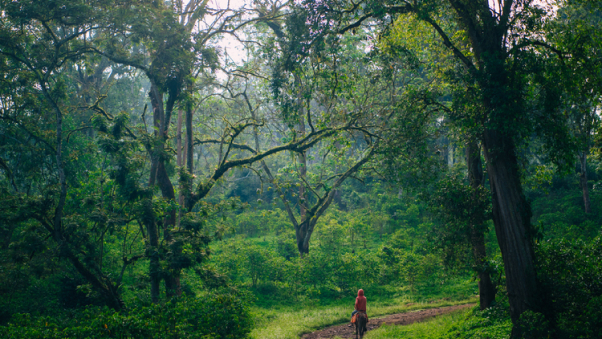
Gesha Village is located in the Bench Maji region of western Ethiopia, surrounded by dense jungle. The estate's location is scenically beautiful with a comfortable climate, and from high ground one can gaze out at the ancient and vast forest. To find their ideal estate, the owners Adam and Rachel spent three years searching, and finally, led by local people, walked into the forest that is Geisha's native homeland. From the capital Addis Ababa, it takes a two-day drive to arrive.
Gesha Village covers a total area of about 471 hectares, of which about 320 hectares are planted with coffee, and the soil is brown-red loam. Planting density is controlled at 7,000 coffee trees per hectare. This plot is named after a person, "Oma," to commemorate a religious leader deeply respected and loved by the people. The coffee beans of Gesha Village have rich layers of flavor and scarce yields, and are often chosen by baristas in international competitions as competition beans. While maintaining the local ecology, the estate has also established good cooperative relations with surrounding residents. To give back to the local community, the Gesha Village Foundation was also established, promoting educational development through two schools adjacent to the estate.
Gesha Village Grading System
Gesha Village implements a strict internal grading system, in order: Auction, Gold, Red, Green, and Chaka lots.
Auction Lot | Accounts for only 3.7% of Gesha Village's annual production and is the estate's top-tier lot after rigorous screening, obtainable only through the 2018 Gesha Village Coffee Estate global auction. The 2018 auction lots scored 88.15-92.67 points in cupping, and are further divided into Champion's Reserve and Farm Reserve. For example, Gesha Village 2018 Auction Lot RSV.6 belongs to the auction lot.
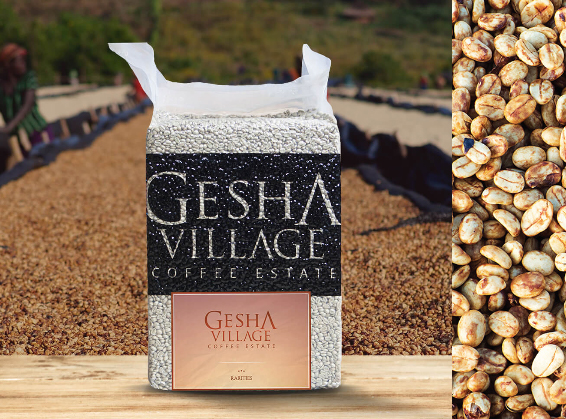
Gold Label Lot | The Gold Label lot accounts for about 10% of Gesha Village's annual production, with complex flavors and extreme rarity. These rare coffees are Gesha Village's top-tier lots apart from the auction lots. Many baristas choose Gold Label lots as competition beans, and roasters with high quality requirements also purchase them. Gold Label lots have complete traceability, and each lot has outstanding flavor and high complexity.
Front Street Gesha Village Oma 059 Gesha Village Oma 059 Lot
Grade: Rarities (Gold) label Gold Label
Processing Method: Natural (32 days)
Variety: Gesha 1931
Country: Ethiopia
Region: Bench Maji
Altitude: 1,931-2,040 meters
Brewing Flavor: Fermented wine aroma, citrus kumquat acidity, full-bodied berry juice
Red Label Lot | Red Label lots account for about 15% of Gesha Village's annual production, are lots with complete traceability, score over 88 points in cupping (SCA standard), and present typical Gesha Village flavors. The flavor intensity and complexity are slightly inferior to the Gold Label lot, making it a very cost-effective single-origin lot.
Front Street Gesha Village · Red Label Geisha
Region: Bench Maji
Altitude: 1909-2069m
Variety: Gori Gesha
Processing Method: Natural
Brewing Flavor: Coconut, licorice, cream, chocolate, toffee, citrus, almond, strawberry, with a fermented aroma on the nose. The overall flavor is relatively balanced, the mouthfeel is full-bodied, and the nutty flavor is quite prominent.
Green Label Lot | The Green Label lot comes from a single plot of Gesha Village and is a single-variety lot. Each lot number provided by the Green Label lot has complete traceability information, including the farm plot name, coffee variety, and processing date.
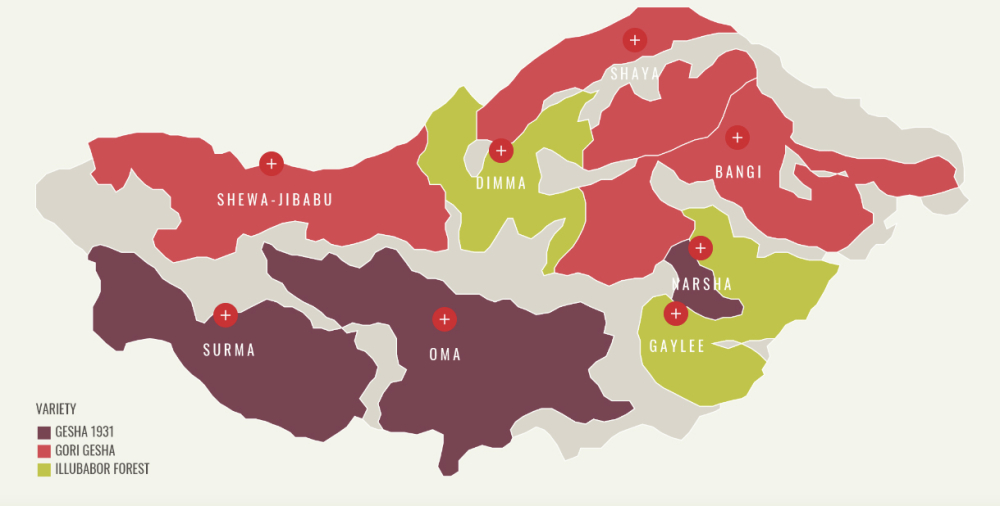
CHAKA Lot | The Chaka lot blends coffee from all plots of the estate and the entire production season. Chaka lot coffee comes in two processing methods, natural and washed, and includes three coffee varieties from Gesha Village: Gesha 1931, Gori Gesha, and Illubabor.
Gori Gesha (GG): This variety replicates the genetic diversity within the Gori Gesha coffee forest;
Gesha 1931 (G31): A combination of various different forest varieties, very similar to Panama Geisha, selected by observing its plant morphology, bean appearance, screen size, and cupping flavor;
Illubabor Forest 1974 (IF): Discovered in 1974 during an expedition to the Illubabor forest, later developed by the Ethiopian research center into a variety with resistance.
Front Street Coffee Brewing Parameters Shared
Water Temperature: 90-91°C
Grind Size: BG#6m (caster sugar size)
Coffee-to-Water Ratio: 1:15
Coffee Dose: 15 grams
Front Street Brewing Method: For the first pour, add 30 grams of water and bloom for 30 seconds, then pour 95 grams (electronic scale shows about 125 grams), finishing the pour in about 1 minute. When the water level drops to 2/3 of the coffee bed, pour the remaining 100 grams (electronic scale shows about 225 grams), finishing the pour in about 1 minute 40 seconds. Dripping completes at 1'55''-2'00'', remove the dripper, and extraction is complete.
The above content is compiled by CoffeeHunters, a coffee news website.


