







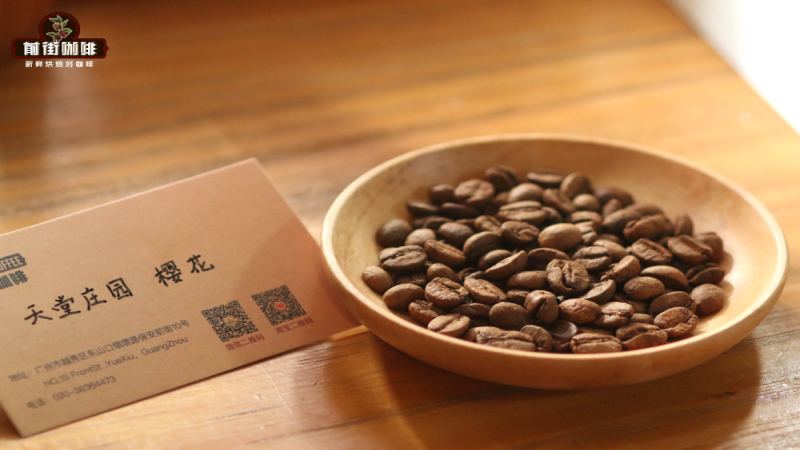
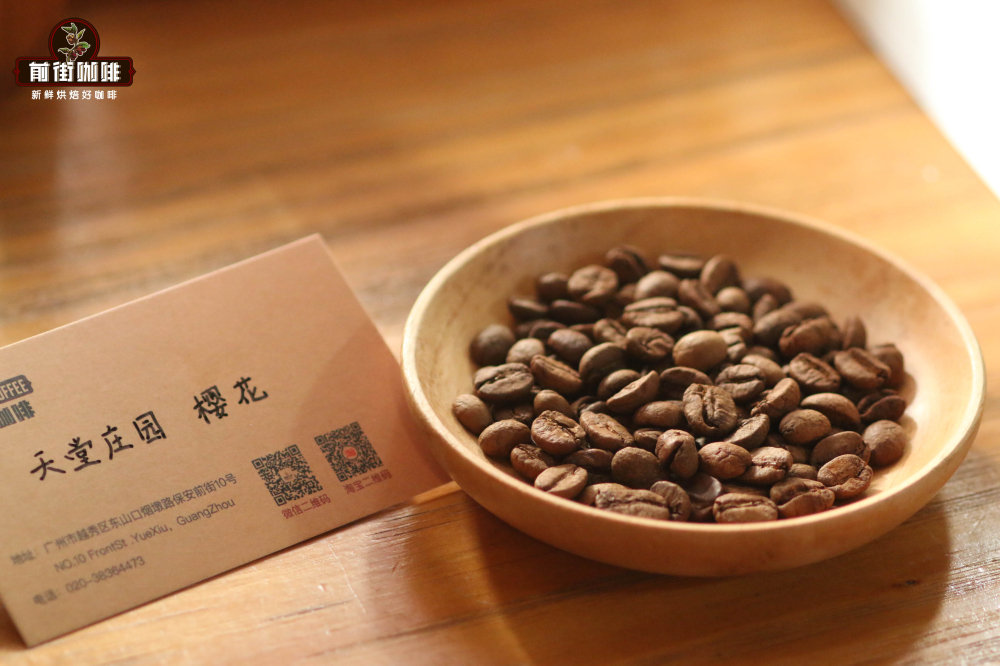
What are the colombian coffee beans characteristics of Sakura?
Despite the name, the Sakura coffee beans from Finca El Paraiso in Colombia cup with basil, rosemary, chamomile, and strawberry jam rather than cherry blossom. Tasters compared the cup to herbal tea. The bean is a Castillo variety grown in Cauca and processed with a double anaerobic washed method, which drives much of that intense aromatic profile.
Cauca sits at an average altitude of about 1,758 meters, reaching 2,100 meters at the highest points, with mineral-rich volcanic soil and a large day-night temperature difference. The local daily average is around 11°C, with daytime averages near 18°C. The article covers the coffee farm background, the roasting curve, the cupping report, and a V60 three-pour recipe to reproduce the flavor.
This Sakura coffee bean from Finca El Paraiso that Front Street Coffee sourced, despite its name, displays a rich aroma in cupping that weaves together basil, rosemary, chamomile, and strawberry jam, leading many tasters to joke that it resembles a pot of herbal tea. This article will guide you through the origin background of this bean—the Cauca region of Colombia and Finca El Paraiso—introduce the characteristics of the Castillo variety and the double anaerobic washed processing method, and reveal Front Street Coffee's roasting curve, cupping report, and V60 three-pour brewing recipe to help you fully recreate the best flavor expression of this coffee.
What exactly should sakura smell like? Many people ask this very question after getting their hands on this bean that Front Street Coffee has recently released. According to descriptions from the Front Street Coffee team members, sakura gives off an extremely delicate fragrance, like the faint trace left when clear water glides across paper. Perhaps when the owner of Finca El Paraiso originally named this bean, it was precisely because he caught some subtle scent from the green beans that he was reminded of sakura.
However, after processing by the Front Street Coffee roasting team, the aroma profile of this bean took on a completely different character. In the cupping organized by Front Street Coffee, some identified basil and rosemary, some found it close to chamomile, and others thought it was the scent of mugwort. Such an intense aromatic performance led the tasting participants to joke: let's just rename this bean "Herbal Tea."
Cauca Coffee Region
Cauca
The Cauca Department is part of Colombia's coffee origin certification region, with an average altitude of about 1,758 meters, reaching up to 2,100 meters at its highest. The area's unique topographic conditions, rainfall distribution, suitable temperatures, mineral-rich volcanic soil, and generations of inherited coffee cultivation methods together nurture the outstanding quality of coffee beans from this region.
If there is one climate feature that most notably distinguishes Cauca from other Colombian regions, it is the large temperature difference between day and night. The local daily average temperature is only 11°C, with daytime average around 18°C. Front Street Coffee has emphasized in previous content many times that the day-night temperature difference has an important impact on coffee quality. The low nighttime temperatures combined with high altitude slow down the growth rate of coffee cherries, allowing the beans to more fully absorb nutrients from the fruit, which also gives Cauca region coffee a brighter acidity and a widely praised distinctive sweetness.
Finca El Paraiso
Finca El Paraiso
Finca El Paraiso has been managed by Mr. Diego Samuel since 2008, who has also been exploring agricultural enterprise management. Initially, it was just a small family estate of 2.5 hectares.
In 2015, Mr. Diego Samuel participated in a regional green bean cupping competition for the first time and took first place. This award gave him great confidence and motivated him even more to devote himself to specialty coffee cultivation. Currently, Finca El Paraiso mainly cultivates Bourbon, Laurina, Geisha, Castillo, and Colombia varieties. The Sakura coffee bean that Front Street Coffee selected uses the Castillo variety.
Castillo Variety
Castillo
Colombia's coffee research center began related research in 1961. As part of a long-term research project targeting rust-resistant varieties such as Caturra and Timor Hybrid, researchers spent 23 years developing 6 Castillo lines, and began large-scale promotion of cultivation in 2005. Today, approximately 45% of Colombia's coffee farms grow Castillo.
Castillo is known for its smooth mouthfeel, prominent aroma, and citric acidity. According to blind test results from Colombia's National Coffee Research Center, Castillo can reach the flavor performance level of Caturra and Bourbon.
Double Anaerobic Washed
Double Anaerobic Washed
The Sakura coffee bean that Front Street Coffee sourced uses double anaerobic washed processing. The specific method is: first, whole coffee cherries are placed in an anaerobic environment for the first fermentation; then the skin and pulp are removed by machine, and the beans still coated with mucilage are placed in plastic bags or other sealed containers for a second anaerobic fermentation.
After the second fermentation is completed, the beans are removed from the anaerobic container for washing to rinse off the mucilage layer, then sun-dried to reduce moisture content to around 11%. Front Street Coffee found in cupping that beans using this processing method have more layered acidity than ordinary anaerobic washed beans.
Front Street Coffee Roasting Record
Yangjia 800N, batch size: 480g. Charged when drum temperature rose to 165°C, airflow set to 3, heat set to 120; turning point appeared at 1'32"; when drum temperature reached 115°C, airflow was opened to 4;
The yellowing point appeared at 6'00", when the bean surface turned yellow, the grassy smell completely dissipated, and the dehydration phase began. At 8'27", wrinkles and dark patches appeared on the bean surface, and the toasted bread scent clearly transformed into coffee aroma, which can be regarded as just before first crack; at this point one must carefully catch the cracking sound of first crack. First crack began at 10'10", airflow was fully opened, heat was reduced to 50 at 178°C; after first crack, developed for 1'30", dropped at 193°C.
Front Street Coffee Cupping Report
As mentioned at the beginning of this article, this Finca El Paraiso bean displayed intense floral and vanilla notes during Front Street Coffee's cupping.
The dry aroma shows basil and rosemary, while the wet aroma carries chamomile and a sweetness like strawberry jam. The overall flavor has chamomile, basil, and rosemary as its main axis, accompanied by the fermented tone of strawberry jam and strawberry-like sweet acidity.
Front Street Coffee Brewing Recommendation
Dripper: V60 #01
Dose: 15g
Coffee-to-water ratio: 1:15
Brewing water temperature: 90°C
Grind size: medium-fine (78% passing through a No. 20 standard sieve)
To fully experience the best flavor of the Sakura coffee bean, Front Street Coffee recommends brewing with freshly roasted beans, as this is the only way to experience the coffee's rich layers to the fullest. Coffee beans shipped by Front Street Coffee are all within 5 days of roasting, because Front Street Coffee deeply understands that freshness is crucial to flavor. Front Street Coffee's roasting philosophy is "freshly roasted good coffee," ensuring that every customer who places an order receives the freshest coffee upon delivery. The resting period for coffee is about 4 to 7 days, so by the time customers receive it, it is precisely in the optimal flavor window.
Front Street Coffee's three-pour brewing method: first preheat the dripper and server. Add 15 grams of coffee grounds, tap lightly to level the surface of the coffee bed. First pour: starting from the center and spiraling outward, pour 30 grams of water, and bloom for 30 seconds. The ideal state is that the coffee grounds are evenly saturated and puff up into a small "coffee burger." After 30 seconds, begin the second pour, keeping the water stream height at 3 to 5 cm, pouring 95 grams of water from the center outward in concentric circles; at this point the total water poured is 125 grams. Observe the coffee surface; it should be covered with golden coffee foam. When the liquid level is about to expose the coffee bed, begin the third pour, adding 100 grams in this stage, slowly circling in concentric circles while keeping the flow steady. After all the coffee liquid in the dripper has flowed into the server, remove the dripper and end the extraction. Total time: 2 minutes 08 seconds.
Brewed flavor: The wet aroma reveals the sweet fragrance of strawberry jam and notes of chamomile. On the palate, there is strawberry-like sweet acidity accompanied by the fermented feel of strawberry jam, followed by the aroma of basil leaves and rosemary, and finally leaving a hint of mint tea-like coolness in the mouth.
For professional coffee knowledge exchange and more coffee bean information, please follow Coffee Workshop (WeChat public account: cafe_style)
For more specialty coffee beans, please add the private WeChat of Front Street Coffee: kaixinguoguo0925
The above content is compiled by CoffeeHunters, a coffee news website.


