







Does coffee bean freshness really depend on storage?
Coffee bean freshness is the main factor shaping the flavor of a brewed cup, and storage is what decides how well that freshness holds. Light and high temperature, humidity, and oxygen are the three drivers of flavor loss. Unroasted green coffee beans mainly need control of moisture and temperature, while roasted beans also need protection from oxidation.
Roasted beans lose aromatic compounds faster when exposed to sunlight, because heat speeds up volatilization. Packaging lined with aluminum foil reflects light but does not insulate heat, so beans should stay out of direct sun. Sealed bags with a one-way degassing valve and vacuum canisters limit oxygen contact, and the size of a coffee bean has no bearing on how quickly it stales.
The freshness of coffee beans directly determines the flavor expression of a cup of coffee, and whether the storage method is appropriate is the core factor affecting freshness. In this article, Front Street Coffee systematically sorts out the differences between the two storage scenarios of green coffee beans and roasted beans, focuses on analyzing the mechanisms of the three major "killers" of coffee bean freshness—light and high temperature, humidity, and oxygen—and provides practical storage solutions such as one-way degassing valve sealed bags and vacuum sealed canisters. At the same time, the article also answers common questions such as the difference between the optimal drinking period and the shelf life of coffee beans, and whether they are suitable for refrigerator storage, helping coffee lovers protect the flavor of every bag of beans in a more scientific way.
Introduction
How long can coffee beans be stored?
Which storage method is more suitable for coffee beans?
Do coffee beans need to be refrigerated?
The final flavor presentation of a cup of coffee is closely related to the freshness of the coffee beans, and whether the storage method is scientific is precisely the key to determining the level of freshness. Front Street needs to particularly point out that the storage of coffee beans should be viewed in two categories: one is unroasted green coffee beans, and the other is roasted beans that have already been roasted. The focus of storing green beans is to control humidity and temperature, preventing moisture, mildew, or pest infestation; while for roasted beans, in addition to temperature and humidity, oxidation must also be given extra attention, because oxidation will significantly accelerate the loss of flavor compounds.
How can roasted coffee beans be kept fresh?
Let us first get to know several "culprits" that damage coffee bean freshness
Factor ① that destroys coffee bean freshness
Light and high temperature
The light source mentioned here mainly refers to sunlight. The heat brought by solar radiation will promote the accelerated volatilization of aromatic components in coffee beans, so never expose coffee beans directly to sunlight. The inner layer of the packaging of coffee beans sold by Front Street Coffee uses aluminum foil material. The core function of aluminum foil is to reflect light, but it cannot truly insulate heat, so when storing coffee beans, any heat source should still be avoided.
Factor ② that destroys coffee bean freshness
Moisture
Moisture refers to water molecules in the air. If coffee beans that are originally in a dry state are placed in a humid environment for a long time, even if there is a sealed container as a barrier, the moment the lid is opened, it is unavoidable for water vapor to intrude. Coffee beans that have absorbed moisture are prone to deterioration, breeding musty and other undesirable odors, directly lowering the taste performance of the coffee. Therefore, keeping the environment dry is more conducive to maintaining coffee bean freshness.
Factor ③ that destroys coffee bean freshness
Oxygen
Reading this, perhaps some people will think: "Oxygen is everywhere, it's impossible to avoid it at all!" Don't worry, this is not asking for complete isolation of coffee beans from oxygen, but rather to shorten the contact time between the two as much as possible. After each time the bag is opened to take beans, the remaining coffee beans in the packaging or container should be resealed immediately to slow down the oxidation process.
After getting to know the three major "threats" to coffee bean freshness
So what exactly should be used to store coffee beans?
Sealed packaging bags with one-way degassing valves
Freshly roasted coffee beans usually come in packaging equipped with a one-way degassing valve. The operating logic of this valve is: the coffee beans in the bag continuously release carbon dioxide, and when the internal pressure rises to a certain level, the gas pushes the valve open and escapes outward. Since the valve only opens when the pressure inside the bag is greater than the external pressure, it also prevents outside air and moisture from flowing back in while degassing. In the absence of a sealed container, directly using the original packaging of the coffee beans for storage is a quite ideal choice, but remember to press the sealing strip tightly.
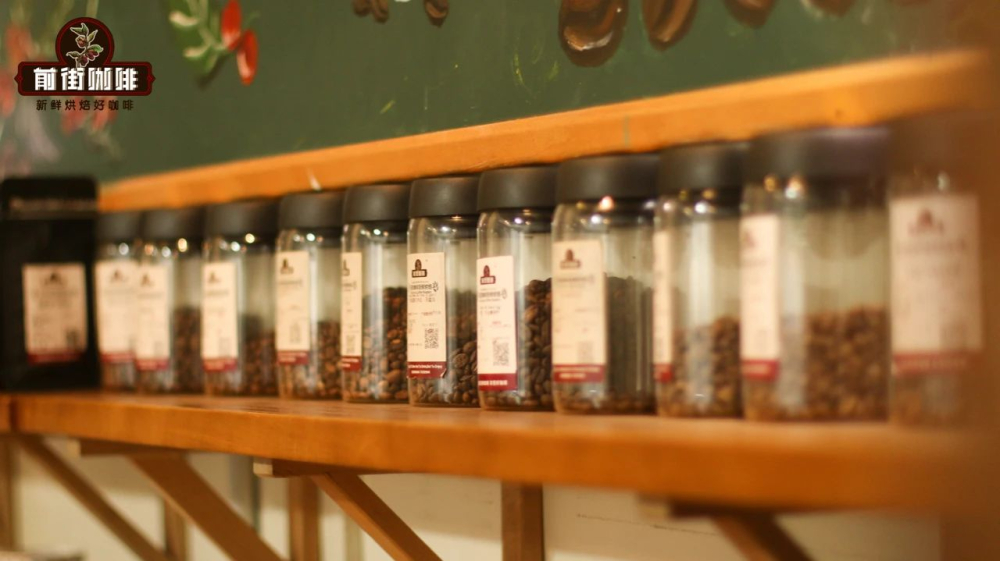
Vacuum sealed canister
The way to use a vacuum sealed canister is to press the exhaust button after putting on the lid, extracting oxygen from the canister and switching it into a sealed state. At this time, the carbon dioxide continuously released by the coffee beans in the canister cannot escape, and under the pressure formed by the vacuum environment, the carbon dioxide will wrap around the coffee beans, thereby slowing down the rate of flavor decline.
How long is the storage period for coffee beans?
The coffee bean freshness mentioned earlier actually refers to the optimal drinking period of coffee beans, that is, the period when the flavor performance is at its fullest. The optimal drinking period of coffee beans roughly falls between the 4th day and the 30th day after roasting is completed. Exceeding the optimal drinking period does not mean the coffee beans can no longer be consumed, but rather that even if the storage conditions are excellent, the flavor will still gradually be lost. Therefore, coffee beans over 30 days old may have problems such as weak aroma and flat taste. If flavor and aroma are not taken into consideration, the shelf life of roasted coffee beans is 365 days.
Can coffee beans be stored in the refrigerator?
It is not recommended to put coffee beans in the refrigerator. Because once coffee beans enter a refrigerated state and are then taken out, there is a large temperature difference between the refrigeration temperature and room temperature, which will cause water droplets to condense on the surface of the coffee beans.
After grinding coffee beans with moisture on the surface, you will find that the coffee grounds form clumps of varying sizes. Clumped coffee grounds not only hinder uniform extraction during brewing, but the damp powder will also remain on the burrs of the grinder. If it is not cleaned in time and kept dry, the flavor of every subsequent grinding and brewing will continue to be affected.
Finally
Front Street does not recommend buying too many coffee beans at once. Buy the next bag after finishing one bag. This is more helpful for ensuring the freshness of coffee beans.
As for those coffee beans whose flavor has already dissipated, they can be ground into coarse powder and placed near the refrigerator or a pet bed, where they can absorb odors.
For more professional coffee knowledge, please follow the WeChat public account: Front Street Coffee (FrontStreet Coffee)
The above content is compiled by CoffeeHunters, a coffee news website.


