







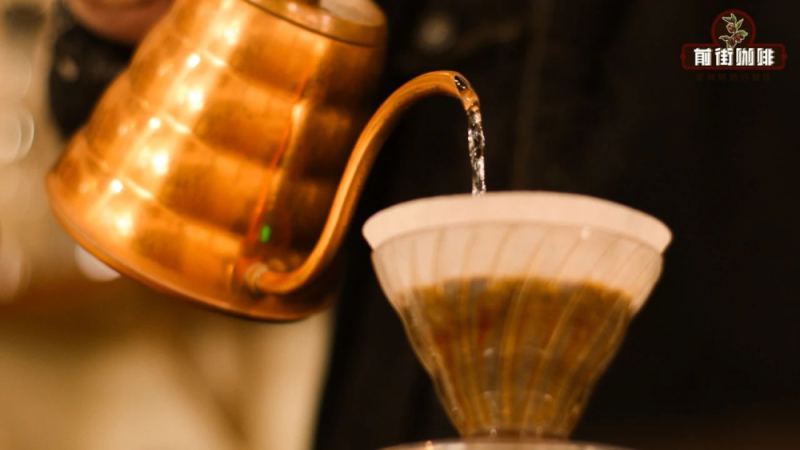
How should you brew medium-dark roast coffee?
Medium-dark roasted coffee beans are looser in structure and absorb water faster, so brewing them with light-roast logic leads to over-extraction and bitterness. Grind coarser, keeping roughly 70 percent pass-through on a No. 20 sieve (0.85 mm), and hold water temperature between 86 and 89 degrees Celsius. Flavor tends toward nuts, dark chocolate, and caramel with a solid body.
Why are coffee beans roasted at all comes down to structure and solubility, and roast level changes both, which is why medium-dark beans need different settings for grind, water temperature, ratio, and dripper choice. A staged three-pour process helps repeat the same result at home. How to process coffee beans upstream also shapes how the roasted bean behaves in the brewer.
Pour-over coffee is not exclusive to light roasts—medium-dark roasted beans can also produce ideal flavors by adjusting parameters. Beans of different roast levels differ noticeably in structure; medium-dark roasted beans are looser in texture and absorb water faster, so applying light-roast brewing logic to them can easily lead to over-extraction and bitterness. Drawing on Front Street Coffee's practical experience, this article systematically outlines the flavor characteristics of medium-dark roasted coffee and explains specific settings for grind size, water temperature range, coffee-to-water ratio, and dripper selection, concluding with Front Street Coffee's standard three-pour brewing process and timing to help you consistently reproduce a rich, sweet, and smooth medium-dark roast pour-over at home.
For more specialty coffee knowledge, please follow the WeChat official account: Front Street Coffee (FrontStreet Coffee)
The brewing parameters for pour-over coffee change significantly with the roast level of the coffee beans, and there is no fixed formula that works for all beans. This article shares some of Front Street Coffee's experience and insights gained from brewing medium-dark roasted coffee beans.
What flavors do medium-dark roasted coffees typically exhibit?
Medium-dark roasted coffee beans lack the lively, bright acidity of light roasts; their flavor profile is dominated by intertwined notes of bitterness, sweetness, and aroma, such as nuts, dark chocolate, and caramel. In terms of mouthfeel, these beans usually deliver a fairly solid body, which is why many coffee enthusiasts prefer medium-dark roasts.
So what should you pay attention to when brewing?
Let's start with grind size. The internal fiber structure of medium-dark roasted coffee beans is relatively loose, making it easier for water to penetrate the particles, so the main risk to guard against during brewing is over-extraction. Based on this, the grind setting should be chosen somewhat coarser, with a 70% pass-through rate on a No. 20 sieve (0.85mm) as a reference standard.
The logic for water temperature is similar—it should not be set too high either. The higher the temperature, the stronger the efficiency of dissolving coffee compounds; to avoid drawing out bitter components as well, it is recommended to keep the water temperature between 86-89°C. Medium-roasted beans can use the 88-89°C range, while darker roasts should be brewed at correspondingly lower temperatures.
For the coffee-to-water ratio, a 1:15 ratio is typically used, as it more easily falls within the Golden Cup extraction range. If you prefer a richer, heavier mouthfeel, you can tighten the ratio to 1:13.
As for dripper selection, Front Street Coffee uses the Kono dripper when brewing medium-dark roasted coffee. This dripper was designed with the intention of recreating a coffee mouthfeel close to that of a flannel filter cloth, making it highly compatible with medium-dark roasted beans.
The Kono dripper was created by Toshio Kono. The body is cone-shaped, with ribs extending straight up from the bottom and stopping at the middle; the upper portion has no ribs and the wall is smooth. Its brilliance lies in this: the filter paper does not need to be pre-wetted, and the ribs allowing air to escape can make the blooming effect more thorough; once the subsequent brewing stage begins, the water level gradually rises, and the filter paper clings tightly to the wall, forming a nearly sealed pseudo-vacuum area.
When the upper channel is sealed off by water and the filter paper, air can only escape through the gap between the lower ribs and the filter paper. At this point, the water and coffee grounds in the dripper push against each other and are ultimately discharged downward together with the air, creating a siphon effect that brings out a rich, full-bodied mouthfeel.
How does Front Street Coffee brew medium-dark roasted coffee?
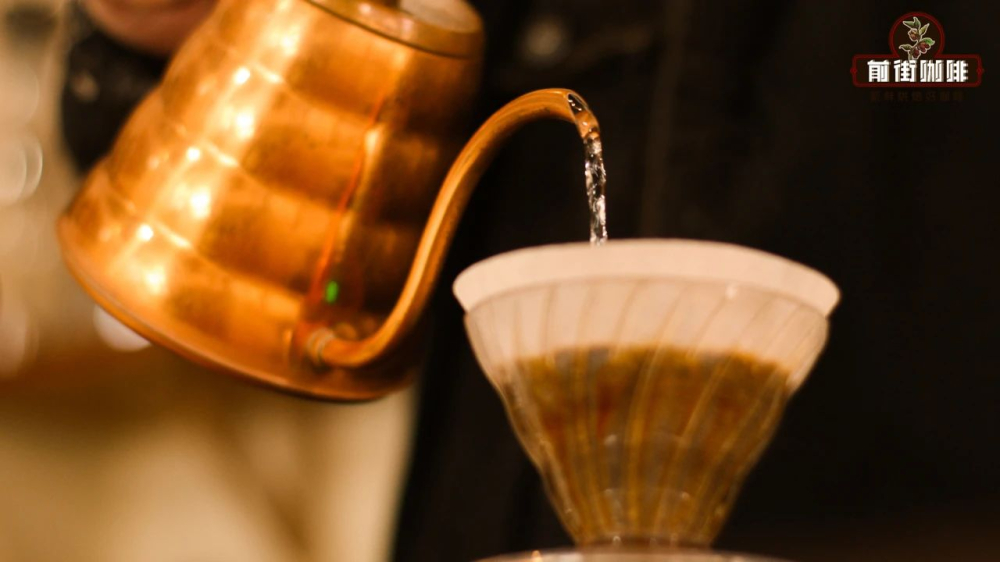
Front Street Coffee's standard approach is to use 15g of coffee grounds with a 1:15 coffee-to-water ratio. First, preheat the dripper, then slowly pour in the coffee grounds, trying to keep the bed level during pouring and not shaking the dripper, because shaking narrows the gaps between particles. For the first pour, start from the center and spiral outward in small circles to pour 30g of water, then let it bloom for 30 seconds; the coffee bed will gradually expand and puff up, forming what is called a "hamburger."
For the second pour, spiral outward from the center to pour 100g of water, keeping the pouring height as close to the coffee bed as possible and moving slowly to avoid over-agitation. For the final pour, add another 95g, again using small circles spiraling from the center. Once all the coffee liquid in the dripper has dripped into the server, extraction is complete. The total extraction time should be controlled between 1 minute 50 seconds and 2 minutes.
The above content is compiled by CoffeeHunters, a coffee news website.


