








Which Coffee Producing Regions in Ecuador Grow High-Altitude Arabica
Ecuador sits on the equator, and the Andes run its full length with dense volcanic soil. Together, low latitude, high altitude, and ash-rich ground give the country the base conditions for specialty coffee. Main coffee producing regions include Loja, the Galapagos Islands, and the Intag Valley, where washed Bourbon and Typica show juicy, complex cups with jammy sweetness and yellow fruit notes.
Coffee arrived in Ecuador in the 19th century, with the first plantations appearing in Manabi Province by the 1860s. The crop only became a major commercial export after disease hit the cocoa industry in the late 1920s. Today Ecuador remains overshadowed by Brazil and Colombia, yet its arabica coffee bean grown at altitude is drawing renewed attention for organic lots and distinct regional flavor.
Among the many coffee-producing countries in South America, Ecuador is often overlooked, yet it possesses ideal conditions for growing specialty coffee, such as low latitude, high altitude, and volcanic ash soil. In this article, Front Street will guide you through the coffee-growing history and recent revival of this equatorial country, the terroir characteristics of major producing regions such as Loja, the Galapagos Islands, and the Intag Valley, as well as the flavor expressions brought by washed processing methods and varieties like Bourbon and Typica—juicy and complex, with jammy sweetness and yellow fruit notes. We also include Front Street's roasting and brewing recommendations, so you can fully appreciate the potential and charm of Ecuadorian organic coffee beans.

When it comes to coffee origins in South America, most people first think of well-known countries like Panama, Colombia, Costa Rica, and Brazil. However, hidden on the South American continent is another country known as the highest altitude place for growing Arabica coffee—Ecuador. It has always stood quietly behind those coffee powerhouses, rarely becoming the center of attention. In this article, Front Street will discuss why Ecuadorian coffee has been slow to become active in the specialty coffee market.
Ecuador has a very unique title—"the Equatorial Country"—because the equator line runs right through its territory. The Andes Mountains stretch across the entire country from north to south, with dense volcanic distribution, the most well-known being the world's highest active volcano at 5,897 meters above sea level. It is precisely thanks to the essential conditions for growing specialty coffee—low latitude, high altitude, and volcanic ash soil—that Ecuadorian specialty coffee can be said to have all the foundations for making a good cup of coffee.
Coffee was introduced to Ecuador in the 19th century. By the 1860s, the earliest coffee plantations in the country appeared in the coastal areas of Manabí Province. As one of the most biodiverse countries in the world, Ecuador's unique ecosystem provided an ideal environment for the flourishing growth of coffee plants, and coffee quickly became one of the country's major export commodities.
However, it was not until the cocoa industry was threatened by disease in the late 1920s that coffee truly became a major commercial crop in Ecuador. Even then, coffee largely remained a supplementary role in the national economy. During the price crisis of the 1990s, coffee production declined significantly. Entering the early 2000s, Ecuador's economy relied mainly on oil, and the proportion of agriculture was much smaller compared to many other coffee-growing countries.
Recent Development of Coffee Farming in Ecuador
Ecuador is one of only 15 countries in the world that produces both Arabica and Robusta coffee. In recent years, with new specialized practices and the unremitting efforts of local farmers and roasters, Ecuador's coffee industry has taken off again. Restoring old plantations and replacing aged, low-yield trees have begun to gradually revive the country's coffee production. The international market's demand for high-quality coffee has meant that this growth is mainly reflected in Arabica plantations and specialty coffee farms. As a lower-yield variety, Arabica also has lower caffeine content and is mainly used for specialty coffee. In contrast, Robusta has high yield and high caffeine content, and is usually only used for espresso blends and instant coffee. Although Ecuador's popular Robusta still far exceeds Arabica in production, the former's output has actually begun to decline for the first time.
In 2016, at the United States Roasting Competition, a classic Ecuadorian coffee roasted by Tony Querio of Spyhouse Coffee won first prize. In 2018, at the 12th Golden Cup held in Quito, Ecuador's capital, an Arabica coffee purchased by a Korean company broke the country's previous price record. These signs indicate that even though Ecuador's specialty coffee production is still small compared to neighboring countries, the focus on quality in recent years has begun to bear fruit.
Challenges Facing Ecuador
Selective harvesting in Ecuador is especially difficult: because the country is located on the equator, coffee needs to be harvested year-round.
The country's altitude ranges from sea level to over 2,000 meters—the wide differences in terrain and climate, plus the specific challenges brought by its special position on the equator, constitute a unique but not insurmountable problem. On the same branch, it is often possible to see all stages of the coffee growth cycle at once: unripe coffee cherries, ripe coffee cherries, and coffee flowers side by side. This forces farmers to continuously pick coffee while also processing it to obtain enough export volume, resulting in prolonged harvest cycles and rising labor costs.
Another challenge comes from Ecuador's subtle climate changes.
Whether due to the combined effect of altitude and the equator, or the influence of the eastern jungle and western ocean, slight climate fluctuations can have a huge impact on farmland. In places where mist is often visible in the morning and afternoon sunlight, sometimes the area is shrouded in fog all day, and even the drying plant cannot dry properly. To grow coffee of comparable quality to previous years, coffee farmers must invest more time and effort.
Coffee Producing Regions
In fact, coffee plantations in Ecuador are generally small. About 80% of coffee farmers cultivate less than 5 hectares, 13% between 5 and 10 hectares, and only 7% cultivate more than 10 hectares. According to statistics, of the approximately 300,000 hectares of planted area nationwide, 20% of coffee plantation land is illegally occupied.
Loja Region
The Loja region is located in southern Ecuador, adjacent to the Andes Mountains. It is one of the highest coffee-growing regions in the world, with altitudes between 1,450 and 2,000 meters, and is also an important coffee export city in the country. The coffee variety is Typica, processed by the washed method, and mostly grown under shade naturally. The local high altitude, diverse climate changes, and excellent soil quality are all very suitable for coffee growth, with many superior conditions for growing coffee.
Galapagos Islands
Coffee beans produced in the Galapagos Islands are organic coffee beans. Thanks to the unique ecological environment such as volcanic soil and microclimates, combined with the complete absence of any chemical fertilizers and pesticides, they are recognized as naturally green specialty coffee. This naturally grown coffee has a mild taste, with faint floral and fruity aromas and caramel notes. It is understood that the Galapagos Islands are about 1,000 kilometers from the Ecuadorian mainland, located at the intersection of the eastern Pacific Ocean and three major ocean currents.
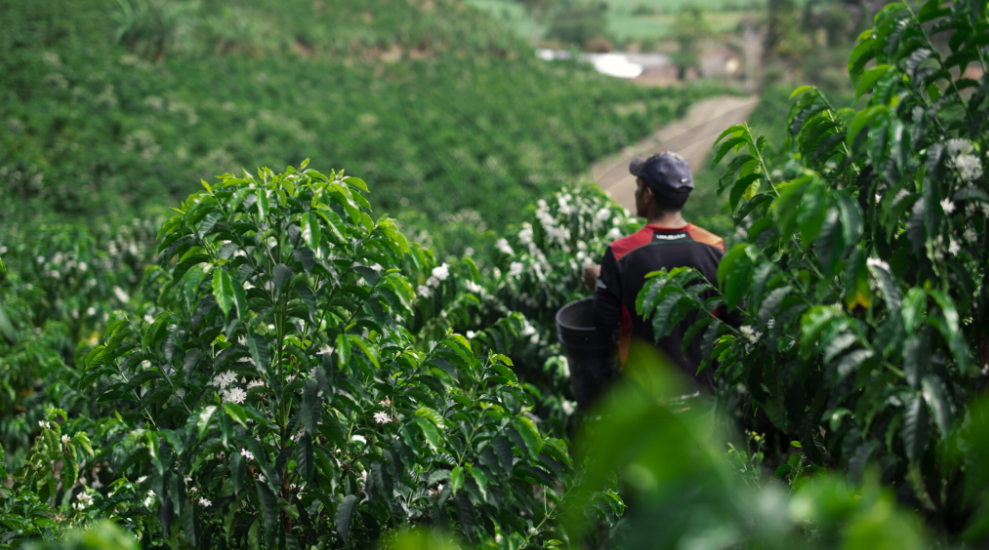
Intag Valley
The western foothills of the Andes south of Guayaquil and the coastal hilly areas of Manabí Province are known for growing Arabica coffee beans, which have a perfect balance of acidity, sweetness, and bitterness.
Pichincha Province
Located in the northwestern region of Ecuador, mainly growing Robusta coffee beans.
Ecuadorian Coffee Flavor
Due to its geographical location, Ecuador's climate varies by region, with different temperature and rainfall patterns. Highland areas tend to be mild and cool, with similarities to flavors produced in higher latitude regions, while coastal areas are warm and hot with fertile soil. Front Street believes that when grown at very high altitudes, coffee beans exhibit rich fruity acidity. Ecuadorian coffee is juicy and complex, with some jammy flavors, prominent sweetness, medium acidity, and accompanying yellow fruit notes.
Coffee Varieties
Ecuadorian coffee beans include two varieties, Galapagos and Gigante, both characterized by large beans and heavy weight. However, the main coffee variety grown in Ecuador is still Bourbon.
Bourbon was originally a mutation after Typica was transplanted to Yemen, with the bean shape changing from slender and pointed to round. In 1715, the French transplanted the round-bodied Yemen Mocha beans to Bourbon Island off the east coast of Africa (renamed Reunion Island after the French Revolution), and it was only afterward named Bourbon. The round-bodied Bourbon beans were introduced to Brazil and Central and South America in 1727, and in 1732 the British also transplanted Yemen Mocha to St. Helena Island (later the place where Napoleon was imprisoned), which was also round-bodied Bourbon. Bourbon is a frequent winner in American specialty coffee cupping competitions.
Coffee Bean Processing Methods
The main coffee processing method in Ecuador is the washed method, which can produce coffee with a cleaner taste.
Bean selection—removing pulp—fermentation—washing—drying—hulling
First, a large amount of water is added to the coffee cherries to wash away unripe fruits and impurities floating on the surface for bean selection, then a pulper is used to remove the skin and pulp. Next, they are placed in a fermentation tank to ferment for 18 to 36 hours, allowing fermenting bacteria to dissolve the pectin on the surface of the coffee cherries. After rinsing with clean water, they are sun-dried for 1 to 3 weeks and then machine-dried. A huller is used to remove the parchment, hull, seed shell, and silver skin. The process is quite cumbersome.
Front Street Roasting Recommendations
FrontStreet Coffee takes into account that coffee beans grown at high altitude in Ecuador have rich fruity acidity. In order to highlight the sweetness and fruity acidity of coffee beans from this region, Front Street's roaster recommends using a medium-light roast.
Most Ecuadorian coffee beans grow in high-altitude areas, and the coffee cherries mature more slowly, thus producing more sugar, which gives the coffee beans a more complex sweetness and also makes the beans harder and denser, which we usually call hard beans.
Hard beans absorb heat energy better than soft beans, so their flavor development is more complete. On the other hand, because hard beans are dense and have high moisture content, they also hinder heat transfer, so Front Street's roaster recommends using a relatively high heat and a higher drop temperature during roasting.
Front Street Brewing Recommendations
Front Street recommends using a V60 conical dripper. The V60 has a larger opening, and together with its unique spiral curved ribs, it allows air to escape more easily, thereby improving extraction quality. The mouthfeel may not be thick enough, but the acidity, sweetness, and distinct aroma brought out by its high concentration are precisely one of its major features.
Water temperature: 90-91°C
Grind size: fine sugar size / 80% passing a No. 20 sieve
Coffee-to-water ratio: 1:15
Coffee dose: 15g
Brewing method: FrontStreet Coffee uses segmented extraction, that is, three-stage pouring. Bloom with 30g of water for 30 seconds, then pour in a slow circular stream to 125g and stop. Wait for the water to drop, then slowly pour again at an even speed; the water level should not be too high. Pour again to 225g and stop. Extraction time is 2 minutes to 2 minutes 10 seconds (including bloom time).
The above content is compiled by CoffeeHunters, a coffee news website.


