







How Do Flow Rate and Spiral Speed Change Coffee Particles Extraction?
In pour-over brewing, a smaller stream keeps the water level low and the coffee bed thick, extending contact between water and coffee particles for a higher concentration and fuller mouthfeel. A larger stream raises the water level, thins the bed, speeds flow-through, and shortens total brew time, giving a cleaner cup with more pronounced aroma.
Circling speed adds another variable: faster circling scours the coffee particles harder and lifts extraction yield, while slower circling weakens that force and extraction intensity. Cross-testing a small stream with fast circling against a large stream with slow circling on a fruit-forward Colombia Sidra shows how these settings steer a cup toward bright coffee or richness.
In the practice of pour-over coffee, the flow rate of the water and the rhythm of the circling motion are two variables that are easily overlooked yet profoundly influence the final flavor. Front Street Coffee has previously conducted dedicated tests on these two factors separately. This time, we further cross-combined water flow intensity with circling speed, using two extreme approaches—a slow circling motion with a small stream of water and a fast circling motion with a large stream of water—to conduct a comparative brewing of a fruit-forward Front Street Colombia Sidra. The experiment was carried out under completely identical conditions of coffee dose, coffee-to-water ratio, grind size, and water temperature. Through concentration measurements and flavor descriptions, we reveal the specific effects of different pouring strategies on extraction efficiency and taste direction. Whether you prefer a rich, full-bodied cup or a bright, delicate one, this article will provide reusable adjustment ideas for your daily brewing.
For more specialty coffee knowledge, please follow: Front Street Coffee (Frontsteet Coffee)
In pour-over coffee pouring techniques, water flow intensity and circling speed have always been two core variables. In earlier tests, Front Street separately examined the effects of strong versus weak water flow and fast versus slow circling.
When all other conditions remain fixed, using a smaller stream of water means the water level will not be raised too high, so the coffee bed stays relatively thick, and the contact time between water and coffee grounds is slightly extended, resulting in a higher final concentration and a fuller mouthfeel. Conversely, when using a larger stream of water, the impact force is stronger, the water level rises noticeably, the coffee bed is thinner, the flow-through speed increases, and the total brewing time is shortened, yielding a cup with a clean, simple taste and more pronounced aroma.
Likewise, with all other factors unchanged, when the circling speed is faster, the water scours the coffee bed with greater force, thereby raising the extraction yield. When the circling speed is slower, the scouring force weakens, and the extraction intensity naturally will not be too strong.
From this, we can simply infer: a small stream with fast circling can maximize extraction efficiency, while a large stream with slow circling can minimize extraction efficiency. So how will a small stream with slow circling and a large stream with fast circling perform?
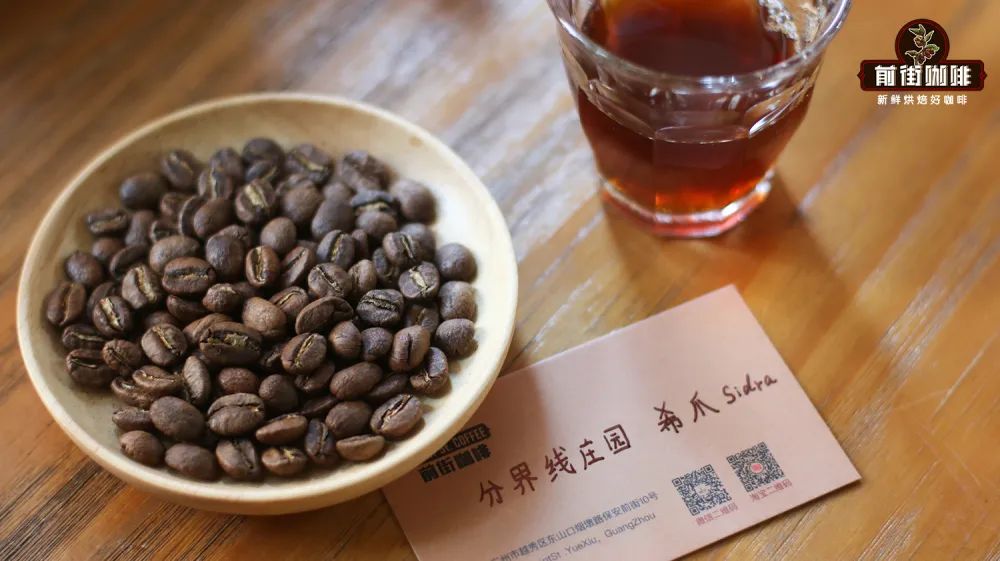
Brewing Experiment This experiment again uses the Front Street Colombia Sidra from Front Street Coffee (FrontStreet Coffee)'s bean list as the test bean. This variety is rich in fruit aromas and typically exhibits flavors such as passion fruit, grape, and dried fruit after brewing. With the same ratio, two approaches were used respectively: a small stream with slow circling and a large stream with fast circling.
Parameters Coffee dose: 15g Coffee-to-water ratio: 1:15 Grind size: fine grind (80% passing through a No. 20 standard sieve) Water temperature: 91°C
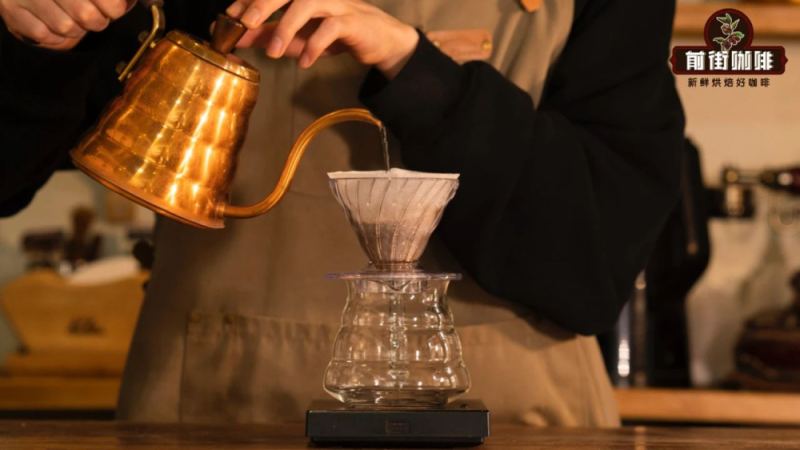
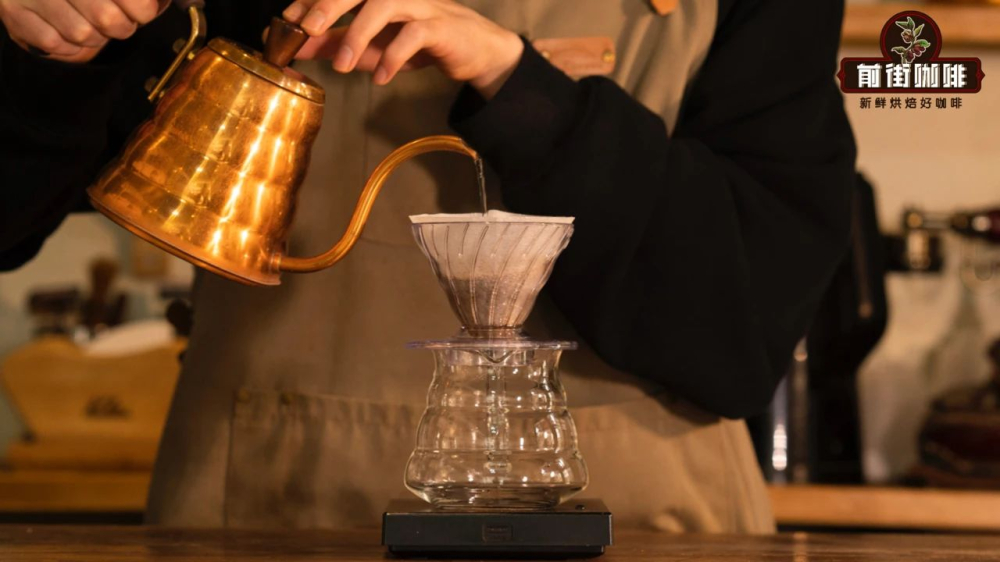
Small stream with slow circling speed: First, pour 30g of water for a 30-second bloom, then at an average pouring speed of [4g/s] and a rhythm of [4 seconds per circle], circle from the center outward and back to the center, stopping the pour at 125g. Wait until the coffee bed drops to the halfway point, then pour in the same manner to 225g and stop. After all the coffee liquid in the dripper has flowed into the server, remove the dripper to end extraction. Total brewing time: 2 minutes.
Large stream with fast circling speed: Similarly, first pour 30g of water for a 30-second bloom, then at an average pouring speed of [6g/s] and a rhythm of [1 second per circle], circle from the center outward and back to the center, stopping the pour at 125g. Wait until the coffee bed drops to the halfway point, then continue pouring in the same manner to 225g and stop. After all the coffee liquid in the dripper has flowed through, remove the dripper to end extraction. Total brewing time: 1 minute 40 seconds.
Flavor Comparison Small stream with slow circling speed: Concentration 1.37%. It presents a relatively rich strawberry aroma, with a sweetness like strawberry jam, a creamy and smooth mouthfeel, and a finish that reveals notes reminiscent of liqueur chocolate—overall very rich.
Large stream with fast circling speed: Concentration 1.28%. It carries a fermented note, with a light and sweet berry flavor, and a fresh black tea finish—overall fresh, with a lighter body.
The pouring method of a small stream with slow circling is essentially a process of even immersion extraction, so it easily brings a full-bodied mouthfeel and rich flavors. The pouring method of a large stream with fast circling is overall a strong scouring extraction, but because the coffee particles are relatively coarser and the flow-through speed is faster, the extraction yield will be somewhat lower, so one may consider adjusting the grind finer to compensate.
The above content is compiled by CoffeeHunters, a coffee news website.


