








How Do Iced Americano, Iced Pour-Over and Cold Brew Differ?
Iced Americano, iced pour-over and cold brew are three distinct iced black coffees. Cold brew soaks grounds in ice water for more than twelve hours by immersion; iced drip runs ice water through the coffee bed at about seven drops every ten seconds. Iced Americano uses an espresso machine, extracting with water near 93 degrees Celsius and 9 bar of pressure.
That temperature gap shapes flavor, clarity and storage time, and it helps explain why cold brew and iced drip are often sold in limited quantities at shops. Cold brew is often described as less acidic, though that is not a fixed rule. Caffeine levels also vary across the three, and choosing an arabica coffee bean suited to cold methods keeps the cup clean and sweet.
When you walk into a coffee shop and order an iced black coffee, you'll often be asked whether you want iced drip, cold brew, or iced Americano. What exactly is the difference between these three iced coffees? From Front Street's perspective, this article sorts out the differences between cold brew and iced drip in terms of extraction method, clarity of taste, and storage time, and also compares the high-temperature rapid extraction characteristics of iced Americano. The article also discusses whether cold brew really has lower acidity, the caffeine content levels of the three iced coffees, and the caffeine misconceptions about espresso and drip coffee, to help you choose the right cup based on flavor and occasion.

When ordering an iced black coffee at a coffee shop, the staff may throw out a series of choices: "Iced drip, cold brew, or iced Americano?" It's perfectly normal to not know how to choose right away. Below, Front Street will explain the characteristics of each of the three, making clear what cold brew coffee, iced drip coffee, and iced Americano coffee each are.
The difference between cold brew coffee and iced drip coffee
You can think of them as a pair of brothers with a very high degree of similarity. In terms of method, both cold brew and iced drip fall under the category of iced coffee, but the extraction temperature and time differ, which ultimately creates the most obvious difference between the two. Cold brew is made by directly soaking coffee grounds in ice water for more than twelve hours, which Front Street classifies as immersion extraction.
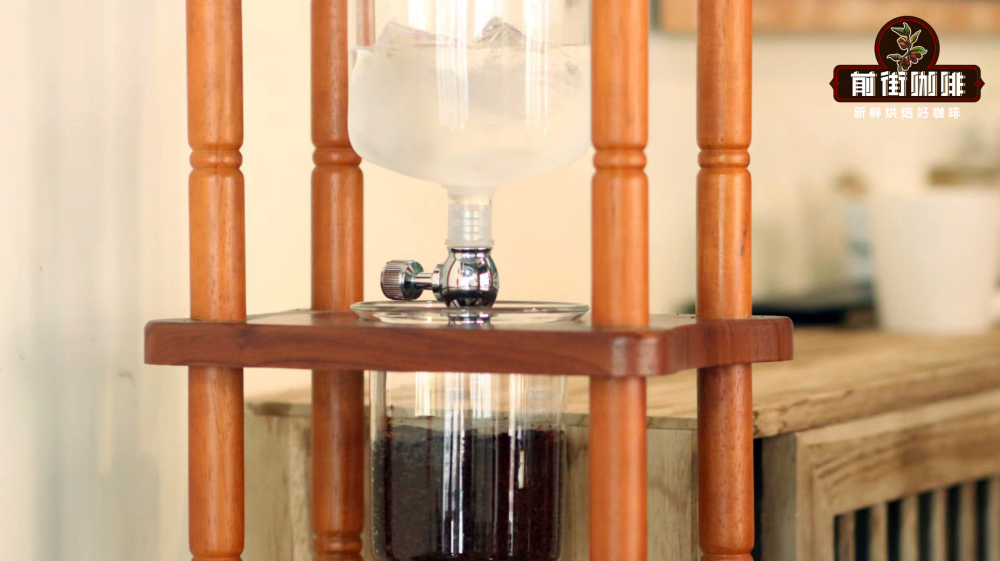
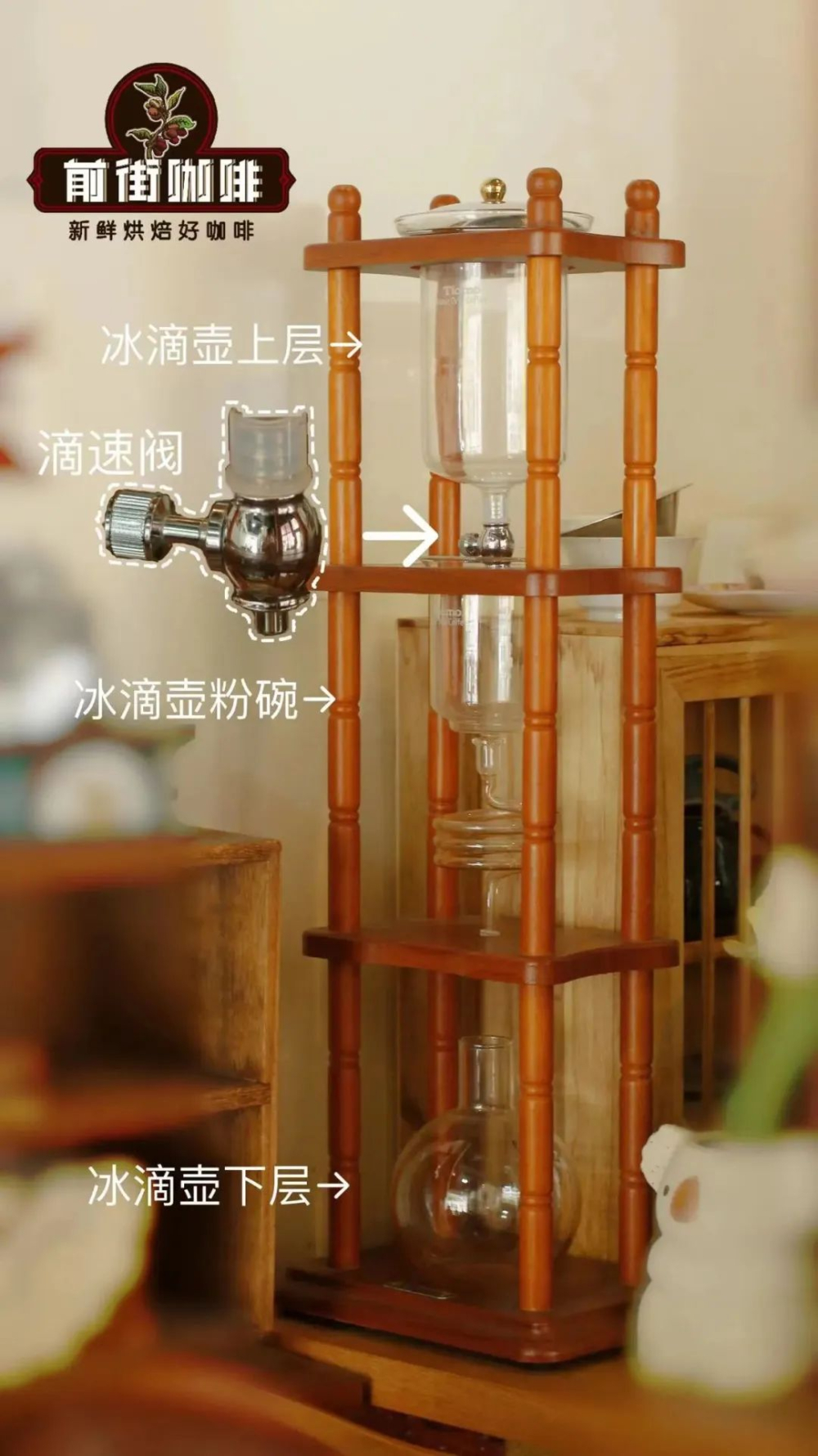
Iced drip, on the other hand, lets ice water pass through the coffee bed at a rate of about seven drops every ten seconds, completing extraction through dripping, which Front Street classifies as drip coffee. Both methods take quite a long time, which is also why cold brew and iced drip at many coffee shops are often sold in limited quantities.
The difference between cold brew coffee and iced Americano
These two iced coffees are actually made under different temperature conditions. Cold brew usually uses ice water for soaking, with a low water temperature, and the production cycle is lengthened, generally requiring more than twelve hours; iced Americano, on the other hand, uses an espresso machine, with hot water at about ninety-three degrees Celsius and 9 bar of pressure to extract the essence of the coffee into espresso, then pours it into a one-to-one ice-water mixture, and it can be completed in a few minutes, making it a convenient and quick iced coffee.
The taste of iced drip coffee
Iced drip coffee tastes mellow, and its clarity is also quite high. As ice water drips drop by drop onto the coffee bed, the low-temperature water passes through the coffee bed over a longer period of time, allowing the rich flavor molecules in the coffee to be retained to a greater extent. However, the coffee liquid just after dripping contains carbon dioxide, and drinking it at this point often yields little flavor. It needs to be poured into a clean, oil-free, pre-chilled sealed container and left to sit in the refrigerator for more than eight hours, allowing the coffee liquid to release carbon dioxide in the bottle and form internal pressure. The pressure helps the flavor molecules release better.
The taste of cold brew coffee
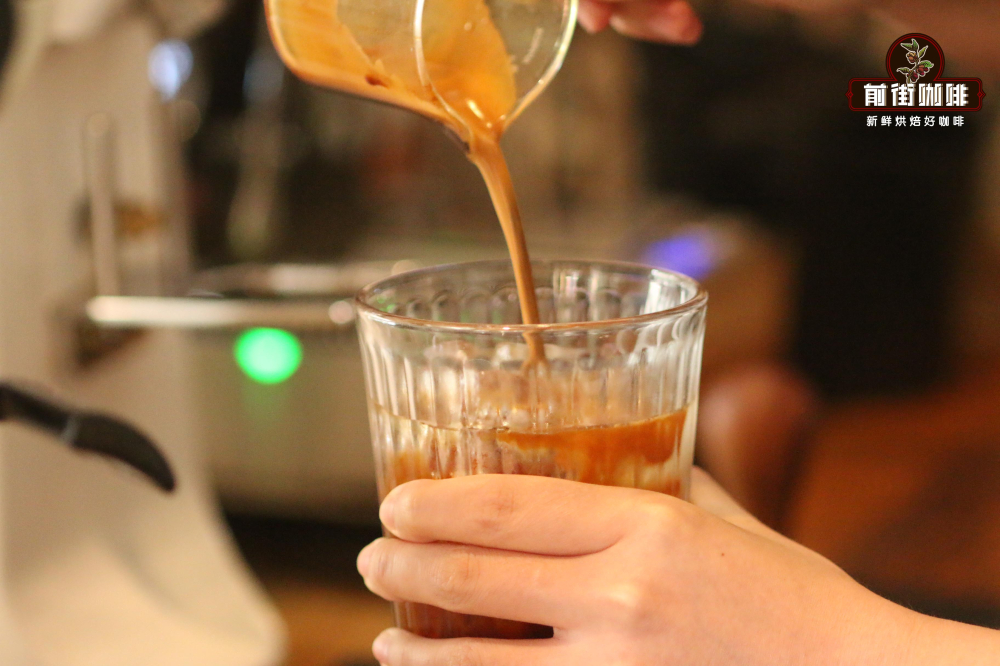
Cold brew coffee is likewise mellow, but its clarity is not as good as iced drip. Its advantage lies in being convenient to make: find a clean container with a lid at home, pour in coffee grounds and ice water, and put it in the refrigerator for more than twelve hours and less than twenty-four hours. After extraction is complete, filter out the coffee grounds with a filtering container and it's ready to drink.
Storage time of cold brew coffee and iced drip coffee
Even if the coffee liquid is stored in a sterilized container, Front Street does not recommend refrigerating it for more than seventy-two hours. After all, low temperature can only inhibit bacterial growth; it cannot completely prevent it.
The taste of iced Americano
The clarity of iced Americano is not as good as the above two iced coffees. Espresso extracted at high temperature will inevitably carry some astringency. In addition, because it is diluted with ice water, different espresso machines and different espresso blend coffee beans will bring different flavors, so it is difficult to keep the concentration completely consistent every time. Iced Americano is suitable for people who want to quickly get an iced coffee. After all, slow work produces fine results.
Does cold brew coffee contain lower acidity?
Rabia A. De Latour, a gastroenterologist and assistant professor of medicine at NYU Langone Health, says this is a common feeling, and people who are "very sensitive" to caffeinated or acidic foods can switch to cold brew coffee.
People who like cold brew often say it is smoother than iced coffee, and those who dislike sourness also find it easier to drink than coffee that has been hot-brewed and then cooled. Some reports even claim that the titratable acidity of cold brew coffee is 67% less than that of hot-extracted then cooled coffee. Coffee contains tannic acid. After boiling, tannic acid breaks down into pyrogallic acid, and pyrogallic acid is prone to change during cooling, making the taste sour and producing a bitter sensation. In cold brew, only ice water and coffee grounds are involved throughout, and what is extracted is mostly small-molecule substances, such as floral and fruity aromas, while smoky and roasted large-molecule flavor substances are not easily brought out, and sourness is also reduced considerably. Of course, for friends with poor stomachs, Front Street still recommends drinking less coffee.
Which contains more caffeine: cold brew, iced drip, or iced Americano?
What does caffeine content depend on? Mainly on the coffee bean variety. Arabica coffee beans have a caffeine content of about 0.8%-1.5%, while Robusta is 1.7%-3%.
Does the degree of roasting affect the caffeine content of coffee beans? When Front Street was looking through materials, it saw that more than ten years ago coffee professionals had already used beans of the same variety for roasting of varying degrees from 5 to 25 minutes, including extremely light (JQ), light (Q), light-medium (QZ), medium (Z), medium-dark (ZS), dark (S), extremely dark (JS), and French heavy (FZ). Among the changes in various chemical components, whether light roast or dark roast, caffeine did not change much, basically all around 1.4%.
Caffeine content of espresso
Many people believe that a shot of espresso contains more caffeine than a cup of hot drip coffee, but this is actually wrong. Each 30 milliliters of espresso contains 64-75 milligrams of caffeine, so a single shot of espresso actually has less caffeine than a single cup of drip coffee. But espresso is diluted in most cases, so for a cup of hot drip coffee of the same size, the caffeine content is almost twice as much.
Caffeine content of cold brew and iced drip coffee
Caffeine can only be fully released at high temperatures, while iced drip and cold brew both belong to low-temperature extraction, so caffeine cannot be fully released. Therefore, the caffeine content of iced Americano, iced drip, and cold brew is actually about the same.
Professional coffee knowledge exchange. For more coffee bean information, please follow Coffee Workshop (WeChat public account cafe_style).
For more specialty coffee beans, please add the private WeChat of Front Street Coffee (FrontStreet Coffee), WeChat ID: kaixinguoguo0925.
The above content is compiled by CoffeeHunters, a coffee news website.


